
Scrolling Through Life: The Messy, Real Impact of Social Media on Teen Mental Health
"Navigating the Digital World: Understanding the Impact of Social Media on Youth Mental Health"

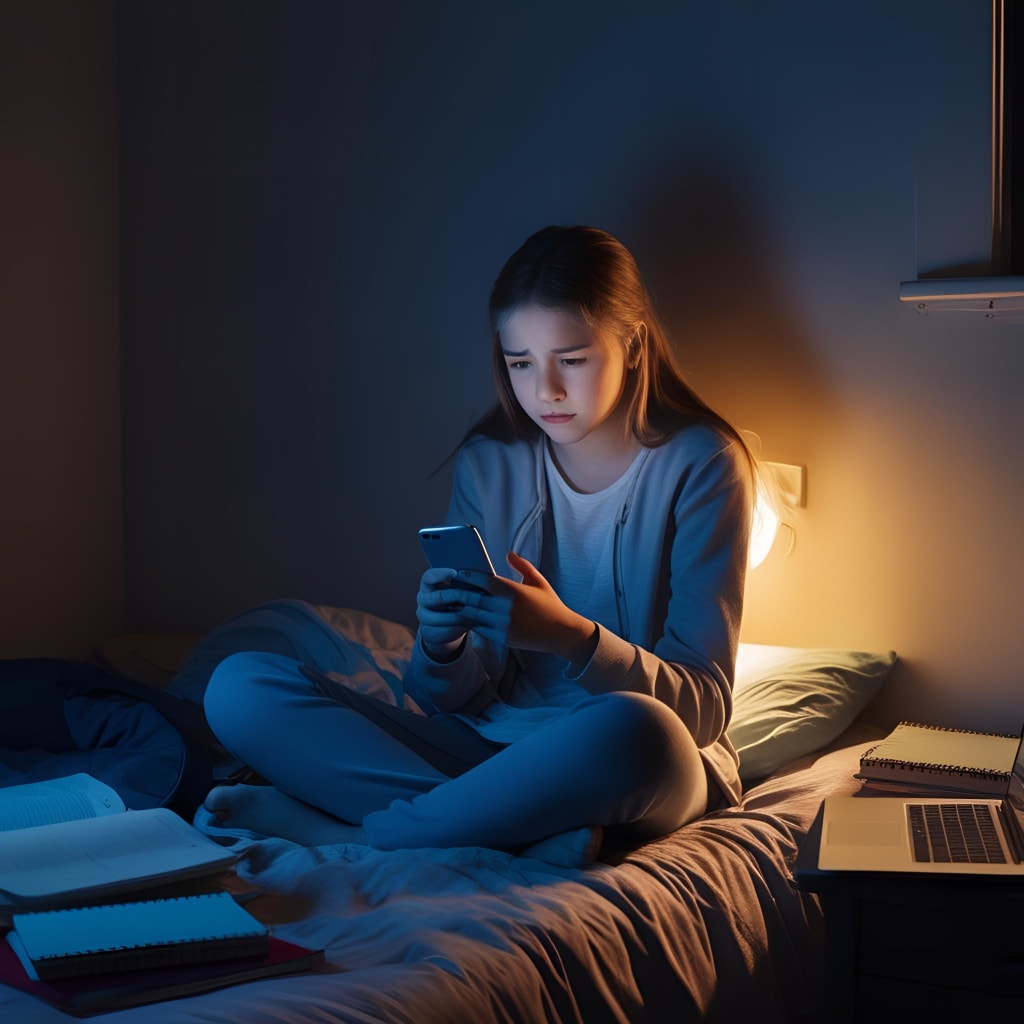
We’ve all been there—lying in bed, phone in hand, mindlessly scrolling. Minutes turn into hours. Laughter fades into numbness. And by the time we finally put our phones down, we don’t feel connected—we feel worse.
This isn’t just some "teen problem." It’s a human problem. And if you’ve ever closed an app feeling lonelier than when you opened it, this is for you.
The Morning Scroll: A Reality Too Many Know Too Well
Let’s talk about Lily. She’s 16, sharp-witted, and a loyal friend. But like most of us, her day doesn’t start with a deep breath or a stretch—it starts with her phone.
7:03 AM – The Unseen Party
Her thumb swipes up. A classmate’s post: "Best night ever!!!" with a group photo from a party she wasn’t invited to.
Her stomach twists.
"Did they forget about me?"
"Was I not fun enough last time?"
"Do they even like me?"
She taps the photo, zooming in on faces, searching for clues.
7:07 AM – The Impossible Standard
Next post: A fitness influencer, glistening with sweat, "Lost 10 lbs in 2 weeks! You can too!"
Lily’s eyes flick to her own reflection in the dark screen. She pinches the soft skin at her waist.
"I should start working out."
"Why can’t I look like that?"
7:12 AM – The Success That Isn’t Yours
Another post. A friend got into their dream college.
"They’re going somewhere. What am I even doing?"
By 7:30 AM, Lily’s heart is pounding. She hasn’t even gotten out of bed.
Sound familiar? It should. Because this isn’t just Lily’s story—it’s ours.
Why Does This Happen? The Psychology Behind the Scroll
Social media wasn’t designed to make us happy. It was designed to keep us scrolling. And it does that by exploiting something deeply human: our need to belong.
1. The Comparison Trap (And Why It Hurts So Much)
We’re wired to compare ourselves to others—it’s how we gauge our place in the world. But social media distorts that.
Offline life: We see people in full context—bad days, awkward laughs, flaws and all.
Online life: We see highlight reels—carefully filtered, edited, and staged.
Our brains don’t process the difference. So when we see someone’s "perfect" post, we don’t think: "They worked hard to curate that." We think: "Why isn’t my life like that?"
2. The Like Economy (And How It Warps Self-Worth)
Likes, comments, shares—they’ve become social currency. And without realizing it, we start to believe:
"More likes = more worth."
So when a post flops? It doesn’t just feel like a bad photo—it feels like rejection.
Lily once spent an hour editing a selfie, only to delete it after 30 minutes because the likes weren’t coming fast enough.
"Was it my face? My caption? Do people just not care?"
That’s the trap: We start outsourcing our self-esteem to strangers on the internet.
3. The Addictive Loop (And Why It’s So Hard to Stop)
Every notification gives a tiny hit of dopamine—the same chemical released when we eat something delicious or win a game.
But here’s the catch: The more we get, the more we need to feel satisfied.
So we scroll, refresh, post, repeat—chasing a feeling that never lasts.
The Hidden Toll: Anxiety, Depression, and the "Always-On" Pressure
Studies show that teens who spend more than 3 hours a day on social media are twice as likely to struggle with depression and anxiety.
But it’s not just about screen time—it’s about what that time does to us.
1. The "Fear of Missing Out" (FOMO) Is Exhausting
Seeing friends hang out without you, events you weren’t invited to, inside jokes you don’t get—it triggers a primal fear: "Am I being left behind?"
Lily once saw a Snapchat story of her friends at a movie night. She wasn’t invited. She spent the rest of the night refreshing her feed, watching them laugh without her.
"Why does this hurt so much?"
2. The Pressure to Perform (Even When You’re Exhausted)
Social media isn’t just about consuming—it’s about performing. Every post is a mini-audition for approval.
"Should I post this? Will people think it’s lame?"
"What if no one likes it?"
"What if I look desperate?"
Lily once took 20 selfies before settling on one, then spent the next hour anxiously checking for likes.
"Why do I care so much?"
3. The Sleep Stealer (And Why It Makes Everything Worse)
Late-night scrolling isn’t just a bad habit—it’s a mental health killer.
Blue light messes with melatonin (the sleep hormone).
Stressful content spikes cortisol (the stress hormone).
Endless scrolling keeps your brain wired when it should be winding down.
Lily used to stay up until 2 AM scrolling, then wonder why she felt like a zombie the next day.
Breaking the Cycle: How to Reclaim Your Brain (Without Quitting the Internet)
We can’t delete social media forever (let’s be real). But we can change how it affects us.
1. Name the Trick (Outsmart the Algorithm)
When you see a "perfect" post, remind yourself:
"This is a performance."
*"They’re not living this 24/7."*
"I’m seeing the highlight reel, not the bloopers."
Lily started doing this, and slowly, the envy faded.
2. Curate Your Feed Like a Garden (Pull the Weeds, Plant the Flowers)
Unfollow accounts that make you feel like crap. (Yes, even that influencer you’ve followed for years.)
Follow accounts that make you feel seen. (Body-positive activists, real-life struggles, humor.)
Lily unfollowed fitness influencers and followed artists instead. Her feed became hers again.
3. Set Boundaries (Your Phone Is a Tool, Not a Life)
No phone for the first 30 minutes of the day. (Lily started journaling instead.)
No scrolling before bed. (She charged her phone across the room.)
Social media-free zones. (Dinner table, bathroom, hangouts with friends.)
4. Talk About the Ugly Parts (You’re Not Alone)
When Lily finally admitted to her friends how social media made her feel, they all sighed in relief.
"Dude, me too."
"I thought I was the only one."
Just saying it out loud took away its power.
The Truth No One Posts About
Here’s what you won’t see on Instagram:
The valedictorian who had a panic attack before graduation.
The "perfect" couple who fought right before their cute selfie.
The influencer who cried because her brand deal fell through.
We’re all out here pretending, and it’s exhausting.
You’re Already Enough
Lily still uses social media. But now, when that heavy feeling creeps in, she asks:
"Is this making my life better, or worse?"
"Would I judge my best friend this harshly?"
"What’s something real I can do right now?"
Sometimes, she closes the app and calls a friend. Other times, she posts something silly—just for fun, not for likes.
Slowly, she’s reclaiming her brain.
Your Turn
Next time you’re scrolling and that ache hits:
Pause. Notice how your body feels. (Clenched jaw? Racing heart?)
Ask: "What do I need right now?" (Sleep? A snack? A real conversation?)
Do one small thing offline. (Pet a dog. Text a friend. Breathe.)
You’re not a bad person for struggling with this. Social media is designed to mess with our heads.
But you are powerful enough to take some of that power back.
And hey—if no one’s told you today?
You’re doing better than you think. 💙
Drop a comment below: Ever had a moment where social media made you feel awful? What helped? Let’s get real about this.
About the Creator
The Healing Hive
The Healing Hive| Wellness Storyteller
I write about real-life wellness-the messy, joyful, human kind. Mental health sustainable habits. Because thriving isn’t about perfection it’s about showing up.
Keep reading
More stories from The Healing Hive and writers in Longevity and other communities.
Day 4 of Quitting
If this is how sobriety feels, maybe it’s better to go through life a little buzzed… this, along with other hits like, I want to kill myself, I wish I was dead, and I’m going to throw myself off a bridge have been the only thoughts on rotation these past few days. I promise myself that if, in a month, I still feel like this (‘this’ meaning despondent, full of rage, and simultaneously numb) I can go back to smoking. Until mid-February though? Nicotine is off the table.
By sleepy drafts12 days ago in Longevity
Kratom Capsules Explained. Uses, Benefits, Dosage, and What to Expect
Kratom capsules are one of the most popular ways to use kratom. Many people choose capsules because they are easy to take, taste free, and simple to measure. If you dislike the bitter flavor of kratom powder or want a cleaner option, capsules solve that problem.
By Jack Wilderabout 6 hours ago in Longevity



Comments
There are no comments for this story
Be the first to respond and start the conversation.