
Saudi Arabia Smart Hospital Market Size and Forecast 2025–2033
How Vision 2030 Is Accelerating the Kingdom’s Transition to Intelligent, Connected Healthcare


Saudi Arabia Smart Hospital Market Overview
The Saudi Arabia Smart Hospital Market is undergoing a transformative phase as the Kingdom redefines its healthcare system through digital innovation and advanced technologies. According to Renub Research, the market is expected to expand from US$ 674.89 million in 2024 to US$ 1,773.13 million by 2033, growing at a robust CAGR of 11.33% from 2025 to 2033. This rapid growth reflects Saudi Arabia’s ambitious push to modernize healthcare under Vision 2030, with smart hospitals emerging as the backbone of the future healthcare ecosystem.
Smart hospitals in Saudi Arabia integrate artificial intelligence (AI), Internet of Things (IoT), electronic health records (EHRs), robotics, 5G connectivity, telemedicine, and cloud-based platforms to deliver more efficient, patient-centered, and data-driven care. These facilities are not just technologically advanced buildings but intelligent healthcare ecosystems designed to improve outcomes, reduce operational inefficiencies, and enhance patient experience.
The convergence of government funding, regulatory support, private sector participation, and international technology partnerships has placed Saudi Arabia among the fastest-growing smart hospital markets in the Middle East. As chronic disease prevalence rises and healthcare demand increases, smart hospitals are playing a critical role in ensuring scalable, sustainable, and high-quality healthcare delivery.
Saudi Arabia Smart Hospital Industry Landscape
Saudi Arabia’s healthcare sector is transitioning from traditional, fragmented systems to fully integrated digital care models. Hospitals across the Kingdom are adopting smart infrastructure that allows real-time data exchange between departments, automated clinical workflows, and predictive analytics for disease management.
At the core of this evolution is the integration of AI-assisted diagnostics, robotic surgery, remote patient monitoring, smart beds, digital imaging, and automated pharmacy systems. These technologies reduce human error, improve clinical efficiency, and enable clinicians to focus more on patient care rather than administrative tasks.
Sustainability is also a key design principle of new smart hospitals. Energy-efficient buildings, smart lighting, intelligent HVAC systems, and optimized resource utilization help reduce environmental impact while lowering long-term operational costs. With healthcare modernization at the heart of Vision 2030, smart hospitals are becoming a national priority and a symbol of Saudi Arabia’s commitment to innovation-driven growth.
Key Drivers of the Saudi Arabia Smart Hospital Market
1. Vision 2030 and Government Support
Saudi Arabia’s Vision 2030 is the single most powerful driver of smart hospital adoption. Through the Health Sector Transformation Program (HSTP), the government is building a digitally enabled, integrated, and value-based healthcare system. Billions of dollars are being invested in hospital digitization, smart infrastructure, and health IT systems.
Government initiatives promote the adoption of EHRs, telemedicine platforms, AI diagnostics, and connected medical devices across public hospitals. Regulatory reforms and public–private partnerships (PPPs) further accelerate implementation. By aligning healthcare with national digital transformation goals, Saudi Arabia is creating a fertile environment for smart hospital technologies to thrive.
2. Rapid Modernization of Healthcare Infrastructure
The Kingdom is undertaking one of the largest healthcare infrastructure modernization programs in the region. Existing hospitals are being upgraded with digital command centers, IoT-enabled medical devices, robotics, and cloud platforms, while new hospitals are being designed as fully smart facilities from the ground up.
The deployment of 5G networks enables ultra-low latency communication, supporting remote surgery, real-time imaging, and continuous patient monitoring. These upgrades are essential for addressing the growing healthcare needs of an aging population and rising chronic disease burden.
3. Rising Adoption of Digital Health Solutions
Digital health is now central to healthcare delivery in Saudi Arabia. Electronic health records (EHRs) ensure seamless information flow across hospitals and clinics, improving care continuity and reducing duplication. Telemedicine platforms allow patients in remote areas to access specialist care without travel.
AI-driven solutions are increasingly used for medical imaging analysis, disease prediction, and clinical decision support. Mobile health applications empower patients to manage appointments, medications, and chronic conditions more effectively. This shift from reactive to proactive healthcare is significantly boosting smart hospital adoption.
Challenges Facing the Saudi Arabia Smart Hospital Market
1. High Implementation and Maintenance Costs
Building and maintaining smart hospitals requires substantial capital investment. The cost of AI systems, IoT devices, robotics, cybersecurity infrastructure, staff training, and software integration can be prohibitive, especially for smaller healthcare providers.
While long-term cost savings are significant, the initial financial burden may slow adoption in less developed regions. Ongoing costs related to system upgrades, data storage, and technical support further add to financial pressure.
2. Cybersecurity and Data Privacy Risks
As hospitals become more connected, cybersecurity threats grow in complexity. Smart hospitals handle vast amounts of sensitive patient data, making them attractive targets for cyberattacks. Breaches can disrupt operations, compromise patient trust, and result in regulatory penalties.
Ensuring compliance with data protection regulations requires continuous investment in encryption, secure cloud systems, access controls, and cybersecurity training. Addressing these risks remains a critical challenge for the market’s long-term sustainability.
Saudi Arabia Smart Hospital Market Regional Analysis
Smart hospital adoption is concentrated in major urban centers, where infrastructure, funding, and technological readiness are strongest. Cities like Riyadh, Jeddah, Dammam, Dhahran, and Khobar are leading the transformation.
Dhahran Smart Hospital Market
Dhahran’s smart hospital ecosystem is anchored by Johns Hopkins Aramco Healthcare (JHAH), one of the most advanced healthcare institutions in the Eastern Province. JHAH has pioneered AI-supported imaging, robotic-assisted surgeries, and digital home healthcare solutions, significantly reducing administrative workload and improving patient outcomes.
The hospital’s integration of Epic Dorothy home care platform, robotic colorectal surgery, and AI cardiac risk diagnostics has positioned Dhahran as a regional leader in technology-driven healthcare excellence.
Riyadh Smart Hospital Market
Riyadh represents the epicenter of smart healthcare in Saudi Arabia. King Faisal Specialist Hospital & Research Centre (KFSHRC) has been recognized among Newsweek’s World’s Best Smart Hospitals 2025, highlighting its global leadership in digital healthcare.
The hospital operates an AI-powered command center, virtual reality training labs, and more than 20 AI-driven clinical applications. Riyadh also hosts the Seha Virtual Hospital, the world’s largest virtual hospital network, connecting 224 hospitals and delivering 44 specialized services remotely. These innovations make Riyadh a benchmark for smart hospital development.
Jeddah Smart Hospital Market
Jeddah is rapidly emerging as a smart healthcare innovation hub. The International Medical Center (IMC) has introduced a “Digital Door” strategy, using AI-powered apps to enhance patient engagement and streamline clinical workflows.
KFSHRC Jeddah has achieved major milestones, including the first fully robotic liver transplant in western Saudi Arabia, while Andalusia New Hospital is incorporating smart rooms and robotic procedures. These developments underline Jeddah’s growing role in the Kingdom’s digital health revolution.
Market Segmentation Analysis
By Artificial Intelligence
Offering
Technology
Applications
By Components
Hardware
System & Software
Services
By Connectivity
Wired
Wireless
By Application
Outpatient Vigilance
Electronic Health Record & Clinical Workflow
Remote Medicine Management
Medical Connection Imaging
By States
Dhahran
Riyadh
Khobar
Jeddah
Dammam
Others
Competitive Landscape and Company Analysis
The Saudi Arabia smart hospital market is highly competitive, with global and regional players collaborating with healthcare providers and government agencies. Key companies covered in the market include:
Koninklijke Philips N.V. – Smart imaging, patient monitoring, and connected care solutions
Medtronic Plc – Advanced medical devices and AI-enabled therapies
SAP SE – Healthcare data platforms and digital hospital management systems
Cerner Corporation – EHR and health information systems
Schneider Electric Healthcare – Smart energy management and hospital infrastructure solutions
These companies are actively expanding their presence through partnerships, technology integration, and localized solutions tailored to Saudi Arabia’s healthcare goals.
Final Thoughts: A Digital Healthcare Future Takes Shape
The Saudi Arabia Smart Hospital Market is set to become one of the most advanced healthcare ecosystems in the Middle East. With strong government backing, rapid infrastructure development, and accelerating adoption of AI, IoT, and telemedicine, smart hospitals are redefining how healthcare is delivered in the Kingdom.
As Vision 2030 continues to drive innovation, smart hospitals will play a central role in improving patient outcomes, enhancing operational efficiency, and positioning Saudi Arabia as a global leader in digital healthcare transformation. The next decade will mark a decisive shift from traditional care models to fully connected, intelligent, and patient-centric healthcare systems—making smart hospitals not just a trend, but the future of healthcare in Saudi Arabia.
About the Creator
Keep reading
More stories from Aaina Oberoi and writers in Longevity and other communities.
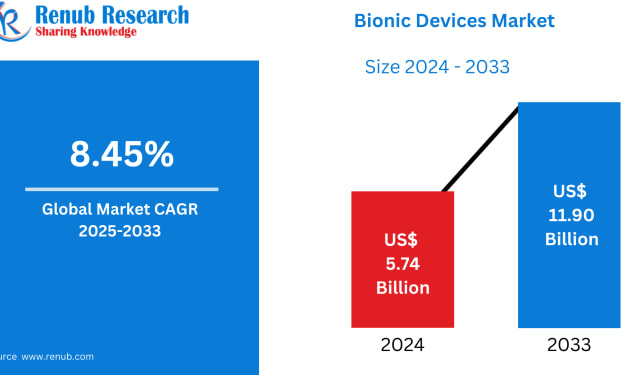
Global Bionic Devices Market Size & Forecast 2025–2033
Introduction: Where Biology Meets Engineering The global healthcare landscape is undergoing a profound transformation as technology increasingly integrates with the human body. At the forefront of this evolution is the bionic devices market, a sector dedicated to restoring, enhancing, or replacing biological functions through advanced engineering, robotics, and artificial intelligence. From intelligent prosthetic limbs and exoskeletons to cochlear and retinal implants, bionic devices are no longer experimental—they are rapidly becoming essential tools in rehabilitation, mobility support, and sensory restoration.
By Aaina Oberoi6 days ago in Longevity
Day 4 of Quitting
If this is how sobriety feels, maybe it’s better to go through life a little buzzed… this, along with other hits like, I want to kill myself, I wish I was dead, and I’m going to throw myself off a bridge have been the only thoughts on rotation these past few days. I promise myself that if, in a month, I still feel like this (‘this’ meaning despondent, full of rage, and simultaneously numb) I can go back to smoking. Until mid-February though? Nicotine is off the table.
By sleepy drafts12 days ago in Longevity
SpaceX Rocket Launch
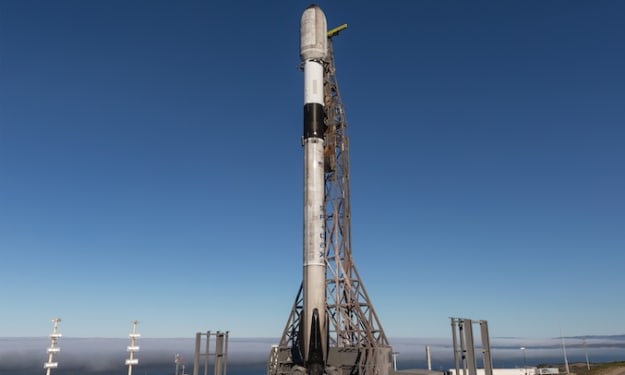
Every SpaceX rocket launch carries more than just payloads into orbit—it carries ambition, experimentation, and a vision of a future where space is no longer unreachable. Founded by Elon Musk in 2002, SpaceX has steadily transformed from a bold startup into one of the most influential aerospace companies in history. Each launch represents another step toward redefining how humanity explores space, communicates across the globe, and imagines life beyond Earth. The Meaning Behind a SpaceX Launch A SpaceX rocket launch is not simply a technical event. It is the result of years of engineering, testing, and problem-solving. From the early Falcon 1 attempts to the now-reliable Falcon 9 and Falcon Heavy missions, SpaceX has focused on one core principle: reusability. This approach has fundamentally changed the economics of spaceflight. Traditional rockets were designed to be used once, making every launch extremely expensive. SpaceX challenged that model by developing rockets that can return to Earth, land vertically, and be flown again. When a Falcon 9 booster touches down on a droneship or landing pad, it marks not just a successful mission, but a proof of concept that spaceflight can be sustainable and repeatable. Falcon 9: The Workhorse of Modern Spaceflight Most SpaceX rocket launches today involve the Falcon 9, a two-stage rocket designed for reliability and efficiency. It has become the backbone of commercial satellite launches, government missions, and cargo resupply trips to the International Space Station (ISS). A typical Falcon 9 launch follows a carefully choreographed sequence. After liftoff, the first stage separates and begins its journey back to Earth, while the second stage continues carrying the payload into orbit. Watching the booster descend through the atmosphere and land upright has become iconic, but it is still a remarkable engineering achievement. These launches often deploy Starlink satellites, part of SpaceX’s effort to provide global internet coverage. For many viewers, a SpaceX rocket launch is their first glimpse into how space technology directly impacts daily life on Earth. Human Spaceflight and the Crew Dragon Era One of the most significant milestones in SpaceX history came with the successful launch of astronauts aboard the Crew Dragon spacecraft. This achievement restored the United States’ ability to launch humans into space from its own soil, ending years of reliance on foreign launch systems. Human-rated SpaceX rocket launches carry a different emotional weight. Every detail—from life support systems to escape mechanisms—is scrutinized to ensure astronaut safety. When a Crew Dragon lifts off, it symbolizes trust: trust in engineering, trust in innovation, and trust in a private company to handle missions once reserved exclusively for national space agencies. These launches have opened new possibilities for international collaboration and long-term space habitation. Starship: The Next Giant Leap While Falcon 9 dominates current missions, Starship represents SpaceX’s most ambitious project yet. Designed as a fully reusable super heavy-lift rocket, Starship is intended to carry humans and cargo to the Moon, Mars, and beyond. A Starship launch is experimental by nature. Test flights focus on learning through iteration—sometimes succeeding, sometimes failing, but always collecting valuable data. Unlike traditional programs that avoid public failure, SpaceX embraces transparency, broadcasting launches and setbacks alike. This approach has reshaped public perception of rocket development. Instead of polished perfection, audiences witness real engineering in progress, complete with challenges and breakthroughs. Why SpaceX Launches Capture Global Attention SpaceX rocket launches attract millions of viewers worldwide, not just because of the technology, but because of what they represent. They remind people that exploration is still alive in the modern world. In an era dominated by digital experiences, watching a rocket break free from Earth’s gravity feels profoundly physical and inspiring. Social media, live streams, and public access have made these launches shared global events. Students, engineers, and casual observers alike tune in, learning about orbital mechanics and rocket science along the way. SpaceX has also changed how people think about careers in science and engineering. For many young viewers, a SpaceX launch is the moment that sparks curiosity and ambition. The Broader Impact on the Space Industry Beyond individual missions, SpaceX rocket launches have forced the aerospace industry to evolve. Lower launch costs and faster turnaround times have encouraged innovation across the sector. Competitors and national agencies alike have begun adopting reusable technology and more agile development methods. This shift benefits scientific research, Earth observation, and communication networks. It also lays the groundwork for future exploration missions that were once considered financially unrealistic. Looking Ahead As SpaceX continues launching rockets at an unprecedented pace, the question is no longer whether spaceflight can be routine, but how far it can take us. Future launches will likely support lunar bases, Mars missions, and expanded satellite networks that connect even the most remote parts of the planet. Each SpaceX rocket launch builds on the last, forming a continuous story of progress. It is a story still being written—one that blends risk, innovation, and a deeply human desire to explore the unknown. In watching these rockets rise into the sky, we are reminded that the boundaries of possibility are not fixed. They are meant to be challenged, tested, and ultimately surpassed.
By Saboor Brohi 3 days ago in Longevity
Wild Card Weekend Recap: What Happens Now?
I think I figured out why I love Wild Card Weekend so much. It's because it's the first playoff anything of the calendar year. The NFL season starts in the fall, and once upon a time, the champion was crowned either on or slightly before New Year's. The evolution of the NFL schedule has resulted in the playoffs starting just into the New Year, and currently, the final week of the season falls on the first weekend of the New Year, with Wild Card Weekend coming a week after that. So yes, chronologically, the NFL's Wild Card Weekend serves as the first playoff anything of the calendar year.
By Clyde E. Dawkins7 days ago in Unbalanced


Comments
There are no comments for this story
Be the first to respond and start the conversation.