
Red Light Therapy Improves Vision in Older People
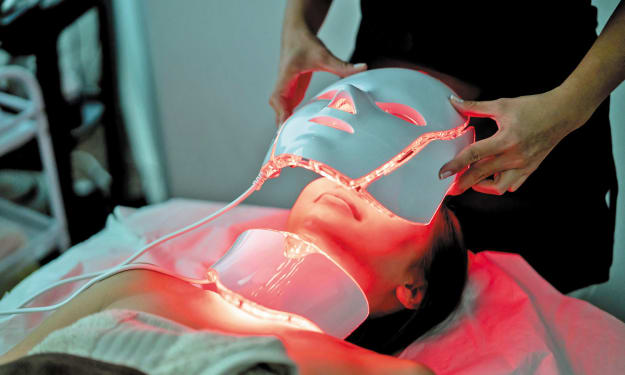
To preserve your eyesight, nothing better than three minutes a day looking at a halo of red light. That reveals a new scientific study published by researchers.

Like brushing your teeth, staring at the halo of red light emanating from a lamp for three minutes could become the next nightly ritual. A detailed and an in-depth explanation is given by neuroscientist Glen Jeffery, professor at the Institute of Ophthalmology at University College London, who performs this routine every day for three minutes, it may be able to slow down the loss of vision caused by aging. The results of the research, which has already passed peer review, were published on June 29, 2020.
Experiment with Humans for Two Weeks
Twenty-four people between the ages of 28 and 72 participated in the study; none of them had ocular pathologies. At first, the researchers looked at the sensitivity of the retinal photoreceptors. There are two types of photosensitive cells: cones, responsible for color perception, and rods, which deal with peripheral vision and in the dark.
To measure the performance of the rod cells, the participants were administered a drug to dilate their pupils, in order to observe how they react in the dark to weak light signals. To check the functioning of the cone cells, the participants had to recognize colored letters presented before them with very low contrast and progressively blurred. The scientists then handed each of these people a small LED pocket lamp, tasked with looking at the halo of deep red light every day for the next two weeks, for three minutes a day. Once that time had passed, the rod and cone cell photosensitivity tests were repeated.
Useful for People Over 40
The experiment revealed that only people over 40 years of age benefited from red light treatment. Their cone cell performance improved by more than a fifth. In the younger participants, no change was observed. The most notable improvement occurred in the recognition of the blue color, that is, the color range in which vision typically loses strength. It also significantly improved the performance of the cone cells.
The lamps are not very expensive to manufacture either; the researchers calculated the equivalent of 13 Euros per piece. Precisely for this reason, it is necessary to note at this point that the retina is a highly sensitive organ. LED light and especially laser light can permanently damage it. In addition, it should be noted that the published study is the result of basic research and it is not yet known whether red light treatment can cause long-term damage, so please do not improvise your own homemade lamps. Red light.
Also Proven In Animals
As we get older, especially after 40, "the sensitivity of the retina and the perception of colors gradually weaken," says scientist Jeffery. This occurs, above all, because the mitochondria in cells lose their ability to function. Mitochondria are considered the powerhouses of cells, as they supply energy in the form of adenosine triphosphate (ATP). If the mitochondria lose efficiency, the cells cannot fulfill their function properly.
The photoreceptor cells of the retina have a very high concentration of mitochondria. At the same time, they are cells that have a very high need for energy. For this reason, the aging process is reflected in our eyesight before other organs. The production of ATP decreases throughout life by 70 percent, with which the function of the photoreceptors is progressively worse.
Scientists have already found in previous studies that photoreceptor function dramatically improves in bumblebees, fruit flies, and mice with red light treatment with wavelengths between 650 and 1,000 nanometers. Jeffery compares light therapy to recharging a battery: "It is possible to significantly improve the sight of older people with appropriate light treatments to recharge the energy system of the cells of the retina," says the scientist.
About the Creator
Day 4 of Quitting
If this is how sobriety feels, maybe it’s better to go through life a little buzzed… this, along with other hits like, I want to kill myself, I wish I was dead, and I’m going to throw myself off a bridge have been the only thoughts on rotation these past few days. I promise myself that if, in a month, I still feel like this (‘this’ meaning despondent, full of rage, and simultaneously numb) I can go back to smoking. Until mid-February though? Nicotine is off the table.
By sleepy drafts10 days ago in Longevity
Saudi Arabia Generic Drugs Market Size and Forecast 2025–2033
Saudi Arabia Generic Drugs Market Outlook The Saudi Arabia Generic Drugs Market is anticipated to grow to US$ 8.11 billion by 2033 from US$ 4.05 billion in 2024, expanding at a CAGR of 8.02% during 2025–2033. This growth is attributed to rising healthcare needs, proactive government efforts to curb pharmaceutical expenditure, and increasing awareness of cost-effective medication alternatives. Expanding domestic pharmaceutical manufacturing and regulatory support for generics are further strengthening the market’s long-term outlook.
By Marthan Sir3 days ago in Longevity



Comments
There are no comments for this story
Be the first to respond and start the conversation.