
Pickleball Rules
A Complete Guide to Mastering the Game
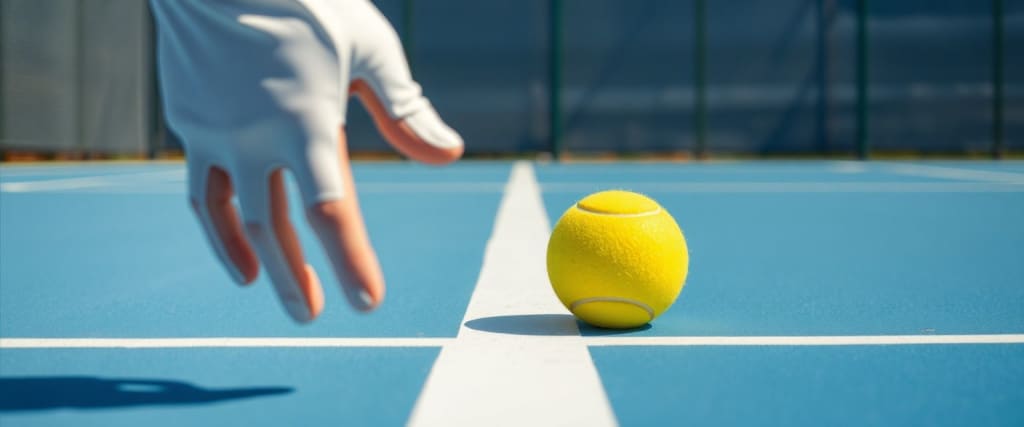
Pickleball is one of the fastest-growing sports in the world, combining elements of tennis, badminton, and ping-pong into a fun and accessible game for players of all ages.
Whether you're a beginner or an experienced player looking to refine your skills, understanding the pickleball rules is essential to enjoying the game and playing it correctly.
In this comprehensive guide, we’ll break down everything you need to know about pickleball rules, from scoring to serving, and provide tips to help you dominate the court.
(NOTE: Need a Pickleball Racket? Heres the #1 Best Selling Racket on Amazon.)
What is Pickleball?
Before diving into the rules, let’s start with a quick overview of the game. Pickleball is played on a badminton-sized court (20 feet wide by 44 feet long) with a modified tennis net.
Players use solid paddles to hit a perforated plastic ball over the net. The game can be played as singles or doubles, but doubles is the most popular format.
Basic Pickleball Rules
1. Court Dimensions and Setup
The court is 20 feet wide and 44 feet long, divided into two sides by a net.
The net height is 36 inches at the sidelines and 34 inches at the center.
The court includes a non-volley zone (also called the "kitchen"), which is a 7-foot area on both sides of the net where players cannot volley the ball.
2. Serving Rules
The serve must be underhand, with the paddle below the waist.
The server must hit the ball diagonally across the court to the opponent's service zone.
Only one serve attempt is allowed (let serves, where the ball hits the net and lands in the correct zone, are allowed).
The server continues to serve until they commit a fault.
3. Scoring Rules
Games are typically played to 11 points, and you must win by 2 points.
Only the serving team can score points.
In doubles, both players on a team get a chance to serve before the serve switches to the opposing team (except at the start of the game, where only one player serves).
4. Double-Bounce Rule
After the serve, the receiving team must let the ball bounce once before returning it.
The serving team must also let the return bounce before hitting it.
After these two bounces, players can either volley the ball (hit it in the air) or let it bounce.
5. Non-Volley Zone (The Kitchen)
Players cannot volley the ball (hit it in the air) while standing in the non-volley zone or touching the line.
Players can enter the kitchen to play a ball that has bounced, but they must exit before hitting a volley.
6. Faults
A fault occurs when:
- The ball is hit out of bounds.
- The ball doesn’t clear the net.
- A player volleys the ball from the non-volley zone.
- The ball bounces twice on one side before being returned.
- A serve doesn’t land in the correct diagonal service zone.
Advanced Pickleball Rules and Strategies
Once you’ve mastered the basics, you can start incorporating advanced strategies and rules into your gameplay.
1. Serving Strategies
Aim for deep serves to push your opponent back and limit their options.
Mix up your serves (short, long, or angled) to keep your opponent guessing.
2. Dinking
A dink is a soft shot that lands in the opponent’s non-volley zone, forcing them to hit upward.
Dinking is a key strategy for controlling the pace of the game and setting up winning shots.
3. Third Shot Drop
After the serve and return, the serving team often uses a third shot drop—a soft shot that lands in the opponent’s kitchen—to reset the rally and move forward to the net.
4. Stacking
In doubles, stacking is a positioning strategy where players on a team line up on the same side of the court to maximize their strengths (e.g., keeping a stronger player on the forehand side).
Common Pickleball Terms to Know
- Ace: A serve that the opponent cannot return.
- Side Out: When the serve switches to the opposing team.
- Rally: A series of hits back and forth between teams.
- Lob: A high, deep shot aimed at pushing the opponent back.
- Erne: A shot where a player jumps around the non-volley zone to hit a volley.
Tips for Beginners
- Practice Your Serve: A consistent serve is the foundation of a good game.
- Stay Out of the Kitchen: Avoid stepping into the non-volley zone unless the ball has bounced.
- Communicate in Doubles: Talk to your partner about who will take shots, especially in the middle of the court.
- Focus on Placement: Aim for your opponent’s weak spots rather than hitting the ball hard.
- Have Fun: Pickleball is a social sport, so enjoy the game and the camaraderie!
Frequently Asked Questions (FAQs)
1. Can you volley in pickleball?
Yes, you can volley the ball (hit it in the air) as long as you’re not in the non-volley zone.
2. What happens if the ball hits the net during a serve?
If the ball hits the net and lands in the correct service zone, it’s called a let serve and is considered in play.
3. How do you keep score in pickleball?
Only the serving team can score points. Games are played to 11 points, and you must win by 2.
4. Can you step into the non-volley zone?
Yes, but only to play a ball that has bounced. You must exit the zone before hitting a volley.
5. What’s the best way to improve at pickleball?
Practice regularly, watch experienced players, and focus on mastering the basics before moving on to advanced strategies.
Conclusion
Understanding the pickleball rules is the first step to becoming a confident and skilled player.
Whether you’re playing for fun or competing in tournaments, knowing the ins and outs of the game will enhance your experience and help you perform at your best.
From serving and scoring to advanced strategies like dinking and stacking, pickleball offers endless opportunities for growth and enjoyment.
So grab your paddle, hit the court, and start putting these rules into practice. With a little dedication and a lot of fun, you’ll be mastering the game of pickleball in no time!
About the Creator
Arctic Plunge Gear
I’m passionate about cold therapy and wellness. Explore more at https://arcticplungegear.com/
Keep reading
More stories from Arctic Plunge Gear and writers in Longevity and other communities.
Early Warning Signs: Minor Symptoms That Evolve Into Chronic Pain
Most people dismiss minor aches and stiffness as temporary inconveniences or inevitable parts of aging. However, medical experts across multiple specialties warn that these seemingly insignificant symptoms often serve as early warning signs of chronic pain conditions that become far more difficult and expensive to treat once they progress. Understanding which minor symptoms deserve immediate attention can prevent years of unnecessary suffering and disability.
By Tim Clarke7 days ago in Longevity
The impact of sleep on our mental state
Introduction Sleep is a critical pillar of our daily lives, yet it’s often treated as an afterthought. While comfort and personal preference matter, the idea that we should just sleep “whenever and however” is a trap. To truly function at your peak, you need more than just rest — you need a disciplined strategy. It sounds harsh and at first, if you are used to staying up all night and not paying attention to your mental and physical health, it might seem impossible. However, great things do require some small sacrifices, so let us begin with the three tips.
By Charilaos Spanoudis4 days ago in Longevity
I wanted to title this something different, but worried that my chosen title might cause problems entering the United States in the future so this is the new title. It's the greatest title. No one has ever written a title better than this. (All titles unrelated to content).
Let me be honest. I am finding this difficult. Now, I like a challenge, a stretch, a bit of an obstacle course. “Write about the decline of the British Empire in the form of a narrative poem in which your protagonist is an artichoke” I read, and flex my fingers. “Write a haiku to evoke the sensation of sibilance using only the first half of the alphabet.” “Well”, I think to myself, “this should be fun.” But “write about a system that isn’t working”? A system that isn’t working? Now? In 2026? ONE system? My favourite system that isn’t working? The sexiest system that isn’t working? The one giving me the most angst day to day? The one giving me the most existential dread? I am, as I say, finding this difficult. I will own that I have contemplated writing a thousand words on why the steady “all on” setting on my fairy lights is the EIGHTH of seven options which must be sequentially activated to get there, because that is a system that some fool came up with and it definitely doesn’t work, and now who is paying the price, eh? But how can I write about my fairy lights when…. When…. When….
By Hannah Moore4 days ago in Humans


Comments
There are no comments for this story
Be the first to respond and start the conversation.