
Ophthalmic Eye Dropper Market Size and Forecast 2025–2033
Aging Populations, Rising Eye Disorders, and Smarter Delivery Systems Propel a Growing Global Market


The global ophthalmic eye dropper market is undergoing steady and significant expansion, driven by growing eye-related health challenges, rapid product innovations, and a rising elderly population seeking more effective and convenient treatment options. According to Renub Research, the market is projected to reach US$ 25.51 billion by 2033, up from US$ 15.2 billion in 2024, registering a CAGR of 5.92% from 2025 to 2033.
As eye diseases such as glaucoma, cataracts, age-related macular degeneration (AMD), allergies, and dry eye syndrome continue to surge worldwide, the demand for efficient medication delivery systems—particularly user-friendly eye droppers—has become more critical than ever. New designs, preservative-free solutions, and smart droppers are redefining how patients use ophthalmic medications and are contributing to major structural shifts in the market.
Global Ophthalmic Eye Dropper Industry Overview
The ophthalmic eye dropper market plays a crucial role in ensuring reliable, sterile, and precise delivery of medications for a variety of eye conditions. As AMD, glaucoma, and dry eye cases increase across all major regions, the need for advanced and safe drug administration tools is more pressing.
Consumers today—especially older patients—want products that are ergonomic, easy to handle, and capable of providing accurate dosing. This has sparked major innovations, including:
Preservative-free multi-dose systems
Unidose sterility-safe droppers
Anti-contamination valve systems
Smart feedback and dosage-tracking designs
Growing eye-care awareness, improved global screening programs, and lifestyle-related issues such as prolonged screen time are further supporting market expansion.
A significant global driver is the rising incidence of infections, surgical complications, and poor eye hygiene practices. For example, according to a 2023 Ministry of Health study, there are 60 million suspected cases of glaucoma worldwide, making it the second-leading cause of blindness. This escalating disease burden results in a surging need for reliable eye drop delivery platforms.
Key Drivers of Ophthalmic Eye Dropper Market Growth
1. Increasing Prevalence of Eye Disorders
Eye ailments—including glaucoma, dry eye syndrome, conjunctivitis, and age-related macular degeneration—continue to rise worldwide. These diseases require frequent and often long-term medication, making droppers indispensable.
The demand for droppers is strengthened by the need for:
Reliable dose accuracy
Reduced contamination risks
Higher patient compliance
Better usability for elderly and visually impaired patients
Environmental triggers such as pollution and rising global screen exposure are intensifying dry eye cases even among younger demographics. More patients are integrating eye care into their daily wellness routines, boosting the demand for easy-to-use droppers.
2. Technological Advancements in Dropper Design
The industry is in the midst of a design revolution, where manufacturers are focused on improving patient experience through technology.
Recent innovations include:
Dose-limiting valves to prevent overdosing
One-handed operation mechanisms
Anti-counterfeit packaging
Compatibility with preservative-free formulas
Smart droppers that track usage and timing
These advancements cater especially to elderly users and people with reduced motor control. As treatment adherence improves through these innovations, their adoption is expected to accelerate across hospitals, pharmacies, and home-care settings.
3. Rising Global Aging Population
The elderly population is growing rapidly—and so is the prevalence of chronic eye diseases. Seniors are disproportionately affected by:
Cataracts
Glaucoma
Dry eye
Macular degeneration
Eye droppers remain one of the most preferred methods for medication delivery among older adults. The market is witnessing an uptick in demand for user-friendly, low-pressure, easy-squeeze droppers that minimize errors.
As global healthcare systems prioritize geriatric care, manufacturers are creating designs tailored specifically for older users, reinforcing long-term demand.
Key Challenges Affecting Market Growth
1. Improper Dosage & Non-Compliance
Despite innovations, dropper usage still presents challenges:
-Many patients fail to deliver the drop correctly
-Wastage occurs from over-squeezing or missing the eye
-Poor dexterity (common among elderly patients) complicates use
-Patients often stop using medication once symptoms improve
These issues reduce treatment efficacy and increase medication waste, posing a recurring concern for pharmaceutical companies and healthcare providers.
2. Risk of Contamination & Infection
Sterility maintenance continues to be one of the most critical challenges:
Contact between the dropper tip and eyelashes/fingers can introduce bacteria
Multi-dose containers face contamination risk once opened
Preservative-free droppers, while gentler, require advanced sterile packaging
Lack of user training in many regions increases infection risks
To counter these challenges, manufacturers must invest in safer packaging systems and improved patient education.
Regional Market Outlook
North America: A Dominant Market Led by Advanced Healthcare Infrastructure
North America, led by the United States, remains the largest market due to:
High consumer awareness
A robust healthcare ecosystem
Widespread use of ophthalmic medications
A large aging population
More than 12 million Americans aged 40 and above experience visual impairment, with 1 million living with blindness. With pharma giants and medical device innovators headquartered in the region, technological advancements continue to accelerate.
The Netherlands: Rising Demand for OTC & Homeopathic Eye Care
The Netherlands is witnessing increased consumer interest in:
Homeopathic remedies
OTC lubricating and anti-allergy drops
Private-label eye care products
E-commerce platforms are playing a major role in distribution, and consumers show strong preference for natural and preservative-free options. High digital device usage is also contributing to the growing dry eye prevalence.
China: Rapid Expansion Supported by Aging Demographics and Pharma Growth
China’s ophthalmic eye dropper market is benefiting from:
A booming elderly population
High incidence of dry eye, glaucoma, and allergies
A strong domestic pharmaceutical manufacturing base
Technological innovation in preservative-free dropper systems
Government-led healthcare upgrades and large-scale awareness programs are further accelerating growth.
United Arab Emirates: Increasing Healthcare Awareness Fuels Growth
The UAE is experiencing robust market expansion due to:
Growing cases of dry eye (common in arid climates)
Digital eye strain among young adults
Availability of advanced OTC eye care products
Strong retail pharmacy networks
Innovative dropper designs and preservative-free formulations are becoming more mainstream in the UAE market.
Market Segmentation
By Type
Preserved Multi-Dose Eye Droppers
Preservative-Free Multi-Dose Eye Droppers
Unidose Eye Droppers
By Drug Type
Prescription Drugs
Over-the-Counter (OTC) Drugs
By Treatment Type
Dry Eye
Glaucoma
Allergies
Conjunctivitis
Others
By Region
North America: United States, Canada
Europe: France, Germany, Italy, Spain, UK, Belgium, Netherlands, Turkey
Asia-Pacific: China, Japan, India, Australia, South Korea, Thailand, Malaysia, Indonesia, New Zealand
Latin America: Brazil, Mexico, Argentina
Middle East & Africa: South Africa, Saudi Arabia, UAE
Leading Companies Analyzed
AptarGroup, Inc.
Alcon plc
Pfizer Inc.
Bausch & Lomb Incorporated
Novartis AG
AbbVie Inc.
Santen Pharmaceutical Co., Ltd.
Similasan Corporation
These companies are focusing on innovations such as precision dosing, sterile delivery systems, and preservative-free packaging. Key strategies include partnerships, acquisitions, regional expansions, and R&D investments to strengthen market dominance.
Final Thoughts
The ophthalmic eye dropper market is entering a transformative decade. With rising eye diseases, an aging global population, and the demand for safer, more convenient drug delivery systems, the industry is primed for sustained growth through 2033.
Manufacturers that prioritize patient-friendly designs, smart delivery technologies, and contamination-proof packaging will lead the next era of ophthalmic care. As digital lifestyles and environmental stressors continue influencing eye health, the reliance on droppers as an essential care tool will only deepen.
The future of eye care lies in precision, safety, and ease of use—and the global ophthalmic eye dropper market is fully aligned with this vision.
About the Creator
jaiklin Fanandish
Jaiklin Fanandish, a passionate storyteller with 10 years of experience, crafts engaging narratives that blend creativity, emotion, and imagination to inspire and connect with readers worldwide.
Keep reading
More stories from jaiklin Fanandish and writers in Longevity and other communities.
Vitamin K2 Market Size and Forecast 2025–2033
The Global Vitamin K2 Market continues its upward trajectory, supported by a powerful combination of scientific validation, consumer awareness, and demographic shifts. According to Renub Research, the market is expected to reach US$ 909.17 million by 2033, rising sharply from US$ 275.2 million in 2024, registering an impressive CAGR of 14.2% from 2025 to 2033. This rapid growth reflects a global pivot toward preventive healthcare, functional nutrition, and natural therapeutic solutions.
By jaiklin Fanandish2 months ago in Longevity
Day 4 of Quitting
If this is how sobriety feels, maybe it’s better to go through life a little buzzed… this, along with other hits like, I want to kill myself, I wish I was dead, and I’m going to throw myself off a bridge have been the only thoughts on rotation these past few days. I promise myself that if, in a month, I still feel like this (‘this’ meaning despondent, full of rage, and simultaneously numb) I can go back to smoking. Until mid-February though? Nicotine is off the table.
By sleepy drafts10 days ago in Longevity
SpaceX Rocket Launch
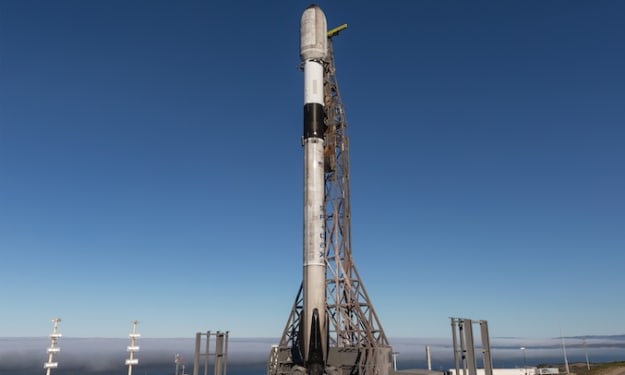
Every SpaceX rocket launch carries more than just payloads into orbit—it carries ambition, experimentation, and a vision of a future where space is no longer unreachable. Founded by Elon Musk in 2002, SpaceX has steadily transformed from a bold startup into one of the most influential aerospace companies in history. Each launch represents another step toward redefining how humanity explores space, communicates across the globe, and imagines life beyond Earth. The Meaning Behind a SpaceX Launch A SpaceX rocket launch is not simply a technical event. It is the result of years of engineering, testing, and problem-solving. From the early Falcon 1 attempts to the now-reliable Falcon 9 and Falcon Heavy missions, SpaceX has focused on one core principle: reusability. This approach has fundamentally changed the economics of spaceflight. Traditional rockets were designed to be used once, making every launch extremely expensive. SpaceX challenged that model by developing rockets that can return to Earth, land vertically, and be flown again. When a Falcon 9 booster touches down on a droneship or landing pad, it marks not just a successful mission, but a proof of concept that spaceflight can be sustainable and repeatable. Falcon 9: The Workhorse of Modern Spaceflight Most SpaceX rocket launches today involve the Falcon 9, a two-stage rocket designed for reliability and efficiency. It has become the backbone of commercial satellite launches, government missions, and cargo resupply trips to the International Space Station (ISS). A typical Falcon 9 launch follows a carefully choreographed sequence. After liftoff, the first stage separates and begins its journey back to Earth, while the second stage continues carrying the payload into orbit. Watching the booster descend through the atmosphere and land upright has become iconic, but it is still a remarkable engineering achievement. These launches often deploy Starlink satellites, part of SpaceX’s effort to provide global internet coverage. For many viewers, a SpaceX rocket launch is their first glimpse into how space technology directly impacts daily life on Earth. Human Spaceflight and the Crew Dragon Era One of the most significant milestones in SpaceX history came with the successful launch of astronauts aboard the Crew Dragon spacecraft. This achievement restored the United States’ ability to launch humans into space from its own soil, ending years of reliance on foreign launch systems. Human-rated SpaceX rocket launches carry a different emotional weight. Every detail—from life support systems to escape mechanisms—is scrutinized to ensure astronaut safety. When a Crew Dragon lifts off, it symbolizes trust: trust in engineering, trust in innovation, and trust in a private company to handle missions once reserved exclusively for national space agencies. These launches have opened new possibilities for international collaboration and long-term space habitation. Starship: The Next Giant Leap While Falcon 9 dominates current missions, Starship represents SpaceX’s most ambitious project yet. Designed as a fully reusable super heavy-lift rocket, Starship is intended to carry humans and cargo to the Moon, Mars, and beyond. A Starship launch is experimental by nature. Test flights focus on learning through iteration—sometimes succeeding, sometimes failing, but always collecting valuable data. Unlike traditional programs that avoid public failure, SpaceX embraces transparency, broadcasting launches and setbacks alike. This approach has reshaped public perception of rocket development. Instead of polished perfection, audiences witness real engineering in progress, complete with challenges and breakthroughs. Why SpaceX Launches Capture Global Attention SpaceX rocket launches attract millions of viewers worldwide, not just because of the technology, but because of what they represent. They remind people that exploration is still alive in the modern world. In an era dominated by digital experiences, watching a rocket break free from Earth’s gravity feels profoundly physical and inspiring. Social media, live streams, and public access have made these launches shared global events. Students, engineers, and casual observers alike tune in, learning about orbital mechanics and rocket science along the way. SpaceX has also changed how people think about careers in science and engineering. For many young viewers, a SpaceX launch is the moment that sparks curiosity and ambition. The Broader Impact on the Space Industry Beyond individual missions, SpaceX rocket launches have forced the aerospace industry to evolve. Lower launch costs and faster turnaround times have encouraged innovation across the sector. Competitors and national agencies alike have begun adopting reusable technology and more agile development methods. This shift benefits scientific research, Earth observation, and communication networks. It also lays the groundwork for future exploration missions that were once considered financially unrealistic. Looking Ahead As SpaceX continues launching rockets at an unprecedented pace, the question is no longer whether spaceflight can be routine, but how far it can take us. Future launches will likely support lunar bases, Mars missions, and expanded satellite networks that connect even the most remote parts of the planet. Each SpaceX rocket launch builds on the last, forming a continuous story of progress. It is a story still being written—one that blends risk, innovation, and a deeply human desire to explore the unknown. In watching these rockets rise into the sky, we are reminded that the boundaries of possibility are not fixed. They are meant to be challenged, tested, and ultimately surpassed.
By Saboor Brohi about 3 hours ago in Longevity



Comments
There are no comments for this story
Be the first to respond and start the conversation.