
North America Biotechnology Market Size and Forecast 2025–2033: Innovation, Investments & the Future of Precision Science
How research funding, genomic breakthroughs, and cross-sector adoption are shaping a US$ 1.59 trillion biotechnology powerhouse.


Introduction
The biotechnology revolution is accelerating across North America, reshaping healthcare, agriculture, energy, and industrial processing. According to Renub Research, the North America Biotechnology Market is expected to reach US$ 1,592.68 billion by 2033, rising from US$ 532.72 billion in 2024, at a powerful CAGR of 12.94% during 2025–2033. This remarkable growth trajectory reflects the region’s unmatched R&D capabilities, an expanding genomic science ecosystem, rising demand for precision medicine, and aggressive government and private-sector investment into next-generation biological innovation.
Beyond its scientific depth, biotechnology is emerging as a cornerstone of economic expansion, environmental sustainability, disease management, and industrial transformation. From gene therapies and regenerative medicine to biofuels, synthetic biology, and climate-resilient agriculture, North America’s biotechnology industry is becoming a global benchmark for innovation and commercialization.
This feature explores the market's evolution, growth drivers, challenges, major regional trends, and the latest developments shaping its future through 2033.
North America Biotechnology Market Overview
Biotechnology integrates biological systems, living organisms, and cellular processes to develop products that improve human health, yield better crops, create sustainable materials, and protect the environment. This fusion of biology and technology supports an extraordinary range of applications:
Biopharmaceuticals & Vaccines
Genetically Modified (GM) Crops and Agri-Biotech Solutions
Industrial Biotech for Enzymes, Biofuels & Biopolymers
Environmental Biotechnology for Pollution Control
Gene Editing & Synthetic Biology
In North America, these technologies are amplified by world-class R&D infrastructure, strong funding ecosystems, leading universities, and a thriving network of biotech startups and pharmaceutical giants.
The region benefits from a robust healthcare market, rapid technological adoption, favorable government policies, and extensive private-sector collaborations. With biotech firms increasingly targeting multi-omics technologies, precision healthcare, industrial automation, and sustainable biological manufacturing, the market continues to expand into new commercial frontiers.
Key Growth Drivers of the North America Biotechnology Market
1. Expanding Cross-Sector Applications
Biotechnology in North America has moved far beyond its initial medical focus and now powers industrial, agricultural, and environmental innovation.
Healthcare & Life Sciences
Precision therapeutics
Gene and cell therapy
Diagnostic biomarkers
Regenerative medicine
mRNA vaccine pipelines
Agriculture & Food Systems
GM crops for pest resistance and climate resilience
High-yield seed technologies
Biotechnology-driven sustainable farming inputs
Industrial & Environmental Biotechnology
Biodegradable plastics
Enzyme-based industrial processes
Bioremediation and waste-to-energy solutions
Biofuel and renewable chemical production
The integration of synthetic biology, AI-based biological design, and advanced computational modeling is enabling customized biological systems. This cross-sector versatility ensures the biotechnology industry remains a central pillar of North America’s innovation economy.
2. Rising Demand for Personalized Medicine
Personalized medicine—targeted treatments designed around an individual’s genetics, behavior, and environment—is rapidly gaining adoption in the United States and Canada.
Breakthroughs in genomics and molecular diagnostics now allow clinicians to:
Identify genetic mutations
Detect disease risk earlier
Tailor drug therapies based on genetic profiles
Reduce trial-and-error prescribing in chronic diseases
The declining costs of whole-genome sequencing—from thousands of dollars to under $200—are making personalized healthcare more accessible. Biotech companies are responding with:
Targeted biologics
Gene therapies
Companion diagnostics
Precision oncology solutions
The rise of hereditary disease testing, pharmacogenomics, and chronic condition management is expected to generate billions in new biotech revenue over the forecast period.
3. Advancements in Genomic and Proteomic Technologies
North America leads the world in genomic and proteomic science, driven by:
Next-Generation Sequencing (NGS)
CRISPR-Cas9 gene editing
Multi-omics platforms combining proteomics, metabolomics, and transcriptomics
Bioinformatics and AI-enabled biomarker discovery
These breakthroughs support drug development, predictive diagnostics, and precision therapy at unprecedented speed.
A notable development occurred in July 2023, when Alexion and AstraZeneca Rare Disease partnered with Pfizer to acquire preclinical gene therapy assets, reflecting the growing demand for genomic-based therapeutics.
Enhanced protein mapping technologies are also enabling pharmaceutical companies to develop more effective biologics and monoclonal antibodies. The integration of proteomics into early-stage R&D is revolutionizing how diseases are understood at the molecular level.
Challenges Facing the North America Biotechnology Market
Despite its upward momentum, the biotechnology sector faces several systemic challenges.
1. High R&D Costs
Biotechnology innovation is incredibly capital-intensive. Bringing a new biopharmaceutical therapy to market can cost:
Over US$ 1–2 billion
Up to 10–15 years of development
Extensive regulatory requirements
Smaller biotech startups often struggle to sustain long-term R&D cycles without venture funding, partnerships, or acquisition by large pharmaceutical companies. High failure rates in clinical trials further intensify financial risk.
2. Regulatory Hurdles
The U.S. FDA, Health Canada, and other agencies enforce strict guidelines for:
Clinical trials
Biosafety
Genetic engineering
Manufacturing quality controls
Post-market surveillance
While these regulations protect public health, they can significantly delay product approvals and increase operational costs.
Additionally, regulatory differences between the U.S., Canada, and Mexico complicate cross-border commercialization. For emerging fields like gene editing and synthetic biology, evolving regulatory frameworks create further uncertainty.
United States Biotechnology Market Insights
The United States is the world’s largest and most advanced biotechnology market, powered by:
Unmatched R&D spending
Hundreds of biotech startups and unicorns
Elite research institutions (Harvard, MIT, Stanford, NIH)
Strong collaboration between academia and industry
A maturing precision medicine ecosystem
Robust venture capital investment
Biopharmaceuticals, genomic medicine, and industrial biotechnology are leading growth segments. Strategic partnerships, acquisitions, and multibillion-dollar pipeline expansions continue to shape the U.S. biotech landscape.
However, the market still faces:
Intense competition
Complex regulatory pathways
High R&D attrition rates
Despite these challenges, the United States is expected to remain a global biotechnology leader through 2033 and beyond.
Canada Biotechnology Market Insights
Canada’s biotechnology sector is expanding steadily, supported by:
Government grants
Tax incentives
A growing network of research centers
Skilled biomanufacturing talent
Key focus areas include:
Regenerative medicine
Biopharmaceutical production
Agricultural biotechnology
Sustainable industrial biotech
Genomics and proteomics
Canada is also emerging as a destination for biotech clinical trials and contract biomanufacturing. While limited funding compared to the U.S. and challenges in talent retention persist, Canada remains well-positioned for growth in precision medicine and sustainable biotech innovation.
Recent Developments Transforming the North America Biotechnology Market
North America is witnessing a wave of landmark investments, partnerships, and acquisitions:
2025 Developments
Eli Lilly acquired Verve Therapeutics for US$ 1.3 billion (June 2025) to enhance its gene-editing portfolio.
Illumina completed a US$ 425 million acquisition of SomaLogic, expanding its proteomics and multi-omic analytics capabilities.
Novartis announced a US$ 23 billion investment across five years to strengthen its U.S. biologics manufacturing and R&D footprint, including seven new facilities.
Amgen added US$ 900 million to its Ohio manufacturing expansion, taking total investment to US$ 1.4 billion.
Roche launched the Roche Genentech Innovation Center Boston, specializing in AI-driven drug discovery and CVRM diseases.
2023 Developments
Gilead Sciences partnered with Assembly Biosciences to develop innovative antiviral therapies.
Bertis Bioscience launched its Pan-omics Analysis Service in the U.S., advancing biomarker discovery and clinical research using AI and multi-omics platforms.
These activities underscore the region’s commitment to staying at the forefront of biotechnology research, production, and commercialization.
Market Segmentation
By Product Type
Instruments
Reagents
Software & Services
By Technology
Nanobiotechnology
Tissue Engineering & Regeneration
DNA Sequencing
Cell-Based Assays
Fermentation
PCR Technology
Chromatography
Others
By Application
Healthcare
Food & Agriculture
Natural Resources & Environment
Industrial Processing
Bioinformatics
Others
By Country
United States
Canada
Key Players in the North America Biotechnology Market
The region is home to world-leading biotechnology powerhouses, including:
Lonza Group AG
Amgen Inc.
Syngenta AG
Biocon Limited
Biogen Inc.
F. Hoffmann-La Roche AG
Novartis AG
Novo Nordisk A/S
Pfizer Inc.
Seagen Inc.
These companies continue to shape the competitive landscape through strong product pipelines, strategic acquisitions, and innovations in biologics, vaccines, enzyme technologies, and genomic medicine.
Final Thoughts
Biotechnology is not just a scientific discipline—it is emerging as the backbone of North America’s future economic, environmental, and healthcare systems. With the market expected to reach US$ 1.59 trillion by 2033, biotechnology is poised to influence nearly every aspect of modern life, from disease prevention to sustainable manufacturing and global food security.
Continued breakthroughs in genomics, proteomics, AI-driven drug discovery, and personalized medicine will define the next decade of growth. Meanwhile, aggressive investments by leading biotech firms and supportive government policies ensure the region remains a global biotechnology powerhouse.
As the industry evolves, North America is setting new global standards for innovation, commercialization, and scientific excellence—charting a path toward a more sustainable, healthier, and technologically advanced future.
About the Creator
Janine Root
Janine Root is a skilled content writer with a passion for creating engaging, informative, and SEO-optimized content. She excels in crafting compelling narratives that resonate with audiences and drive results.
Keep reading
More stories from Janine Root and writers in Longevity and other communities.
North America Hempcrete Market Size and Forecast 2025–2033
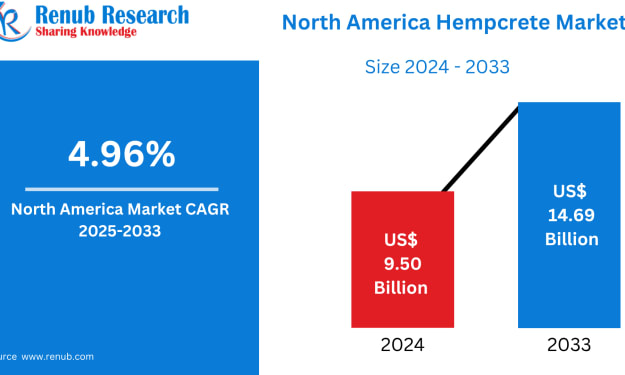
The North America Hempcrete Market is expected to reach US$ 14.69 billion by 2033, up from US$ 9.50 billion in 2024, exhibiting a CAGR of 4.96% from 2025 to 2033, according to Renub Research. Growing demand for sustainable construction materials, shifting regulatory landscapes, and a rising commitment to low-carbon building solutions are accelerating the adoption of hempcrete across the region.
By Janine Root 2 months ago in Longevity
Day 4 of Quitting
If this is how sobriety feels, maybe it’s better to go through life a little buzzed… this, along with other hits like, I want to kill myself, I wish I was dead, and I’m going to throw myself off a bridge have been the only thoughts on rotation these past few days. I promise myself that if, in a month, I still feel like this (‘this’ meaning despondent, full of rage, and simultaneously numb) I can go back to smoking. Until mid-February though? Nicotine is off the table.
By sleepy drafts5 days ago in Longevity
Bruce Lee and The God of War: Kuan Ti
It starts with love.. The Power to the God Of War and Wealth Walk into a Chinese restaurant (even in Oklahoma, USA), a Chinese police station, a kung fu martial arts studio or even a Chinese temple and you often see a red faced warrior holding a heavy quan-do (spear like weapon).
By WILD WAYNE : The Dragon King5 days ago in Chapters


Comments
There are no comments for this story
Be the first to respond and start the conversation.