
My Mantra Playlist
The Transformative Magic of Chanting

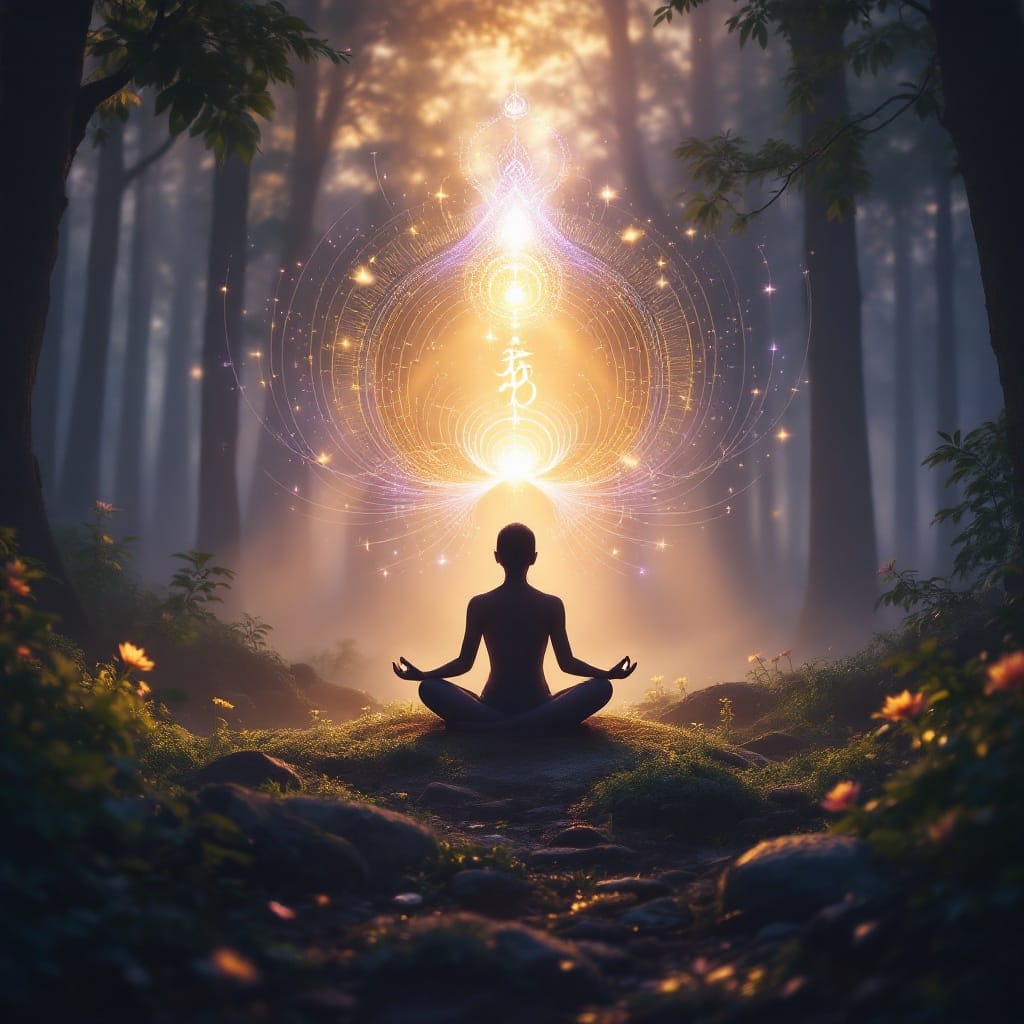
The Power of Mantra
When my husband and I first started meditating, some friends and family joked about whether we were dancing around chanting, evoking images of Hare Krishnas in airports. At the time, our understanding of meditation was limited to guided or silent practices. However, as we explored different methods, we discovered a whole new world of mantra meditation—a practice that surprised and deeply resonated with us.
My husband, the jokester that he is, once shared a playful "mantra" with our daughter, who was actually the first in our family to meditate with mantras. His mantra? Owa-Ta-Go-Siam. When you say it fast enough, it becomes “Oh, what a goose I am.” This playful attitude reflected the lighthearted skepticism with which he approached meditation at first—but over time, even he came to appreciate the deeper, transformative power of true mantras.
One of the most unexpected discoveries for me was the cathartic power of chanting. There were moments when I felt so close to God—something I never anticipated. The word mantra comes from two Sanskrit roots: manas (mind) and tra (tool), meaning "mind-tool." It is a powerful sound vibration that helps clear the chaos from our minds. By focusing on a mantra, we can cut through mental noise and access a deeper state of meditation.
Mantras are more than just words or sounds; they serve as guides to channel our thoughts with intention. They help us connect with inner peace and clarity. I love turning to mantras during everyday chores, whether I’m washing dishes or folding laundry.
To help you explore the power of mantra, I’ve put together a playlist of some of my favorites. Each mantra carries its own unique energy and purpose, and I hope they inspire and uplift you on your journey.
Ra Ma Da Sa So Se So Hung - Prashanti Paz
A powerful mantra used in Kundalini Yoga, Ra Ma Da Sa So Se So Hung is one of my favorites to chant along with, especially during Prashanti Paz's 21-Day Mantra: Journey to Happiness course on Insight Timer. It was one of the first mantras I learned, and its ease of pronunciation and melody made it stick with me.
- Ra: Sun - energy, vitality
- Ma: Moon - receptivity, nurturing
- Da: Earth - grounding, stability
- Sa: Infinity - beyond limitations
- So Hung: The state of complete union with the divine
This mantra balances and harmonizes body, mind, and spirit, creating a profound connection to the infinite and a sense of inner peace.
OM MANI PADME HUNG - Yoga with Sacha
This famous Tibetan Buddhist mantra symbolizes the union of method and wisdom, guiding practitioners toward enlightenment. It is associated with compassion, peace, and harmony, and is believed to transform impure body, speech, and mind into those of a Buddha while fostering a loving awareness of reality.
- Om: Represents the essence of the universe.
- Mani: "Jewel," symbolizing compassion and the intention to become enlightened.
- Padme: "Lotus," representing wisdom and purity.
- Hum: Indivisibility and the spirit of enlightenment.
This one is a personal favorite which I have chanted on many a walk with the dogs. Meaning “I am the jewel in the heart of the lotus,” it is a meditative gem.
Hum Dhum Har Har - Mirabai Ceiba
This soothing mantra beautifully bridges the connection between the inner and outer divine, fostering unity with the cosmic energy and opening the heart chakra. It serves as a reminder of the divine presence both within and around us.
- Hum: Represents the individual soul, the inner divine, or God within oneself.
- Dhum: Symbolizes the universal consciousness, the outer divine, or God in the universe.
- Har Har: Refers to the creative power of the universe, a sacred name for God.
Chanting Hum Dhum Har Har harmonizes the connection between the self and the cosmos, encouraging a deeper sense of oneness and awakening the heart to divine love and creativity.
Lokah Samastah Sukhino Bhavantu - Prashanti Paz
As we explored more complex mantras, we embraced the challenge and uncovered deeply meaningful chants like this one. Lokah Samastah Sukhino Bhavantu is a Sanskrit mantra that translates to “May all beings everywhere be happy and free.” You may have heard it chanted in a yoga class, as it is a powerful invocation of peace and global well-being.
- Lokah: Refers to "universe," "realm," or "location."
- Samastah: Encompasses "all beings."
- Sukhino: Expresses "happiness, joy, and freedom from suffering."
- Bhavantu: Invokes "may everyone."
This mantra reminds us to think globally and wish for happiness and freedom for all beings. It serves as a reflection of our interconnectedness with the universe and our ability to positively impact all of creation.
Har Har Mukanday - Prashanti Paz
This beautiful mantra holds transformative power, turning challenges into opportunities, removing fear, and inspiring courage to follow your heart. An energizing meditation, it’s ideal for starting your day with confidence and radiance.
- Har Har Mukanday is a Kundalini yoga mantra that liberates you from whatever blocks or holds you back.
- Har: The root word for Hari, a divine name for God, and Hara, meaning “destroyer” or “remover.”
- Mukanday: Represents the liberating aspect of the Self, freeing us from limitations.
Chanting this mantra helps clear obstacles, empowering you to manifest your true potential and embrace a fearless, radiant life.
Om Tare Tuttare Ture Soha
This powerful mantra, central to Tibetan Buddhism, invokes Green Tara, the embodiment of compassion and action.
- Om: Represents Tara’s sacred body, speech, and mind.
- Tare: Liberates us from all discontent.
- Tuttare: Frees us from the eight fears, including external dangers and internal delusions.
- Ture: Liberates us from duality, guiding us to clarity and the cessation of confusion.
- Soha: Anchors the mantra’s blessings in our minds.
Chanting this mantra is believed to eliminate diseases, troubles, disasters, and karma while bringing blessings, longevity, and the wisdom to transcend the cycle of reincarnation.
The Sacred Significance of 108 Repetitions
In spiritual traditions, repeating a mantra 108 times aligns with cosmic cycles and is considered sacred, symbolizing universal harmony and interconnectedness. This practice enhances spiritual growth by deepening focus and activating energy channels within the body.
- Cosmic Alignment - The distance between the Earth and the Sun or Moon is roughly 108 times their respective diameters, making 108 a symbol of universal harmony.
- Chakra Activation - Yogic tradition holds that 108 energy lines converge at the heart chakra, and chanting 108 times helps activate these energy points.
- Intensified Focus - Repetition of a mantra 108 times fosters deep concentration and connection to its vibrational energy.
- Purification and Transformation - This practice is believed to cleanse negative energies and mental blockages, promoting inner peace and spiritual growth.
Each repetition is a step toward deeper connection, purification, and self-realization.
Embrace the Power of Mantra
Mantras have this amazing way of calming your mind, lifting your spirit, and connecting you to something bigger. For me, they’ve been cathartic and transformative—sometimes even bringing me closer to God.
Dive Into the Vibration
Check out the playlist, try chanting along, or just listen to the vibrations. Don’t worry if you feel silly at first—we did too! But trust me, that fades quickly. Start with a mantra that is easy and you enjoy reciting. You might be surprised when you find yourself humming or singing a mantra. Enjoy where it takes you!
About the Creator
Xine Segalas
"This is my art - and it's dangerous!" Okay, maybe not so dangerous, but it could be - if - when I am in a mood.
Keep reading
More stories from Xine Segalas and writers in Longevity and other communities.
After the warmest weather of the year so far, is winter finally over?
As much of the Northern Hemisphere basks in unseasonably warm temperatures, many are asking whether winter is truly coming to an end or if this is merely a brief interlude before the chill returns. Meteorologists note that while recent weeks have brought record-breaking warmth in several regions, the seasonal transition is more nuanced, and forecasts suggest that cold snaps may still make surprise appearances. Across parts of North America, Europe, and Asia, thermometers have consistently recorded temperatures above seasonal averages. In cities like New York City, Paris, and Beijing, residents have reported unusually mild weather, prompting early sightings of blooming flowers and active wildlife that typically emerge later in the season. Local authorities have even issued advisories for heat-sensitive infrastructure, such as early melting of snow and ice causing minor flooding in some urban areas. Climatologists emphasize that while short-term warmth can feel like the end of winter, it does not necessarily indicate a permanent shift. “Weather and climate are distinct concepts,” said Dr. Hannah Moore, a meteorologist at the National Weather Service. “A week or two of warm temperatures is a weather event. Winter, defined by astronomical and climatological markers, continues until the official seasonal end.” The current warm spell has been linked to several atmospheric phenomena. A persistent high-pressure system has settled over large portions of the Northern Hemisphere, drawing in warmer air from lower latitudes. At the same time, shifts in the jet stream have allowed cold Arctic air to remain farther north than usual, creating a pocket of warmth at mid-latitudes. While such patterns often produce temporary spikes in temperature, they do not necessarily mark the end of the season. Unseasonably warm conditions have significant ecological and societal impacts. Early thawing of snowpacks in mountainous regions increases the risk of spring flooding. Wildlife, particularly migratory birds and hibernating mammals, may be confused by inconsistent cues from the environment, affecting feeding and breeding patterns. Agricultural communities are also on alert, as early warmth can prompt premature growth of crops, leaving them vulnerable to potential late frosts. Despite the optimism brought by sunshine and mild days, experts caution that winter is not officially over until astronomical markers, such as the vernal equinox, are reached. Moreover, historical climate data shows that sudden cold snaps in March and even early April are not uncommon. For instance, a notable late-season cold wave in 2018 caused widespread frost damage across parts of Europe and North America, highlighting the unpredictable nature of transitional seasons. The psychological effects of early warmth are also notable. Residents often report a boost in mood and increased outdoor activity, reflecting the strong link between sunlight and human well-being. Cities have seen a surge in park attendance, cycling, and other recreational pursuits. However, meteorologists urge caution: the allure of warm weather should not lead to underestimating potential residual winter hazards, such as icy patches on roads or sudden snow flurries. Climate change adds another layer of complexity. While seasonal averages are gradually shifting upward globally, the variability from year to year remains significant. Scientists warn that interpreting a single warm spell as a permanent end to winter is misleading. Instead, it should be seen as part of broader patterns of climate variability, including more frequent temperature extremes and unusual weather events. In conclusion, while recent warmth may feel like the curtain call for winter, it is too early to declare the season officially over. Atmospheric patterns, historical precedent, and the persistence of cold pockets all suggest that winter can still make intermittent returns. For now, residents can enjoy the sunny reprieve but should remain prepared for sudden chills. Seasonal transitions are rarely linear, and this early taste of spring may merely be a preview of the warmth to come rather than a definitive end to winter’s reign.
By Fiaz Ahmed 2 days ago in Longevity
The impact of sleep on our mental state
Introduction Sleep is a critical pillar of our daily lives, yet it’s often treated as an afterthought. While comfort and personal preference matter, the idea that we should just sleep “whenever and however” is a trap. To truly function at your peak, you need more than just rest — you need a disciplined strategy. It sounds harsh and at first, if you are used to staying up all night and not paying attention to your mental and physical health, it might seem impossible. However, great things do require some small sacrifices, so let us begin with the three tips.
By Charilaos Spanoudis5 days ago in Longevity
REEEEEEEEE!
I'm on a low road right now. There are a literal million things to do and not one of them worth my time. I would rather sit in place and burn but the orbit takes me on its inevitable route 'round the center; and I a center in my own right, around which others orbit, and so on and so forth, ad infinitum, ad nauseum.
By C. Rommial Butlera day ago in Poets



Comments (3)
Great playlist! I will add to mine!
Great! Thank you!😊💕💗
💙