
My Husband Only Got His Prostate Checked After I Made Him Listen to a Podcast. It Saved His Life
How a simple podcast prompted a life-saving prostate screening and transformed one family’s approach to men’s health."


It’s funny how life sometimes hinges on the smallest nudges. For years, my husband, like so many men I know, had avoided routine medical checkups. He would joke about doctors being “too pessimistic” or claim he was “fine” despite occasional aches and fatigue. I, on the other hand, had become increasingly aware of health issues men face silently—especially prostate cancer. I knew the statistics, the risks, and the often late diagnoses, but my words alone were not enough to persuade him.
Then, one evening, I stumbled across a podcast episode that changed everything. The episode was hosted by a urologist who discussed early detection of prostate cancer in men over 50, highlighting personal stories of survival and the importance of proactive health checks. I handed my husband my phone and told him, “Just listen to this one episode. Please.”
At first, he rolled his eyes and muttered under his breath, but something about the way the stories were told—the real human experiences of men facing life-threatening diagnoses—caught his attention. By the end of the episode, he looked at me with a rare seriousness. “Maybe I should get it checked,” he said. And that was the moment I realized a small push, framed in the right way, can make all the difference.
Within a week, he scheduled his first prostate screening. I held my breath, trying to remain calm while a storm of thoughts ran through my mind: What if the tests revealed something serious? Could it be too late? I reminded myself that early detection was key.
When the results came back, our world shifted. He had a small tumor, caught in the earliest stage—something that, without this nudge, could have gone unnoticed until it was far too late. The doctor reassured us that the cancer was highly treatable and that with proper intervention, his prognosis was excellent.
The experience left me in awe of how something as simple as a podcast could save a life. It wasn’t just the medical facts; it was the power of storytelling, the ability to connect with someone emotionally and make a long-term impact on their health choices. In hindsight, I realize that men often respond better to indirect encouragement rather than direct admonitions. I could have lectured him for years, but a story, carefully told, created a moment of self-reflection and action.
This experience also opened my eyes to a broader issue: men’s health often gets ignored. Prostate cancer is one of the most common cancers among men, yet many avoid regular screenings due to fear, stigma, or a misplaced sense of invincibility. Awareness campaigns exist, but personal stories—shared via podcasts, articles, or videos—can have an even stronger effect because they humanize statistics. They create empathy and a sense of urgency without sounding like a warning.
It’s not just about men over 50, either. My husband’s case reminded me that early detection matters at every age. Routine checkups, blood tests, and screenings are tools of empowerment, not panic. By prioritizing health and normalizing conversations around potentially life-threatening conditions, families can support each other in ways that statistics alone cannot convey.
Looking back, I’m incredibly grateful for that podcast and the moment it created. I think about the thousands of men who might ignore symptoms or postpone checkups for years. A story, a gentle push, or a shared experience could be the catalyst they need to take action. Health isn’t just a personal responsibility—it’s often a communal effort, fueled by encouragement, shared knowledge, and sometimes a little persistence.
My husband’s journey has transformed both of us. He now takes his health seriously, schedules regular screenings, and even talks openly to friends about his experience. I hope our story can inspire others to find creative ways to communicate about men’s health. Sometimes, saving a life doesn’t require confrontation or fear—it requires patience, persistence, and, occasionally, a podcast episode that resonates.
In the end, what seemed like a small, almost trivial intervention turned into a life-saving moment. It reminds me that we often underestimate the power of information delivered in the right way. And for my husband, it wasn’t just a medical test—it was a second chance at life.
About the Creator
Fiaz Ahmed Brohi
I am a passionate writer with a love for exploring and creating content on trending topics. Always curious, always sharing stories that engage and inspire.
Keep reading
More stories from Fiaz Ahmed Brohi and writers in Longevity and other communities.
5 Best Aircraft Carriers in the World for 2026, Ranked
Aircraft carriers are among the most powerful symbols of naval strength, representing a nation’s ability to project military power across the globe. As technology advances and maritime strategy evolves, the world’s most formidable carriers continue to push the limits of speed, stealth, and firepower. For 2026, we’ve ranked the five best aircraft carriers in the world, considering factors such as size, technology, operational capabilities, and global influence. 1. USS Gerald R. Ford (CVN-78) – United States The USS Gerald R. Ford-class carrier is the most advanced aircraft carrier in the U.S. Navy and arguably the world. Commissioned in 2017, the ship incorporates cutting-edge technology that revolutionizes naval aviation. Its electromagnetic aircraft launch system (EMALS) allows for faster, more efficient launches compared to traditional steam catapults. Additionally, the Ford-class features advanced radar systems, increased sortie rates, and a redesigned flight deck that enhances operational efficiency. With a length of 1,106 feet and a displacement of over 100,000 tons, the Gerald R. Ford carries around 75 aircraft, including the F/A-18E/F Super Hornet and the F-35C Lightning II. Its nuclear propulsion provides virtually unlimited range, ensuring the U.S. maintains unrivaled power projection across the oceans. For 2026, it remains the top aircraft carrier due to its technological superiority and unmatched operational flexibility. 2. HMS Queen Elizabeth – United Kingdom The HMS Queen Elizabeth is the pride of the Royal Navy, representing Britain’s return to carrier strike group prominence. At 65,000 tons, it is the largest warship ever built for the United Kingdom and can carry up to 40 aircraft, including the F-35B Lightning II. Its design prioritizes versatility, allowing it to launch helicopters for anti-submarine operations, UAVs for reconnaissance, and fighter jets for air superiority missions. The Queen Elizabeth-class carriers are central to the UK’s strategy of maintaining a credible global presence. Their ability to operate in joint missions with NATO allies makes them a crucial asset in European security, particularly given rising tensions in Eastern Europe and the Middle East. 3. Charles de Gaulle (R91) – France France’s only nuclear-powered aircraft carrier, Charles de Gaulle, is the centerpiece of the French Navy. Commissioned in 2001, the ship can carry up to 40 aircraft, including Rafale M fighters and E-2C Hawkeye early warning aircraft. Its nuclear propulsion allows for long deployments without refueling, providing France with an independent global strike capability. Charles de Gaulle has participated in multiple NATO operations, anti-terror missions, and humanitarian interventions, showcasing its versatility. For 2026, the carrier continues to be vital for France’s military diplomacy and power projection in the Mediterranean, North Africa, and beyond. 4. Liaoning (16) – China The Liaoning is China’s first operational aircraft carrier and represents a significant leap in its naval capabilities. Commissioned in 2012, it is a refurbished Soviet-era vessel transformed into a modern carrier with a displacement of 60,000 tons and a capacity for 40 aircraft. China uses the Liaoning primarily for training and strategic deterrence, but it has also played a role in power projection in the South China Sea. China’s ambitious carrier development plan includes more advanced vessels like the Shandong and the Fujian, but the Liaoning remains a symbol of China’s growing maritime influence. Its inclusion in the top five highlights the country’s increasing role in global naval dynamics.
By Fiaz Ahmed Brohi14 days ago in Longevity
Day 4 of Quitting
If this is how sobriety feels, maybe it’s better to go through life a little buzzed… this, along with other hits like, I want to kill myself, I wish I was dead, and I’m going to throw myself off a bridge have been the only thoughts on rotation these past few days. I promise myself that if, in a month, I still feel like this (‘this’ meaning despondent, full of rage, and simultaneously numb) I can go back to smoking. Until mid-February though? Nicotine is off the table.
By sleepy drafts11 days ago in Longevity
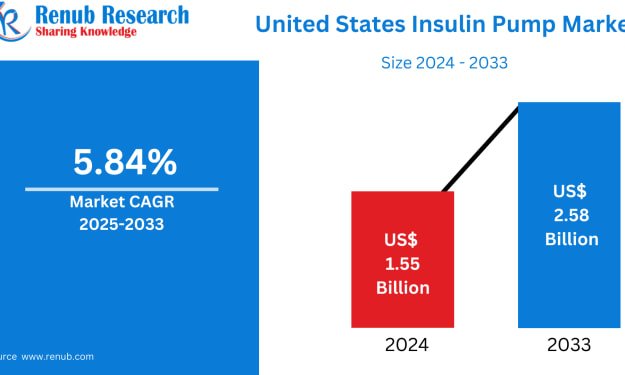
United States Insulin Pump Market Size and Forecast 2025–2033
Introduction Diabetes continues to be one of the most widespread chronic diseases in the United States, affecting millions of people across all age groups. With the growing emphasis on precision medicine, patient convenience, and digital healthcare integration, insulin delivery technologies are undergoing a major transformation. Among these innovations, insulin pumps have emerged as a cornerstone in modern diabetes management.
By jaiklin Fanandish2 days ago in Longevity



Comments
There are no comments for this story
Be the first to respond and start the conversation.