
5 Best Aircraft Carriers in the World for 2026, Ranked
Power, Technology, and Strategy: Ranking the World’s Most Advanced Aircraft Carriers in 2026"

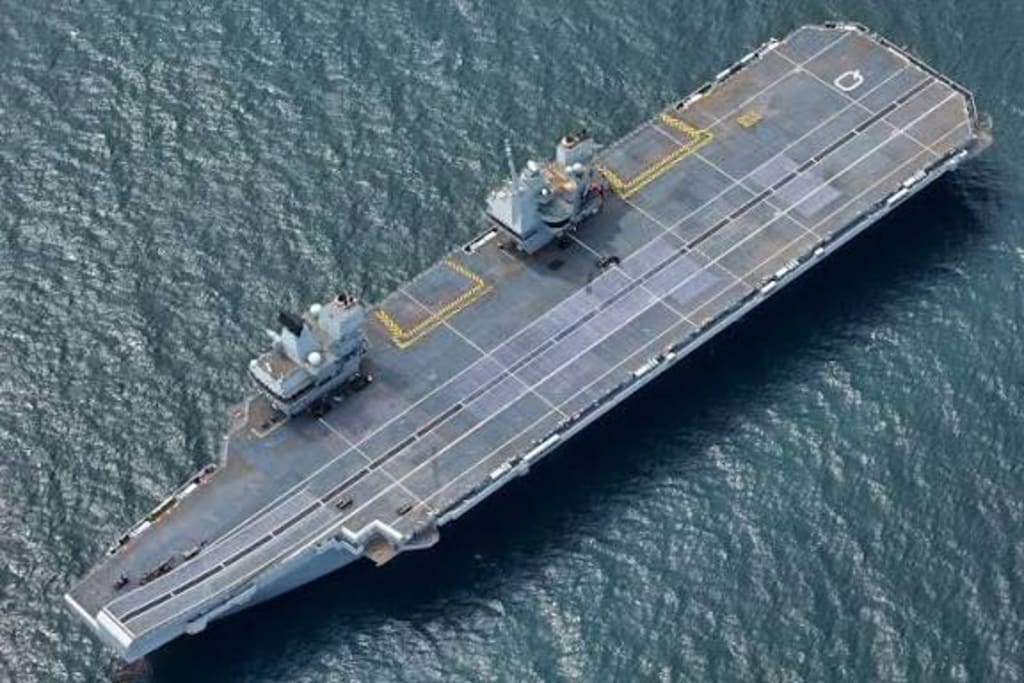
Aircraft carriers are among the most powerful symbols of naval strength, representing a nation’s ability to project military power across the globe. As technology advances and maritime strategy evolves, the world’s most formidable carriers continue to push the limits of speed, stealth, and firepower. For 2026, we’ve ranked the five best aircraft carriers in the world, considering factors such as size, technology, operational capabilities, and global influence.
1. USS Gerald R. Ford (CVN-78) – United States
The USS Gerald R. Ford-class carrier is the most advanced aircraft carrier in the U.S. Navy and arguably the world. Commissioned in 2017, the ship incorporates cutting-edge technology that revolutionizes naval aviation. Its electromagnetic aircraft launch system (EMALS) allows for faster, more efficient launches compared to traditional steam catapults. Additionally, the Ford-class features advanced radar systems, increased sortie rates, and a redesigned flight deck that enhances operational efficiency.
With a length of 1,106 feet and a displacement of over 100,000 tons, the Gerald R. Ford carries around 75 aircraft, including the F/A-18E/F Super Hornet and the F-35C Lightning II. Its nuclear propulsion provides virtually unlimited range, ensuring the U.S. maintains unrivaled power projection across the oceans. For 2026, it remains the top aircraft carrier due to its technological superiority and unmatched operational flexibility.
2. HMS Queen Elizabeth – United Kingdom
The HMS Queen Elizabeth is the pride of the Royal Navy, representing Britain’s return to carrier strike group prominence. At 65,000 tons, it is the largest warship ever built for the United Kingdom and can carry up to 40 aircraft, including the F-35B Lightning II. Its design prioritizes versatility, allowing it to launch helicopters for anti-submarine operations, UAVs for reconnaissance, and fighter jets for air superiority missions.
The Queen Elizabeth-class carriers are central to the UK’s strategy of maintaining a credible global presence. Their ability to operate in joint missions with NATO allies makes them a crucial asset in European security, particularly given rising tensions in Eastern Europe and the Middle East.
3. Charles de Gaulle (R91) – France
France’s only nuclear-powered aircraft carrier, Charles de Gaulle, is the centerpiece of the French Navy. Commissioned in 2001, the ship can carry up to 40 aircraft, including Rafale M fighters and E-2C Hawkeye early warning aircraft. Its nuclear propulsion allows for long deployments without refueling, providing France with an independent global strike capability.
Charles de Gaulle has participated in multiple NATO operations, anti-terror missions, and humanitarian interventions, showcasing its versatility. For 2026, the carrier continues to be vital for France’s military diplomacy and power projection in the Mediterranean, North Africa, and beyond.
4. Liaoning (16) – China
The Liaoning is China’s first operational aircraft carrier and represents a significant leap in its naval capabilities. Commissioned in 2012, it is a refurbished Soviet-era vessel transformed into a modern carrier with a displacement of 60,000 tons and a capacity for 40 aircraft. China uses the Liaoning primarily for training and strategic deterrence, but it has also played a role in power projection in the South China Sea.
China’s ambitious carrier development plan includes more advanced vessels like the Shandong and the Fujian, but the Liaoning remains a symbol of China’s growing maritime influence. Its inclusion in the top five highlights the country’s increasing role in global naval dynamics.
5. Charles de Gaulle – France
France’s Charles de Gaulle is the only nuclear-powered aircraft carrier in Europe and serves as the centerpiece of the French Navy. At around 42,000 tons, it can carry up to 40 aircraft, including Rafale M fighters. Despite being commissioned in 2001, ongoing upgrades have kept it relevant in modern naval operations.
The Charles de Gaulle combines nuclear propulsion with advanced sensors and defensive systems, offering long-range operational endurance. It is frequently deployed for multinational exercises and crisis response missions, highlighting France’s commitment to maintaining a global naval presence.
Conclusion
Aircraft carriers are more than just ships—they are floating airbases, diplomatic symbols, and powerful deterrents. The five carriers listed above represent the current pinnacle of naval aviation, combining firepower, technology, and strategic versatility.
As nations continue to invest in carrier development, the next decade promises further innovation, including unmanned aircraft integration, enhanced missile defense systems, and stealth technologies. For now, the USS Gerald R. Ford, HMS Queen Elizabeth, Liaoning, INS Vikrant, and Charles de Gaulle stand as the elite carriers defining 2026’s naval landscape, each shaping global maritime strategy in its own way.
About the Creator
Fiaz Ahmed Brohi
I am a passionate writer with a love for exploring and creating content on trending topics. Always curious, always sharing stories that engage and inspire.
Keep reading
More stories from Fiaz Ahmed Brohi and writers in Longevity and other communities.
Most Significant Heatwave Since Black Summer to Blast Australia’s Southern States as Band of Hot Weather Moves East
Australia is bracing itself for what meteorologists are calling the most significant heatwave since the infamous Black Summer bushfires of 2019–2020. The southern states, including Victoria, South Australia, and New South Wales, are expected to experience extreme temperatures over the coming days as a band of hot weather moves eastward across the continent. Authorities are warning residents to take precautions as the nation faces not only soaring heat but also the heightened risk of wildfires, power outages, and health emergencies. The Scale of the Heatwave Experts describe the approaching heatwave as unusually intense, with temperatures expected to soar well above seasonal averages. Forecasts suggest that some regions could experience highs exceeding 45°C (113°F), a level of heat that can be life-threatening if adequate precautions are not taken. In comparison to previous years, this heatwave is notable for its intensity, rapid movement, and broad geographic coverage, affecting both urban centers and rural communities. Meteorologists point out that the heatwave is fueled by a combination of atmospheric pressure patterns, dry winds, and unusually warm sea surface temperatures. As the hot air mass moves eastward, it is likely to amplify existing drought conditions in several areas, leaving landscapes and communities more vulnerable to bushfires and water shortages. Impact on Southern States Victoria and South Australia are expected to bear the brunt of the heatwave. Authorities have issued multiple heat warnings and activated emergency response plans in anticipation of the extreme conditions. Public health officials are advising residents to remain indoors during peak temperatures, avoid strenuous activity, and ensure they stay hydrated. Vulnerable populations, such as the elderly, children, and those with pre-existing health conditions, are at particular risk. In New South Wales, the heatwave is predicted to sweep through major cities including Sydney and Canberra later in the week. Urban areas may face additional challenges due to the “urban heat island” effect, where concrete, asphalt, and buildings trap heat, making cities hotter than surrounding rural areas. Power grids are also likely to be strained as air conditioning use surges, increasing the risk of blackouts. Fire Danger Remains High The memory of Black Summer remains vivid in Australia, when devastating bushfires claimed lives, destroyed homes, and ravaged ecosystems. This heatwave has reignited concerns about fire risk across southern states. The combination of extremely dry vegetation, high temperatures, and strong winds creates ideal conditions for rapid fire spread. Fire authorities are on high alert, with resources pre-positioned to respond quickly to any outbreaks. Residents are being urged to prepare emergency plans, maintain defensible space around properties, and monitor official fire warnings closely. Any spark in these dry, hot conditions could escalate rapidly, leading to catastrophic consequences. Environmental and Health Concerns Beyond the immediate risk of fires, the heatwave poses serious health and environmental concerns. Heat-related illnesses, including dehydration, heatstroke, and heart complications, are expected to increase, particularly among at-risk populations. Hospitals and healthcare providers are preparing for a surge in heat-related admissions. Additionally, the heatwave could exacerbate existing drought conditions, impacting water supply and agricultural production. Crops, livestock, and ecosystems are all vulnerable to prolonged exposure to extreme temperatures, potentially affecting food security and local economies. Government Response and Precautions Australian authorities are mobilizing multiple agencies to mitigate the effects of the heatwave. Emergency services are coordinating with local governments to provide cooling centers, distribute water, and issue public safety alerts. Energy providers are preparing for increased electricity demand and implementing measures to prevent power outages. Public health campaigns are emphasizing the importance of hydration, limiting outdoor activity during peak heat, and checking on vulnerable neighbors. Communities are also encouraged to stay informed via official weather updates and local emergency services. Looking Ahead While extreme heat is a recurring phenomenon in Australia, scientists warn that the intensity and frequency of such events are increasing due to climate change. The current heatwave serves as a stark reminder of the ongoing challenges posed by a warming planet. Experts stress that long-term adaptation strategies—including improved infrastructure, better emergency planning, and public education—are critical to minimize the human, economic, and environmental costs of extreme heat events. As southern Australia prepares to face the hottest days in years, the coming week will test the resilience of communities, emergency services, and individuals alike. Staying alert, following official guidance, and taking proactive measures will be crucial in navigating this unprecedented heatwave safely.
By Fiaz Ahmed Brohi2 months ago in Longevity


Comments
There are no comments for this story
Be the first to respond and start the conversation.