
Molecular Diagnostics Market Trends & Summary
A Rapidly Evolving Industry Powering Precision Medicine and Early Disease Detection


The global molecular diagnostics market has entered a transformative growth phase driven by technological breakthroughs, rising disease burden, and the accelerating shift toward personalized medicine. According to Renub Research, the market reached USD 16.43 billion in 2024 and is projected to rise to USD 28.83 billion by 2033, growing at a CAGR of 6.45% during 2025–2033. This surge is propelled by innovations in PCR, sequencing, microarrays, and AI-enabled analytics—technologies that are reshaping how the world detects, tracks, and treats diseases.
From rapid infectious disease testing to advanced cancer biomarker profiling, molecular diagnostics has become indispensable for modern healthcare systems seeking accuracy, speed, and therapeutic precision. As countries strengthen healthcare infrastructure and as biotech enters its most innovative decade, the molecular diagnostics industry stands positioned as one of the most influential segments of medical technology.
Understanding the Molecular Diagnostics Landscape
Molecular diagnostics refers to testing methods that analyze biological molecules—particularly DNA, RNA, and proteins—to detect disease, determine genetic predisposition, or guide therapy. Unlike traditional diagnostics, molecular tools provide deeper insights into the genetic and molecular composition of patients and pathogens.
Technologies like polymerase chain reaction (PCR), next-generation sequencing (NGS), microarrays, and mass spectrometry enable clinicians to:
Detect infectious pathogens with high accuracy
Identify genetic mutations linked to diseases
Choose targeted drug therapies
Predict disease progression
Monitor response to treatment
These capabilities make molecular diagnostics central to infectious disease management, oncology, pharmacogenomics, prenatal testing, and genetic screening programs worldwide.
Key Growth Drivers in the Molecular Diagnostics Market
1. Rising Prevalence of Infectious Diseases and Cancer
The global rise in infectious diseases such as COVID-19, HIV, hepatitis, and tuberculosis, combined with escalating cancer rates, has created an unprecedented demand for high-accuracy diagnostics.
Cancer alone remains a massive public health challenge:
20 million new cases were recorded globally in 2020
9.7 million deaths occurred that same year
53.5 million people lived within 5 years of a diagnosis
1 in 5 people will develop cancer in their lifetime
Molecular diagnostics allows clinicians to detect diseases at earlier stages, improving survival outcomes and shaping precise treatment strategies. With growing awareness and the expansion of hospital and laboratory networks, the demand curve continues to rise.
2. Technological Advancements Transforming Diagnostic Capabilities
New technologies are enhancing the speed, sensitivity, and scope of diagnostics:
Digital PCR provides ultra-precise quantification
CRISPR-based diagnostics offer rapid and affordable detection
Microfluidics enables miniaturized and point-of-care platforms
AI-powered analytics support automated result interpretation
In September 2024, Roche launched the cobas® Respiratory Flex Test, powered by its advanced TAGS (Temperature-Activated Generation of Signal) platform. The technology can detect up to 15 respiratory pathogens in a single multiplex PCR test, demonstrating the industry's rapid push toward broader, more accurate testing solutions.
3. Growing Global Shift Toward Personalized Medicine
Personalized—or precision—medicine has become a cornerstone of modern healthcare. Treatment strategies increasingly rely on biomarker analysis, genetic profiling, and tumor characterization to customize patient care.
In August 2024, Hitachi High-Tech Corporation partnered with Gencurix Inc. to develop next-generation cancer molecular diagnostics using advanced biomarker discovery platforms. Such collaborations illustrate how innovation is accelerating in the realm of targeted therapy.
Personalized medicine not only enhances treatment accuracy but also reduces side effects and improves patient satisfaction, making molecular diagnostics essential for future healthcare delivery.
Key Market Challenges
1. High Testing and Equipment Costs
Although highly effective, molecular diagnostic tests tend to be expensive due to:
Advanced equipment like PCR and sequencing systems
Specialized reagents and kits
Skilled workforce requirements
Cost barriers disproportionately affect low- and middle-income countries, limiting accessibility and adoption.
2. Regulatory and Standardization Hurdles
Regulatory frameworks differ widely across regions, creating challenges for companies expanding into new markets. Inconsistent validation methods and interpretation standards further complicate product rollout, adding time and cost burdens for manufacturers.
These issues highlight the need for harmonized global regulatory standards to support faster adoption.
Market Breakdown by Key Segments
Chips & Microarrays
Microarrays allow simultaneous analysis of thousands of genetic markers, making them valuable for:
Gene expression profiling
Mutation detection
Pharmacogenomics
Drug development
As demand for personalized medicine accelerates, microarrays remain a crucial technology.
PCR (Polymerase Chain Reaction)
PCR is the backbone of molecular diagnostics due to its:
High sensitivity
Rapid amplification capabilities
Broad diagnostic applications
Digital PCR and real-time PCR are widely used for infectious disease detection and cancer biomarker analysis. PCR continues to dominate due to its reliability and ease of integration into laboratory workflows.
Infectious Diseases—The Largest Application Segment
Molecular diagnostics revolutionized infectious disease detection during the COVID-19 pandemic, and the trend continues. Pathogens such as HIV, HPV, tuberculosis, influenza, and hepatitis require precise detection to prevent outbreaks and guide therapies.
Global preparedness initiatives and enhanced surveillance systems further amplify the demand for molecular testing platforms.
Oncology—A Fast-Growing Application
In cancer diagnostics, molecular tools are vital for:
Detecting early-stage tumors
Identifying tumor-specific mutations
Guiding targeted therapy
Performing liquid biopsies for real-time monitoring
As cancer remains one of the world’s leading health burdens, oncology is expected to be among the fastest-growing market segments.
Instruments Segment
This includes diagnostic platforms such as:
PCR analyzers
Sequencing machines
Microarray scanners
Automation, miniaturization, and point-of-care deployment are making instruments more versatile and accessible, supporting market expansion.
Regional Insights
United States
The U.S. leads the global molecular diagnostics market due to:
High healthcare expenditure
Strong R&D ecosystem
Advanced laboratory infrastructure
Widespread personalized medicine adoption
A notable partnership occurred in January 2023, when QIAGEN N.V. and Helix collaborated on companion diagnostics aimed at hereditary diseases—expanding genomic testing access across the country.
Germany
Germany remains the European leader, propelled by:
Robust diagnostic laboratories
Strong government R&D funding
Increasing cancer and infectious disease burden
In January 2024, ELITechGroup launched its CE-IVDR certified GI Bacterial PLUS ELITe MGB Kit, strengthening the country's diagnostic capabilities.
India
India's molecular diagnostics market is expanding rapidly due to:
High prevalence of infectious diseases
Growing diagnostic awareness
Strong public and private investment
Increasing affordability through local manufacturing
In 2023, Roche Diagnostics introduced a new molecular test in India, contributing to a 12% revenue increase in its global diagnostics division—a testament to India’s rising market importance.
Saudi Arabia
Supported by its Vision 2030 initiative, Saudi Arabia is investing heavily in medical technology. Molecular diagnostics adoption is fueled by:
Modernizing healthcare infrastructure
Rising chronic disease rates
Strategic collaborations with global diagnostic companies
Saudi Arabia is becoming a regional hub for precision medicine and advanced diagnostics.
Market Segmentation Summary
Technology
PCR
Sequencing
In Situ Hybridization
Chips & Microarrays
Mass Spectrometry
Other Technologies
Application
Infectious Disease
Oncology
Genetic Disease Screening
Pharmacogenomics
Blood Screening
Microbiology
HLA Typing
Product
Instruments
Reagents
Other Products
End Users
Hospitals
Laboratories
Other Healthcare Providers
Countries Covered
United States, Canada, Germany, UK, France, China, Japan, India, Saudi Arabia, Brazil, South Africa, and more (full global coverage across all major regions)
Key Players Included
F. Hoffmann-La Roche Ltd
Illumina Inc.
Hologic Corporation
Agilent Technologies Inc.
QIAGEN N.V.
Myriad Genetics
Abbott Laboratories
BioMérieux SA
Bio-Rad Laboratories Inc.
Sysmex Corporation
Each company is evaluated based on:
Overview, Key Persons, Recent Developments, and Revenue.
Final Thoughts
The molecular diagnostics market is on a powerful upward trajectory, driven by the global need for precision, speed, and reliability in disease detection. As AI, genomics, and sequencing innovations continue to mature, molecular diagnostics will play an even greater role in shaping public health outcomes and advancing personalized medicine.
With strong growth across infectious diseases, oncology, and pharmacogenomics—and rising adoption in developing markets—the industry is poised to redefine the future of healthcare.
About the Creator
Janine Root
Janine Root is a skilled content writer with a passion for creating engaging, informative, and SEO-optimized content. She excels in crafting compelling narratives that resonate with audiences and drive results.
Keep reading
More stories from Janine Root and writers in Longevity and other communities.
Eyewear Market Trends & Summary: Vision, Fashion, and Technology Drive Global Growth
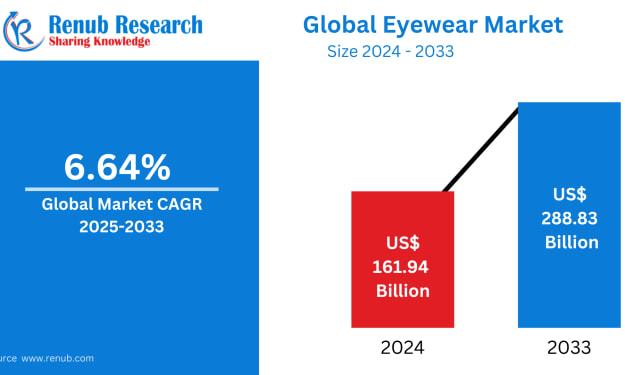
The global eyewear market is entering a new era of unprecedented expansion, blending health, fashion, and technology into one dynamic industry. According to Renub Research, the market is projected to soar from US$ 161.94 billion in 2024 to US$ 288.83 billion by 2033, achieving a healthy CAGR of 6.64% between 2025 and 2033. This impressive growth is fueled by rising cases of visual impairments, an expanding fashion-conscious consumer base, and advancements in smart eyewear technologies.
By Janine Root about a month ago in Longevity
Day 4 of Quitting
If this is how sobriety feels, maybe it’s better to go through life a little buzzed… this, along with other hits like, I want to kill myself, I wish I was dead, and I’m going to throw myself off a bridge have been the only thoughts on rotation these past few days. I promise myself that if, in a month, I still feel like this (‘this’ meaning despondent, full of rage, and simultaneously numb) I can go back to smoking. Until mid-February though? Nicotine is off the table.
By sleepy drafts7 days ago in Longevity
Neither Swimming Nor Pilates: The Best Activity for People With Knee Pain
Knee pain is one of the most common physical complaints worldwide, affecting people of all ages—from young athletes to older adults. Whether caused by arthritis, old injuries, excess weight, or simple wear and tear, knee pain often leaves people confused about one crucial question: Which exercise is actually safe and effective? While swimming and Pilates are frequently recommended, emerging evidence and expert opinion suggest there is another activity that may be even better for protecting and strengthening painful knees.
By Fiaz Ahmed 5 days ago in Longevity


Comments
There are no comments for this story
Be the first to respond and start the conversation.