
Meditation and Its Relevance in Present Time
A must-have habit for personal Growth

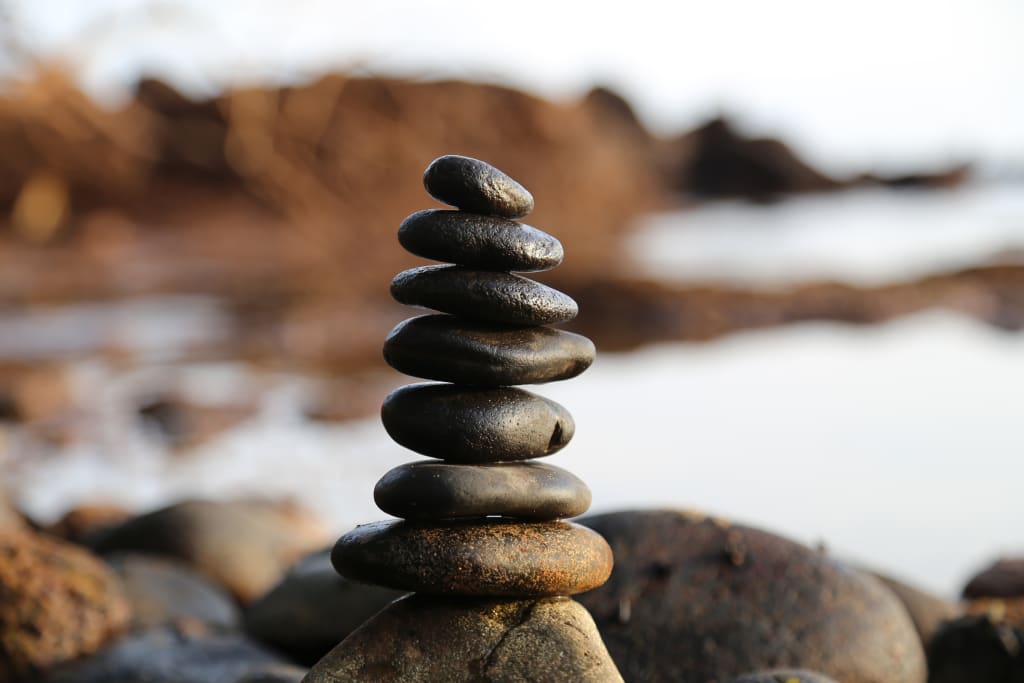
Meditation
Meditation refers to a state where your body and mind are consciously relaxed and focused. Practitioners of this art report increased awareness, focus, and concentration, as well as a more positive outlook in life.
Meditation is most commonly associated with monks, mystics, and other spiritual disciplines. However, you don’t have to be a monk or mystic to enjoy its benefits. And you don’t even have to be in a special place to practice it. You could even try it in your own living room!
Although there are many different approaches to meditation, the fundamental principles remain the same. The most important among these principles is that of removing obstructive, negative, and wandering thoughts and fantasies, and calming the mind with a deep sense of focus. This clears the mind of debris and prepares it for a higher quality of the activity.
The negative thoughts you have those of noisy neighbors, bossy officemates, that parking ticket you got, and unwanted spam are said to contribute to the ‘polluting’ of the mind, and shutting them out is allows for the ‘cleansing’ of the mind so that it may focus on deeper, more meaningful thoughts.
Some practitioners even shut out all sensory input no sights, no sounds, and nothing to touch and try to detach themselves from the commotion around them. You may now focus on a deep, profound thought if this is your goal. It may seem deafening at first since we are all too accustomed to constantly hearing and seeing things, but as you continue this exercise you will find yourself becoming more aware of everything around you.
If you find the meditating positions you see on television threatening those with impossibly arched backs, and painful-looking contortions you need not worry. The principle here is to be in a comfortable position conducive to concentration. This may be while sitting cross-legged, standing, lying down, and even walking.
If the position allows you to relax and focus, then that would be a good starting point. While sitting or standing, the back should be straight, but not tense or tight. In other positions, the only no-no is slouching and falling asleep.
Loose, comfortable clothes help a lot in the process since tight-fitting clothes tend to choke you up and make you feel tense.
The place you perform meditation should have a soothing atmosphere. It may be in your living room, or bedroom, or any place that you feel comfortable in. You might want an exercise mat if you plan to take on the more challenging positions (if you feel more focused doing so, and if the contortionist in you is screaming for release). You may want to have the place arranged so that it is soothing to your senses.
Silence helps most people relax and meditate, so you may want a quiet, isolated area far from the ringing of the phone or the humming of the washing machine. Pleasing scents also help in that regard, so stocking up on aromatic candles isn’t such a bad idea either.
The monks you see on television making those monotonous sounds are actually performing their mantra. This, in simple terms, is a short creed, a simple sound which, for these practitioners, holds a mystic value.
You do not need to perform such; however, it would pay to note that focusing on repeated actions such as breathing and humming helps the practitioner enter a higher state of consciousness.
The principle here is the focus. You could also try focusing on a certain object or thought, or even, while keeping your eyes open, focus on a single sight.
One sample routine would be to while in a meditative state silently name every part of your body and focusing your consciousness on that part. While doing this you should be aware of any tension on any part of your body. Mentally visualize releasing this tension. It works wonders.
There are also many meditation CDs on the market that have been scientifically proven to alter your brainwaves in such a way to help you achieve deep meditation. find out more about these here: Meditation CDs.
In all, meditation is a relatively risk-free practice and its benefits are well worth the effort (or non-effort remember we’re relaxing).
Studies have shown that meditation does bring about beneficial physiologic effects to the body. And there has been a growing consensus in the medical community to further study the effects of such. So start now in creating your health and well-being…start meditating today!
Why you need to meditate
The side effects of meditation are positive and countless. Studies have demonstrated that those who meditate regularly have reduced illness, stress, and need for rest.
But one of the most compelling reasons to meditate is that the process of meditation itself is sublime. Meditation is not dependent upon the result, but the act of meditation itself is a blissful one, transporting one to a state of contentment and tranquil awareness during the training of meditation itself, not just at the end of training. Because the means equals the end, the training has no beginning and never ends.
All of us in modern times experience a constant onslaught of stress. We are bombarded by uninvited energies in the form of such things as television, noise pollution, arguments, and angry or envious people. To counteract this enormously overwhelming force of negativity and distress, we need a superior power, gathered within ourselves; and meditation connects us to this internal reservoir of cleansing, enlightening energy.
In former times, nature surrounded people in their daily routines and rituals of existence. There were no artificial sound vibrations from telephones or machinery; no stresses and diseases were resulting from urban industrial complexities. There was the sound of water, the hum of the wind, the beauty of the stars in the sky, and the scent of the earth. There were natural tempos in every aspect of life, as people planted seeds, nurtured them into foodstuffs, and as they observed the cycles of nature they felt a connection to them. Nowadays we can live our entire lifespan without ever directly contacting nature. We live in artificially controlled climates, we gather food from fast-food restaurants or from stores where it is packaged in a factory; we invite a total divorce of ourselves from our natural origins and our organic, original pace of life.
Meditation allows us an easy, convenient, portable method to enter into those lost natural rhythms and aesthetics, by closing out the world around us, letting go of our bodies, and clearing the mind of all the artificial stress it gathers knowingly or unknowingly during lives.
Meditation costs nothing, it has no harmful side effects, and it won’t add calories or cholesterol to your body. Nor is it addictive in the sense of drugs and alcohol. But it does provide practitioners with an elevated sense of well-being, often compared to a natural “high” more powerful than those induced by drugs, and this component of meditation can be fully embraced for positive, healthy benefits.
The human body is a complex creation, and in the brain, the body naturally produces drugs that are hundreds of times more powerful than pharmaceutical narcotics. As one meditates, the body secretes mysterious hormones and chemicals that provide an incredible rush of energy and happiness, and this is only one of the amazing side effects of meditation practice.
Meditation is different things for different people. Some use it in place of, or in addition to, psychotherapy. Others find it most valuable as a tool to enhance sports or work performance, and to increase memory and other mental functions. Some people rely upon it to help them deal with grief or the aftermath of trauma or tragedy and to regain contentment and appreciation for life’s beauties. And some use meditation as a creative tool to inspire them in the arts. Meditation gives us stronger and more sustainable vigor, sexual energy, and calm, as it provides a restfulness that is comparable to deep, exceptionally restful sleep.
There are countless reasons to meditate, and one way to make the world a better and more peaceful, and harmonious place is for all of us to dedicate some time out of our stressful lives to pause and drink from the mental oasis of meditation practice.
About the Creator
Keep reading
More stories from writers in Longevity and other communities.
Day 4 of Quitting
If this is how sobriety feels, maybe it’s better to go through life a little buzzed… this, along with other hits like, I want to kill myself, I wish I was dead, and I’m going to throw myself off a bridge have been the only thoughts on rotation these past few days. I promise myself that if, in a month, I still feel like this (‘this’ meaning despondent, full of rage, and simultaneously numb) I can go back to smoking. Until mid-February though? Nicotine is off the table.
By sleepy drafts10 days ago in Longevity
Genetic Testing Market Size and Forecast 2025–2033
Introduction The healthcare industry is undergoing a profound transformation, driven by data, biotechnology, and the growing demand for personalized medicine. At the center of this shift lies genetic testing—a powerful tool that decodes DNA to predict disease risks, guide targeted therapies, and improve preventive care. What was once confined to specialized laboratories is now becoming a routine part of clinical diagnostics, oncology, prenatal screening, and even consumer wellness.
By Janine Root 3 days ago in Longevity


Comments
There are no comments for this story
Be the first to respond and start the conversation.