


It seems that a more robust movement against meat is taking place with concerns of the environment, animal cruelty, and health. I see anti-meat stuff or just posts advertising for the whole plant-based diets everywhere. The clearest example I can think of currently was the Vegan movements I have seen on Tiktok. Though, I will admit there is always two sides to every coin. In this case, that being the Liver King. But I digress. For awhile now, it has been argued time and time again the benefit of eating more vegetables and fruit and the harmful effects animal consumption may have e.g. greenhouse gases and animal cruelty. And I for one do agree that those concerns are warranted and important to consider. However, in terms of diet and human health alone, I do personally think meat is getting a worse wrap than deserved, but I also personally am for a low-carb diet, not as a means for weight loss, though it can help. I just have seen data supporting a low-carb diet for health reasons to lower insulin sensitivity and cholesterol. Nevertheless, now I am just rambling. So let us get down to it.
This is a discussion of a paper by Tong et al. 2020. The paper was published in the BioMed Central Journal, and as always I will have the citation of the paper at the end of this article.
Let's talk science.
In 2020, scientists looked into a possible association between consuming meat and lower risks of fractures. The scientists took data from the EPIC-Oxford, which contains an enormous amount of data, and followed participants on their diet, socio-demographics, lifestyle, and medical history. In about a 17 year timeframe, the scientists saw that ultimately, people who consume meat tend to have lower risks of total, hip, leg, and vertebral fractures. This is compared to vegans, vegetarians, and pescetarians (people who do not eat meat except for seafood).
Of course, various variables may have contributed to the results of this study. Furthermore, the authors bring up several interesting points towards this matter. First, the BMI probably played a role as people who do not consume meat tend to have lower BMIs, associated with increased risk of certain fractures. Secondly, with a study like this, not everything can be accounted for, such as using anti-osteoporosis drugs.
Anyway, the question is always so what? Does this paper show that people should not be afraid of meat? Well, no. Diet is such a complicated subject, and it seems that with one claim, there is always data to support both sides. However, if anything, I think this study does two things. First, one argues that meat consumption may not be as horrific as some may try to make it out to be.
Moreover, second, and the most important thing, it leads to more questions. For example, I wonder (and the authors have addressed this) whether weight training/muscle strength could even out the data as we know that weight training, when done correctly and safely, is suitable for bone strength and health.
I also find it interesting that the authors point towards how calcium or vitamin supplements alone have not shown to be effective in preventing fractures, but a combination of which does seem to have some benefit, which makes logical sense as you need both to absorb calcium effectively.
Anyway, that was a small tidbit of this journal article. I hope you enjoyed reading this as I enjoy planning on making coffee with milk.
Resources:
Tong, T. Y., Appleby, P. N., Armstrong, M. E., Fensom, G. K., Knuppel, A., Papier, K., ... & Key, T. J. (2020). Vegetarian and vegan diets and risks of total and site-specific fractures: results from the prospective EPIC-Oxford study. BMC medicine, 18(1), 1-15.
About the Creator
Jojo
I often find myself at peace when I'm around areas with lots of people like cute streets with coffee shops. I love the thought that everyone is simply living their lives as best as they can.
Best Artwork Styles for Contemporary Living Spaces
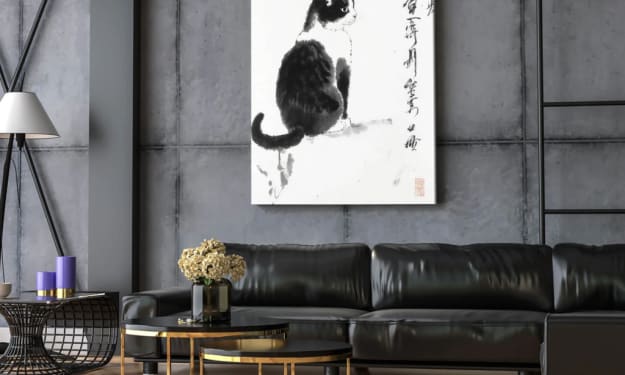
Contemporary living spaces are defined by simplicity, clean lines, and intentional design choices. Unlike traditional interiors that rely heavily on ornamentation, contemporary homes often embrace openness, neutral palettes, and functional layouts. Because of this minimal foundation, artwork plays an essential role in adding personality, warmth, and visual depth.
By CEO A&S Developers2 days ago in Longevity



Comments
There are no comments for this story
Be the first to respond and start the conversation.