
Let's Rethink Body Positivity
The movement has awesome intentions, but doesn't help all the time.

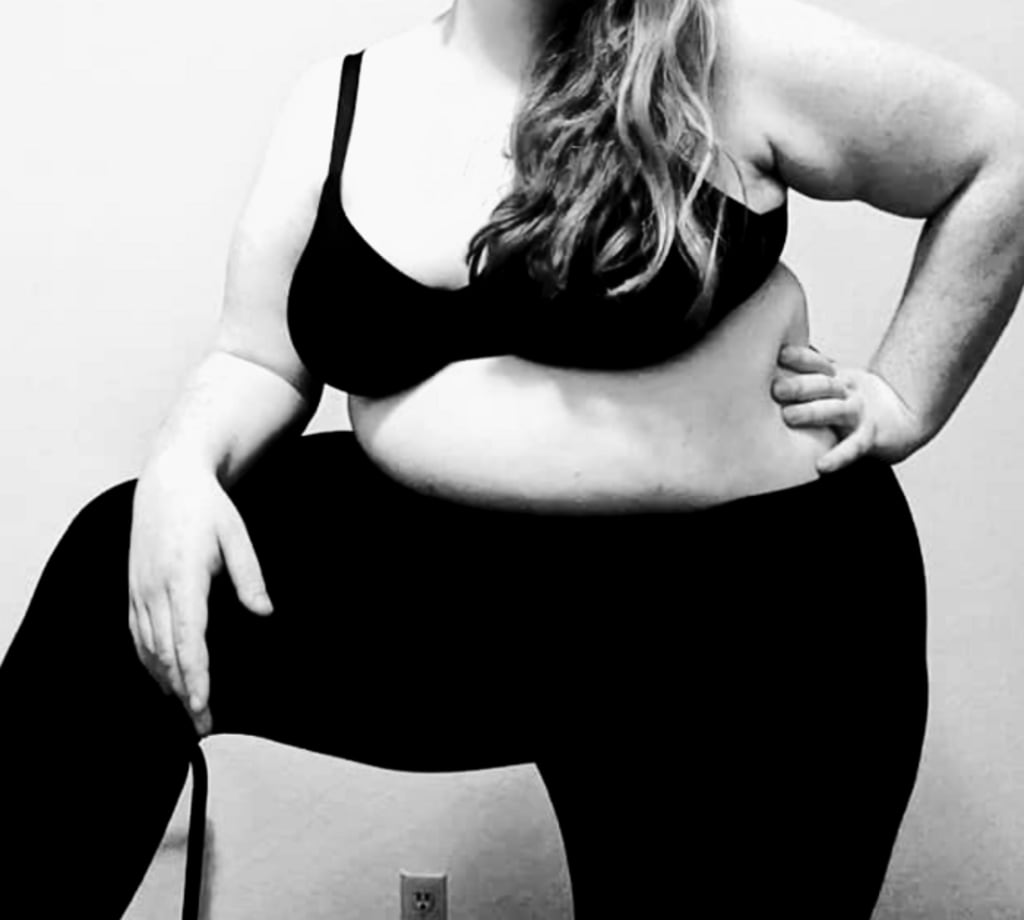
As an intuitive eater and a fat person, I’m done with body positivity. Now, it might not be for the reason you think. Body positivity has done a lot for me and many others in regards to improving my body dysmorphia, self esteem, and image, and has made me confident enough to not worry about if I “look fat” in a photo, because I probably do, but I also look hot. Except that sometimes, I don’t really think I look all that great, and it doesn’t always have to do with my weight. Then when I feel that way, I chastise myself because I feel like I should be okay with my body by now, after years of trying.
And there’s the problem with body positivity. Or, at least, one of the problems. The good news: there’s something better. So let’s talk about it.
Maybe We Should Forget Body Positivity - At Least for Now
More and more people are embracing the idea of body positivity these days. Plenty of Instagram influencers are posting photos of themselves in a bikini or a bloated post-lunch tummy. People are even calling for more representation in advertising and media. While all those things are great, that progress is mainly helpful on a widespread- rather than individual- scale. Also, progress isn’t being made fast enough to do good in the ways that are needed for real progress.
Here’s the thing: body positivity in the media tends to lean in on accepting your body only if it’s at a socially acceptable level of fatness. And that’s the problem- body positivity is too focused on accepting oneself as long as you are perceived as “healthy”. The problem with judging people through a lens of health based on weight or body shape is that the social determinants of health are far too complex to be able to make that assumption.
Another issue with body positivity is it tends to exclude people for being “too fat” or “not fat enough”. This causes major issues, like causing someone to go ignored who might be struggling with an eating disorder. This goes hand in hand with body positivity being for people who are at a socially acceptable level of fatness.
Also, even though body positivity in the media claims to be for all bodies, much of the representation is white, able bodied people. Even though we are seeing an increase in representation, it’s still a rarity and often only comes along due to a special campaign as if the company is trying to say, “Look everybody, at how diverse we are! Buy our clothing!”
Lastly, body positivity creates a culture of comparisons and toxic positivity. While diet culture can do this too, the BP movement has the spotlight at the moment as being the solution to negative body image. Unfortunately, though, it can cause us to compare how we feel about our bodies to how someone else feels about theirs. For example, I follow lots of people with bodies like mine on Instagram. On a day where I don’t feel so good about myself, I might see someone who looks like me on Instagram and beat myself up for not being as confident as her, or not loving myself as much as her. This is a harmful and problematic mindset.
So, What's the Solution?
(Hint: It's body neutrality).
On my journey towards intuitive eating, I began working on my body image too. One important aspect of both of these journeys is learning to accept myself for what I look like now, not what I want to look like or what I might have looked like in the past. I’m sure we’ve all seen photos of ourselves when we were younger and thought, “gosh, if only I looked like that again”. But if you think about it, that’s a little silly. Aging is a normal part of life, and so are weight fluctuations and body changes.
My favorite mantra: You are allowed to exist exactly as you are now.
Here are some of the reasons that body neutrality is what we should be prioritizing over body positivity:
Our bodies change over our lives. Like it or not, we all get wrinkles, grey hair, our weight changes, and more. If we focus too much on being “body positive”, that leads to quite the shock if our body changes a little. We have to readjust our entire mindset towards loving our appearance all over again, and sometimes, that takes time or feels nearly impossible. Body neutrality tells you that it’s okay to not love your appearance at the moment, but you are still allowed to exist exactly as you are now. This mindset allows one to gracefully make the transition through all of life’s changes.
Body neutrality promotes self care for reasons other than appearance. If we view our body as neutral, rather than bad or good, we will engage in activities we are actually interested in and take care of it for the sake of health, happiness, energy, anything besides appearance. Some people might engage in, say, weight loss for health, but many of us are human and will definitely take appearance into account too. Instead, by focusing on health through the lens of happiness and what actually feels good, we can forget the numbers on the scale and improve health overall including mentally, spiritually, and yes, even physically (but the focus should not be weight loss).
Body neutrality leads to better healthcare for all, but in particular for fat individuals. Many of us who are considered overweight, sometimes due to bullsh*t BMI categories, have likely experienced poor healthcare. One of the reasons why a fat person may have poor outcomes may not be due to their weight, but rather due to receiving substandard healthcare as a result of assumptions about their weight. However, poor assumptions based on weight don’t just affect those of us who are fat- it negatively impacts everyone. This is why some people who are suffering from anorexia, for example , might not get treatment because they aren’t “skinny enough”. A body neutral focus allows people - regardless of weight - to receive the treatment they need for a specific issue.
Body neutrality promotes a healthier overall mindset, reduces or eliminates comparisons, and therefore leads to better overall mental health. Health is not just based upon physical appearance or weight. There are several other main aspects to health: emotional, social, spiritual, and intellectual. By seeing bodies as neutral regardless of appearance, we can stop worrying about what we look like in comparison to others. As a result, we will free up our minds to think about other things: our interests (intellectual), our friends and family (social), our personal beliefs and practices (spiritual), and therefore improving our emotional health too.
Body neutrality allows one to focus on yourself for who you are - not your weight.
How to Gain Body Neutrality
- Hold onto a mindset of, “I am allowed to exist how I am now”, regardless of any intentions you might have to change your body and regardless of how you actually feel right then about yourself. If you have a negative thought about yourself, acknowledge it, but go right back to the mindset of simply allowing yourself to exist in your body, for better or worse, this is how you look right now and that’s okay.
- Avoid the scale or measuring yourself. The scale and measuring tape only tells one part of the story. Focus on how you feel in other ways. Are you happy? Then it doesn’t matter how much you weigh.
- Touch your body kindly. I think many of us have touched our bodies in harsh ways to manipulate our shape, or disgustedly pinch at our rolls and skin, wishing we could cut it off and shape ourselves into what we wished we looked like. Instead, practice touching yourself with kindness. Allow your body to glide over your soft bumps and ripples. It might be uncomfortable at first, in fact, it probably will be, but I promise, it works.
- Wear comfortable clothes that you feel comfortable existing out in the world in. This one is self explanatory to an extent, but I’ll talk about it anyway. Sometimes I’ve kept clothes that I don’t feel good in purely because they fit, or clothes I wish I fit in but would be uncomfortable in if I wore them. I acknowledge that this point has an aspect of privilege to it for sure, but if you’re able to clear out your closet and make room for clothes you actually enjoy, it works wonders.
- Take care of yourself- eat in the way you know makes you feel best. This is not the same as a diet. Practice intuitive eating (real intuitive eating- not the diet culture definition), and eat good food that nourishes you regardless of what everyone else around you says.
- Most of all — be kind and forgiving to yourself.
Okay, Fine. We Can Keep Body Positivity Around. But It Has Its Place.
I know I just spent this entire article talking about the reasons why body neutrality should take the place of body positivity, but I don’t want to completely retire the concept of body positivity entirely. Body positivity has its place, and that place is in the media, and while I think there’s a long way to go before it can fully play the part it’s meant to play, there’s still some benefits- even if they are limited.
Body positivity is great for promoting a culture of hyping each other up. Whether it’s in the comment section of an Instagram photo, a new dance on Tik Tok, whatever, body positivity has created a culture where- most of the time- we give each other that little serotonin boost in the comment section when someone puts themselves out there for the world to see.
Body positivity has also slightly played a part in the realization that people of many shapes and sizes deserve clothes that aren’t just ugly floral potato sacks, and therefore, clothing companies are starting to see the need for more inclusive sizing in cuter styles. Fifteen years ago us Fatties just had the same ugly beige and floral options, but now there are all kinds of cool options out there. Since we know that health goes beyond weight, having cute clothes that actually fit and allow one to express themselves plays a big part in boosting one’s self esteem, which can improve their overall mental health.
Body positivity- while again, is slightly limited in this regard- has played a part in normalizing all kinds of ways that people can look, not just in regards to weight, but also race, gender expression, and sometimes ability, so more and more people are seeing themselves represented and feel they are allowed to exist in the world with genuine positive regard from those around them. It can create positivity surrounding appearances that aren’t “typically considered to be beautiful” in the media which can in turn raise the self esteem for those who are struggling.
Finally, at its most basic level, body positivity helps one to feel good about themselves, because as a society, for better or worse, we do tend to focus on appearances and it’s okay to feel good about oneself sometimes.
Just a Few More Words
In the end, body neutrality is important because as humans, our bodies are constantly changing. Body positivity still has importance though, because we all deserve to feel like badass bitches in the end. Body positivity is good practice for feeling confident regardless of appearance, but it has ways in which it can improve, especially in media in regards to representation. Body neutrality is good for normal, every day existence, body changing over time, and for ending harmful comparisons.
It’s up to you to define body positivity for yourself, and I strongly believe the journey starts with body neutrality.
About the Creator
Jessica Mann
I appreciate the complexities and nuances of life, and see nothing as black and white. Social issues and mental health fascinate me, as I live with depression and ADHD. I have a bachelor's degree in sociology, and could study it forever.
Keep reading
More stories from Jessica Mann and writers in Longevity and other communities.
Mental Health, Chronic Illness, and Productivity
Recently I found this article that I had written from the midst of the 2020 pandemic, when I was feeling pretty helpless. I hadn’t realized how much it had affected me until now, looking back on it. I still agree with the main point, which is: why do we have to be productive to feel like we’re worth something? The pandemic certainly brought on feelings of helplessness and worthlessness for many of us, I’m sure.
By Jessica Mann4 years ago in Longevity
Beginner Workout Routine at Home Without Equipment (Step-by-Step Full Body Guide)
Introduction Starting a fitness journey can feel overwhelming, especially for beginners who do not have access to a gym or expensive workout equipment. Many people want to improve their health and strength but are unsure where to begin or worry that working out at home may not be effective. The good news is that you do not need a gym membership or specialized machines to build a strong and healthy body. A well-structured beginner workout routine at home without equipment can help you develop strength, improve endurance, and establish a sustainable fitness habit.
By Core Well Fit4 days ago in Longevity
🧓 The Best Breakfast for the Elderly
Breakfast is often called the most important meal of the day, and for older adults, it plays an even bigger role in maintaining health and energy. After a long night without food, the body needs nutrients to restore energy levels and support normal body functions.
By Being Inquisitive3 days ago in Longevity


Comments
There are no comments for this story
Be the first to respond and start the conversation.