
Learn Cancer
Learn cancer from basic to advance


# What is cancer
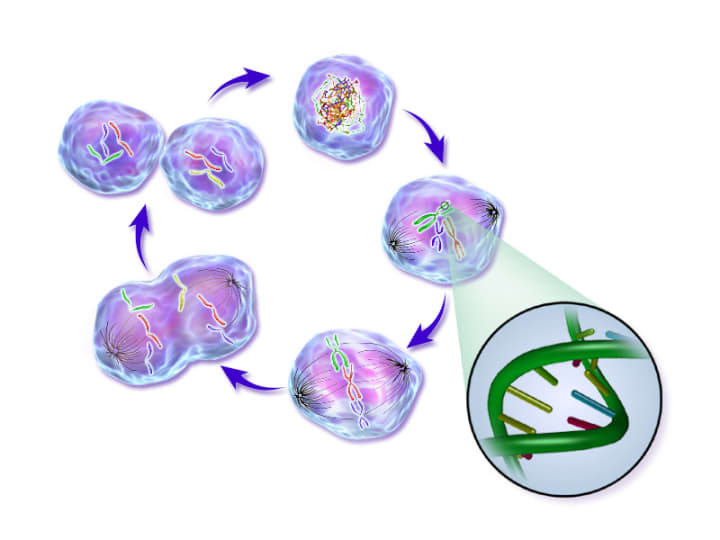
Cancer is basically an uncontrolled rapid and unwanted division of cells forming a tumor is called cancer...
A cell that undergoes uncontrolled, rapid and abnormal growth at the cost of other remaining cells are called a cancerous cell or neoplastic cell
# How does cancer develop?
Cancer researchers have realized that cancer is a disease of DNA. They found that DNA molecules Contain at least 20 oncogenes [ Cancer-Causing genes, present inactively ] and Tumor suppressing genes work together to control cells growth. Defects in these genes cause the cell to grow into tumors. Various factors like radiation, chemicals, etc.. act as a stimulant to oncogenes undergoing rapid mutilation and cells become malignant.
# The major characteristics of cancer cells
1)Hyperplasia: The cancer cells divide at an uncontrolled rate, Forming a cluster of cells called tumor
2)Anaplasia: The cell show structural abnormalities like
- General shape become rounded in a few processes
- The nucleus is enlarged with an irregular outline.
- The nucleus becomes large than normal size
- Chromosome number greatly deviated then a normal one.
3)Metastasis: The ability of the cancerous cell to detach from a tumor, Migrate to other parts of the body, and form a new tumor.
4)Angiogenesis: The ability of cancerous cells to form new blood vessels is called angiogenesis. Through new blood vessels, cancerous cells get nutrients and grow rapidly.
Note :
- The cancer cell is less adhesive than the normal cell
- Cancer cells do not undergo differentiation
- These cells have less survival capability than normal cell
# In Cancer cell two types of tumor is formed such as
A)benign or non-cancerous tumor
- Mass of cells that are enclosed into connective tissue capsule is called a benign tumor
- It consists of the mass of differentiation cells.
- It does not spread to neighboring cells.
- It grows very slowly.
- It is harmless and can be removed surgically
- However, some benign tumors are fatal e.g, Tumor of the brain, liver-kidney, etc
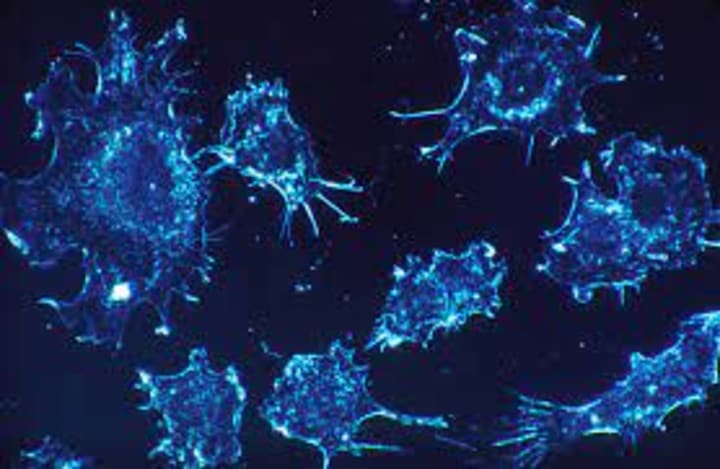
# Malignant or Cancerous Tumor : The non-capsulated mass of cancerous cells is called a malignant tumor.
- It consists of the mass of undifferentiated cells.
- It can spread to neighboring tissue through blood or lymph
- It grows rapidly dried can form a secondary tumor in other parts of the body
- It is harmful and may cause death if not removed in time, eg. bone cancer
# The causative agent of cancer : Any agent which causes cancer is called a carcinogen. Most of the carcinogens are environmental pollutants, while some are biological. Following are some of the carcinogens
1) Radiation: Long exposure to X-rays, Ultraviolet rays, and radioactive substances increase the chances of skin cancer, Leukemia, breast cancer, cancer of thyroid, lungs, etc.
2)Chemicals: Hundreds of chemicals have been identified as carcinogens. They mainly include heavy metallic ions, polycyclic hydrocarbons, Benzene drugs, Arsenic and chromium compounds, etc. these chemicals cause cancer of the esophagus, skin, rectum, etc.
3) Addiction: Addiction to tobacco, alcohol, and drugs leads to cancer of the mouth, throat, esophagus, lungs, rectum, etc...
4)Biological agents: Certain viruses have been identified as probable causative agents of cancer called oncoviruses such as HIV can cause Kaposi's sarcoma, HBV may cause cancer of the liver, Epstein- Barr virus may cause tumor of the jaw called Burkitt’s lymphoma, Human papillomavirus (HPV) May cause cancer of the cervix.
5)Dietary factors: Consumption of fatty food leads to breast cancer while heavy consumption of beef may cause intestinal cancer.
6)Genetic factors: Very few types of cancer proved to be hereditary eg. Retinoblastoma ( cancer of the eye )
7)Others: Pollution, pesticides, Insecticides, excess intake of steroids, etc. May cause cancer
# Symptoms of cancer :
cancer has no symptoms in its early stage. But they may appear before it begins to spread. The signs of spreading are called warning or danger signals of cancer.
These are
# Diagnosis of cancer :
1 It includes biopsy and histological examination of affected parts.
2 Blood typing is another method to detect leukemia, Lymphoma, etc.
3 Endoscopy is used to detect esophageal and stomach cancers
4 Cancer screenings is a modern technique used as a marker of tumor and unrecognized malignancy.
5 Pap test is used to detect Cervix cancer
6 Breast self-examination (BSE) and mammography are used to detection of breast cancer
7 Chest radiation is used to detect lung cancer.
# Treatment of cancer :
Cancer can be cured If early diagnosis and proper treatment is given cancer Patients are treated by following Ways
1) Radiation therapy: It includes the burning and destruction of cancer tissue by exposing It to ionization Radiations? Like X-ray, cobalt 16, radium, etc. E.g Cancer of skin, bladders, cervix. Etc.
2) Surgical method: It included the. Removal of cancer parts by operating methods.
3) Chemotherapy: it includes the use of anti-cancer drugs to kill the cancerous cell by damaging DNA and interfacing the DNA synthesis eg. Alkylating agents, Antimetabolites., Antitumor, Antibiotics, and plant alkaloids like Vincristine, vinblastine, etc.
4) Immunotherapy: It is a recent treatment, including the use of monoclonal antibodies linked with radioisotopes.
If you like this article Then Subscribe, like, and comment...
Thank You...
About the Creator
Mangesh Ashok Jamnik
Hello friend's
I'm Mangesh Jamnik Student at Shri Shivaji college of Art, commerce, and Science
Keep reading
More stories from Mangesh Ashok Jamnik and writers in Longevity and other communities.
LIVING WORLD
The world has two types of structure, living and nonliving. Viruses are peculiar in that they are lifeless particle outside lining beings but become active inside cells of living beings. Despite distinction of living (e.g.,Plants, Animals, Fungi, bacteria) from nonliving (e.g., bricks, stones, rocks, tables, nails), it is very difficult to define life and living being by any simple or composite property. Life is recognized by the mode of its working which Includes some unified and basic characteristics.
By Mangesh Ashok Jamnik4 years ago in FYI
Day 4 of Quitting
If this is how sobriety feels, maybe it’s better to go through life a little buzzed… this, along with other hits like, I want to kill myself, I wish I was dead, and I’m going to throw myself off a bridge have been the only thoughts on rotation these past few days. I promise myself that if, in a month, I still feel like this (‘this’ meaning despondent, full of rage, and simultaneously numb) I can go back to smoking. Until mid-February though? Nicotine is off the table.
By sleepy drafts13 days ago in Longevity
What Is Proprioception? Why Body Awareness Matters More Than You Think
Balance is something most people take for granted—until it starts to feel unreliable. A moment of unsteadiness, a fear of falling, or difficulty walking on uneven ground can raise questions that many people struggle to answer. Strength alone doesn’t always explain these changes. In many cases, the missing piece is something far less talked about: proprioception.
By AhmedFitLife6 days ago in Longevity
The Devil's Cut
“Comrade, finally you’re awake.” The voice was smooth, sensual. A flickering incandescent bar was all that lit the white, sterile room. All Vladimir remembered was everything going black. He tried to move his arms and found them strapped to the gurney.
By Matthew J. Fromm6 days ago in Fiction


Comments
There are no comments for this story
Be the first to respond and start the conversation.