
IVF Market Size and Forecast 2025–2033
Redefining Parenthood Through Science, Innovation, and Global Access


The global In Vitro Fertilization (IVF) market is entering a phase of sustained expansion as medical science, social acceptance, and demographic realities converge. According to Renub Research, the IVF market was valued at US$ 26.43 billion in 2024 and is projected to reach US$ 49.12 billion by 2033, growing at a CAGR of 7.13% during 2025–2033. This impressive trajectory reflects a worldwide rise in infertility, delayed parenthood, and growing reliance on advanced assisted reproductive technologies.
Once considered a niche medical procedure, IVF has now become a mainstream reproductive solution. Technological advancements, improved success rates, greater affordability, and broader social acceptance have transformed IVF into a widely adopted pathway to parenthood for couples, individuals, and diverse family structures across the globe.
Understanding the IVF Market
In-vitro fertilization is a cornerstone of assisted reproductive technology (ART). It involves the retrieval of mature eggs, fertilization in a laboratory environment, and the transfer of embryos into the uterus. IVF is frequently combined with complementary procedures such as intracytoplasmic sperm injection (ICSI), preimplantation genetic testing (PGT), donor programs, and cryopreservation.
IVF is used to treat a range of fertility challenges including tubal blockages, endometriosis, ovulation disorders, low sperm count, unexplained infertility, and fertility preservation prior to cancer treatment. Increasingly, it also supports family planning for single parents by choice and LGBTQ+ couples, reinforcing its role not only as a medical solution but also as a social equalizer.
The market encompasses fertility drugs, laboratory equipment, cryopreservation systems, imaging technologies, genetic screening tools, and fertility clinic services. Rising demand across both developed and emerging economies is reshaping the global fertility treatment landscape.
Key Growth Drivers
Rising Global Infertility Rates
Lifestyle changes, stress, obesity, smoking, alcohol consumption, delayed childbearing, and environmental factors are contributing to a steady increase in infertility worldwide. According to clinical estimates, nearly one in six people globally experiences infertility at some point, significantly expanding the potential patient pool for IVF.
Technological Advancements
Innovations such as time-lapse embryo imaging, AI-driven embryo selection, vitrification techniques, genetic screening, and automated laboratory systems are dramatically improving success rates. These technologies reduce cycle failures, enhance embryo viability, and increase patient confidence.
Changing Social Norms
Greater acceptance of assisted reproduction, especially among single parents, same-sex couples, and older parents, is fueling market growth. IVF is no longer seen as a last resort but as a legitimate reproductive choice.
Expanding Clinic Infrastructure
Many countries have witnessed rapid growth in fertility clinics, specialized reproductive hospitals, and cross-border fertility tourism. Emerging markets such as India, Brazil, Mexico, and Southeast Asia are becoming important IVF hubs due to cost advantages and expanding healthcare infrastructure.
Top Manufacturers and Market Leaders
FUJIFILM Holdings Corporation (Japan)
Fujifilm is a major contributor to the IVF ecosystem through advanced medical imaging, diagnostics, laboratory instruments, and life science solutions. Its healthcare segment supports fertility clinics with precision technologies, cryopreservation equipment, and high-quality imaging platforms, enabling accurate embryo assessment and improved laboratory workflows.
Hamilton Thorne Ltd. (United States)
A specialist in ART instrumentation, Hamilton Thorne develops laser systems, imaging technologies, CASA sperm analyzers, and micromanipulation tools used in IVF clinics worldwide. Its ZILOS-tk laser technology and sperm assessment platforms have become industry benchmarks for embryo handling and reproductive precision.
Vitrolife AB (Sweden)
Vitrolife is a global leader in IVF media, labware, and time-lapse imaging systems. Its product portfolio includes culture media, vitrification solutions, biopsy tools, and embryo monitoring systems. The company plays a critical role in optimizing embryo development environments and cryopreservation protocols.
Thermo Fisher Scientific, Inc. (United States)
Thermo Fisher supports IVF laboratories with molecular biology tools, analytical instruments, consumables, and diagnostics. Its Applied Biosystems and Thermo Scientific platforms are widely used for genetic screening, laboratory automation, and fertility research, strengthening IVF laboratory performance.
Bayer AG (Germany)
While best known for pharmaceuticals and life sciences, Bayer contributes to fertility treatments through reproductive health therapeutics, hormone treatments, and supportive diagnostic technologies. Its research-driven approach strengthens IVF medication protocols and patient outcomes.
Recent Product Launches and Initiatives
Merck & Co., Inc. (September 2023)
Merck introduced a global Fertility Benefit Program across multiple regions including Europe, Asia, and Latin America, providing financial support for fertility treatments. This initiative not only enhances employee access to IVF but also reflects growing corporate involvement in reproductive healthcare.
Fortis Healthcare (April 2025)
Fortis Healthcare launched the Fortis Institute of Genomic Medicine in India, integrating genomics, AI, and diagnostics into patient care. This initiative strengthens IVF outcomes through advanced genetic screening, personalized treatment, and precision reproductive medicine.
SWOT Analysis Highlights
Esco Medical / Esco Micro Pte. Ltd.
Strengths: Advanced IVF lab equipment, product innovation, and strong global trust.
Esco’s time-lapse incubators, embryo culture systems, and laminar flow workstations are designed to improve embryo viability while maintaining stringent regulatory compliance. Its emphasis on biological safety and precision engineering positions it as a preferred partner for fertility clinics.
Ferring Pharmaceuticals
Strengths: Fertility-focused therapeutics, strong clinical expertise, and global brand recognition.
Ferring’s hormone-based therapies for ovarian stimulation, implantation, and reproductive endocrinology form a core component of IVF treatment protocols worldwide. Its investment in personalized medicine and digital fertility platforms enhances patient engagement and clinical effectiveness.
Recent Market Developments
The Cooper Companies, Inc. (November 2023)
CooperCompanies acquired select Cook Medical assets for US$ 300 million, strengthening its fertility and women’s health portfolio. This strategic move expands CooperSurgical’s capabilities in obstetrics, gynecology, and IVF-related medical devices.
Cook Medical (October 2024)
Cook Medical launched the NestVT Vitrification Device in the U.S., designed for secure embryo and oocyte cryo-storage. Alongside product innovation, Cook is offering simulation training and educational programs, enhancing IVF laboratory practices and clinical success rates.
Sustainability in the IVF Market
Kitazato Corporation
Kitazato integrates sustainability through resource-efficient manufacturing, durable medical materials, and environmentally responsible design. By improving cryopreservation success rates and reducing the need for repeat procedures, the company minimizes clinical waste while maintaining high ethical and safety standards.
Boston IVF
As a leading fertility service provider, Boston IVF emphasizes energy-efficient laboratories, reduced plastic usage, and ethical patient care. Its initiatives include optimized HVAC systems, recycling programs, and personalized treatment pathways that lower environmental impact while improving clinical outcomes.
Market Segmentation
By Procedure
Fresh embryo transfer
Frozen embryo transfer (FET)
Donor egg IVF
Intracytoplasmic sperm injection (ICSI)
Genetic testing-assisted IVF
By End User
Fertility clinics
Hospitals
Research institutions
By Region
North America
Europe
Asia-Pacific
Latin America
Middle East & Africa
Historical Trends and Forecast Analysis
Over the past decade, IVF adoption has shifted from experimental therapy to a globally accepted medical solution. Declining treatment costs, improved insurance coverage in select countries, and advancements in laboratory automation have accelerated patient uptake. The introduction of frozen embryo transfer cycles and time-lapse embryo monitoring has significantly improved success rates while reducing emotional and financial burden on patients.
Renub Research forecasts that by 2033, the IVF market will reach US$ 49.12 billion, driven by:
Rising infertility prevalence
Growing fertility tourism
Rapid technological adoption
Supportive regulatory reforms in developing markets
Integration of genomics and AI into reproductive medicine
Asia-Pacific is expected to witness the fastest growth, supported by rising healthcare investment, large patient populations, and increasing medical tourism.
Market Share and Competitive Landscape
Key players such as FUJIFILM, Vitrolife, Hamilton Thorne, Thermo Fisher, Merck KGaA (EMD Serono), Cooper Companies, and Ferring Pharmaceuticals dominate through innovation, acquisitions, and strategic partnerships. Service providers such as Boston IVF, Nova IVF Fertility, and Bloom Fertility & Healthcare are expanding clinical reach, especially in emerging economies.
The market remains moderately consolidated, with ongoing investments in automation, personalized medicine, and sustainability shaping competitive strategies.
Future Outlook: IVF in the Next Decade
The IVF market is expected to evolve from a treatment-focused model to a technology-driven reproductive ecosystem. AI-assisted embryo grading, genomic screening, personalized hormone protocols, and smart laboratory systems will redefine treatment efficiency. Governments and healthcare providers are increasingly recognizing reproductive health as a public health priority, further supporting market growth.
Ethical innovation, sustainability, and patient-centric care will play a critical role in shaping the future of assisted reproduction. IVF will continue to expand access to parenthood while balancing clinical excellence with environmental responsibility.
Final Thoughts
The IVF market stands at the intersection of science, technology, and human aspiration. With a projected rise from US$ 26.43 billion in 2024 to US$ 49.12 billion by 2033, the industry is not only growing economically but also redefining how families are created worldwide. Advancements in genomics, laboratory automation, and ethical reproductive practices are transforming IVF into a more accessible, effective, and sustainable solution.
As infertility rates increase and societal norms evolve, IVF will remain a cornerstone of modern healthcare—offering hope, inclusivity, and innovation in the pursuit of parenthood.
About the Creator
jaiklin Fanandish
Jaiklin Fanandish, a passionate storyteller with 10 years of experience, crafts engaging narratives that blend creativity, emotion, and imagination to inspire and connect with readers worldwide.
Keep reading
More stories from jaiklin Fanandish and writers in Longevity and other communities.
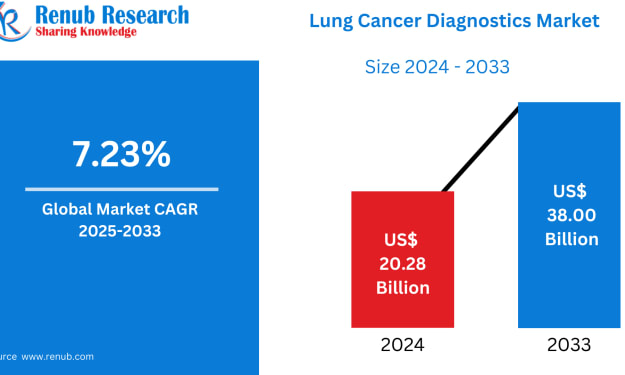
Lung Cancer Diagnostics Market Size and Forecast 2025–2033
Introduction: A Market at the Center of Early Cancer Care Lung cancer remains one of the world’s most challenging public health burdens, accounting for millions of new cases and deaths each year. Yet the narrative around lung cancer is changing. Advances in imaging, molecular diagnostics, and biomarker-driven testing are moving detection earlier, improving treatment selection, and ultimately extending survival. This transformation is reflected in the expanding commercial landscape for diagnostic technologies.
By jaiklin Fanandish4 days ago in Longevity
Day 4 of Quitting
If this is how sobriety feels, maybe it’s better to go through life a little buzzed… this, along with other hits like, I want to kill myself, I wish I was dead, and I’m going to throw myself off a bridge have been the only thoughts on rotation these past few days. I promise myself that if, in a month, I still feel like this (‘this’ meaning despondent, full of rage, and simultaneously numb) I can go back to smoking. Until mid-February though? Nicotine is off the table.
By sleepy drafts10 days ago in Longevity



Comments
There are no comments for this story
Be the first to respond and start the conversation.