
Is Weed Good for You? Understanding the Health Benefits and Risks of Cannabis
Exploring the Medicinal Properties, Health Risks, and the Debate on Cannabis Use


Is Weed Good for You? What to Know About the Health Benefits of Cannabis
Cannabis, commonly known as weed, has been used for centuries for its medicinal properties. In recent years, the debate over its benefits and risks has intensified as more states and countries move toward legalization. This article explores the health benefits and risks associated with cannabis use, helping you make an informed decision.

Medicinal Benefits
Cannabis is composed of over 100 compounds, the most notable being cannabidiol (CBD) and delta-9-tetrahydrocannabinol (THC). These compounds are responsible for the plant’s medicinal properties. Here are some conditions that cannabis may help treat:
Chronic Pain
A comprehensive review in 2017, which analyzed over 10,000 scientific studies, concluded that cannabis and its compounds are effective in relieving chronic pain, particularly neuropathic pain. This makes medicinal cannabis a viable option for those suffering from persistent pain that does not respond well to traditional painkillers.
Alcoholism and Drug Addiction
There is growing evidence that CBD oil can help reduce dependence on prescription pain medications and assist in the treatment of alcohol and opioid addictions. A 2017 review and a 2022 Canadian study both highlight the potential of cannabis in helping people manage and reduce their substance use. However, excessive cannabis use can lead to cannabis use disorder, emphasizing the need for careful, prescribed use.
Mental Health Conditions
Cannabis shows promise in alleviating symptoms of depression, post-traumatic stress disorder (PTSD), and social anxiety. A 2017 review found some evidence supporting its use for these conditions, though it is not recommended for bipolar disorder or psychosis. The research is still in early stages, and more studies are needed to fully understand the efficacy and safety of cannabis for mental health treatment.
Cancer
Cannabis is particularly effective in managing chemotherapy-induced nausea and vomiting. Oral cannabinoids have been shown to alleviate these symptoms, and some small studies suggest that smoked cannabis may also be beneficial.
Multiple Sclerosis
Short-term use of oral cannabinoids has been found to improve symptoms of spasticity in multiple sclerosis (MS) patients, though the effects are modest. Cannabis may provide some relief for those suffering from this debilitating condition.
Epilepsy
In 2018, the FDA approved Epidiolex, a CBD-based medication, for treating two severe forms of epilepsy: Lennox-Gastaut syndrome and Dravet syndrome. Studies have shown that CBD can significantly reduce the frequency of seizures in children with Dravet syndrome, although it may come with side effects like drowsiness and decreased appetite.
Health Risks
Despite its medicinal benefits, cannabis use carries certain risks that must be considered.
Mental Health Problems
Cannabis use can increase the risk of short-term psychosis and long-term mental health issues such as schizophrenia. There is also evidence suggesting a link between regular cannabis use and suicidal thoughts, as well as a small increased risk of depression. Cannabis may exacerbate symptoms in individuals with bipolar disorder.
Testicular Cancer
Long-term cannabis use has been linked to an increased risk of testicular cancer. While more research is needed to establish a definitive causal relationship, this potential risk cannot be ignored.
Respiratory Disease
Smoking cannabis can damage the respiratory system, leading to bronchitis and scarring of lung tissues. However, non-inhaled CBD products, such as oils, do not carry the same risks.
Good or Bad?
The debate over whether cannabis is good or bad for health is complex. While there is substantial evidence supporting the medicinal benefits of cannabis for conditions like chronic pain, nausea, and MS, there are also significant risks, particularly concerning mental health and respiratory issues.
The classification of cannabis as a Schedule I controlled substance by the Drug Enforcement Administration poses challenges for researchers, limiting the scope of scientific studies. Many health organizations, including the American Cancer Society, advocate for more research to fully understand the potential benefits and risks of cannabis use.
Summary
Cannabis and its compounds, particularly CBD and THC, offer potential benefits for managing chronic pain, chemotherapy-induced nausea, and certain symptoms of MS and epilepsy. However, the wide range of cannabis forms and varying chemical compositions of different strains make it difficult to accurately assess the safety and efficacy of cannabis as a whole.
It is crucial to use cannabis products only as directed by a healthcare professional to minimize risks and ensure the best possible outcomes. As research continues, we may gain a clearer understanding of the role cannabis can play in modern medicine.
References
(https://www.medicalnewstoday.com/articles/320984#summary)
(https://healthyliferecovery.com/weed-paranoia-psychosis/)
(https://my.clevelandclinic.org/health/articles/4392-marijuana-cannabis)
About the Creator
prasun prakhar
Blending human creativity with AI innovation.
Keep reading
More stories from prasun prakhar and writers in Longevity and other communities.
Deli Meats Alert: Deadly Listeria Outbreak Claims Lives
Deli Meats Linked to Deadly Listeria Outbreak Public health officials have raised a serious alarm about deli-sliced meats as they investigate a listeria outbreak that has resulted in the deaths of at least two people and hospitalized at least 28 across 12 states. The Centers for Disease Control and Prevention (CDC) issued a warning on Friday, emphasizing the risks for individuals over 65, those with weakened immune systems, and pregnant women. The CDC advises these groups to avoid deli-sliced meats unless they are reheated to an internal temperature of 165°F or are steaming hot, as they are particularly susceptible to severe listeria infections.
By prasun prakhar2 years ago in Longevity
Day 4 of Quitting
If this is how sobriety feels, maybe it’s better to go through life a little buzzed… this, along with other hits like, I want to kill myself, I wish I was dead, and I’m going to throw myself off a bridge have been the only thoughts on rotation these past few days. I promise myself that if, in a month, I still feel like this (‘this’ meaning despondent, full of rage, and simultaneously numb) I can go back to smoking. Until mid-February though? Nicotine is off the table.
By sleepy drafts15 days ago in Longevity
Global Multiple Myeloma Market Size and Forecast 2025–2033
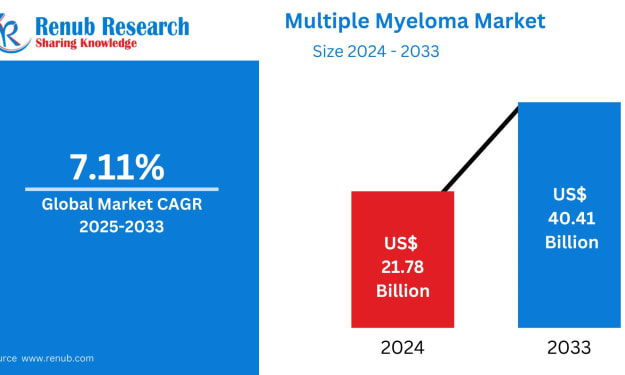
Introduction: A Transformational Era for Multiple Myeloma Treatment The Global Multiple Myeloma Market is undergoing a significant transformation as scientific innovation, improved diagnostics, and rising healthcare investments converge to redefine patient outcomes. According to Renub Research, the market was valued at USD 21.78 billion in 2024 and is projected to reach USD 40.41 billion by 2033, expanding at a CAGR of 7.11% during the forecast period 2025–2033.
By Renub Researchabout 14 hours ago in Longevity



Comments
There are no comments for this story
Be the first to respond and start the conversation.