
If You Strive for Keeping Your Family Healthy, Visiting Doctors is Not Enough
Many of us live a stressful, demanding life, and its pace requires being strong and highly organized. To keep up with, we need to be healthy. Medical counseling is not enough, as health is the matter of everyday routines we stick to our entire life. Luckily, instead of looking for shortcuts that would change our lives, we can make baby steps. These steps are simple, good habits for good health that everyone can follow, and we’re here to share them with you. Take a look.


Practice walking
You can drastically improve your mental and physical health by simply walking regularly. It extends your life and prevents diseases, pumps you up with energy, and makes you happy. For those who care, it contributes to significant weight loss and prevents weight gain. Also, studies prove that if you walk every day and quickly enough, it could be the only sufficient aerobic exercise to keep the heart and lungs healthy.
Speed walking helps prevent flu, cold, and other immune-related issues. It increases the number of white blood cells flowing in your blood. These cells combat infection and other illnesses as part of the immune system. According to a 2011 study described in the British Journal of Sports Medicine, walking is related to a lower number of sick days taken.
Do not skip breakfast
Good habits to be healthy are not necessarily something difficult to follow. For example, the first meal in a day boosts your metabolism, helping your body burn calories all day long. By skipping it, you have all the chances to gain weight in the long run. It is recommended to take food long before lunchtime. Otherwise, you may get so hungry before noon that you snack on high-sugar or high-fat meals.
Breakfast gives you strength and helps you concentrate on work or school. It’s one reason why people have better memory and lower levels of “evil” LDL cholesterol. Also, they are more unlikely to get diabetes and heart disease. Breakfast is the right time for getting in vitamins and nutrients from healthy meals your body needs.
Make baby steps in healthy eating
Healthy eating does not begin with self-torturing. This is just a little tweaking here and there. Eat more fruit and nuts and go easy on sugary drinks and snacks. Fish is recommended twice a week as it has omega-3 fatty acids that are super useful for the skin and lower the risk of heart disease.
Portion control is probably the most critical amongst the habits for a healthy lifestyle. Eat smaller portions of high-calorie meals containing huge amounts of fats, carbs, and sugar. But feel free to go for larger portions of veggies and fruits, especially fiber.
It’s about baby steps, remember? So, let your first one be chewing 20-30 times. This practice reduces calorie intake by about 10%. And finally, make sure you avoid artificial sweeteners by simply reading what’s on a sticker.
Drink more water
Drinking the proper amount of water is pivotal for our bodies. It helps our body regulate temperature, makes joints lubricated, and delivers nutrients to cells. Improved sleep, mood, and cognition, faded infections are also the benefits of drinking enough water.
We used to be told that eight 8-ounce glasses of water daily is the golden rule. But it is not sustained medically. So, the best advice here is to drink that much to urinate every 3 hours, and the urine should be light in color. To instill good habits for good health, use devices, or install apps offering “smart bottles” and other health-related features.
Get proper sleep
The lack of sleep brings about drowsiness, lack of focus, fatigue, and forgetfulness. As we sleep, the brain gets rid of the debris of the day’s activities while resetting and renewing nerve networks. As a result, we are restored to function fully all day long.
Also, did you notice yourself binge eating the very next day? That’s because the levels of hunger hormone ghrelin are increased and it decreases the ones of satiety or fullness, which leads to overeating and weight gain. To avoid these behaviors, sleep around 7-9 hours per day. If you cannot doze off, do not use devices 2 hours before bedtime as their light makes the brain keep awake.
Practice mindfulness
One of the mainstream, good habits to be healthy is practicing mindfulness. By this, we mean being mindful by meditating or praying, or stopping by at a nice place and admiring its beauty, or smelling roses. Studies prove that mindfulness alleviates stress, relieves pain, and makes you feel way better.
One study found out that four months of regular meditation can change our brain's parts responsible for learning, emotions, and memory. You can even turn dishwashing into a mindful practice. Meditation helps in weight loss as it reduces the level of stress hormones. The stress hormone cortisol tells our body to store calories as fat.
Set yourself new challenges
We all go through the motions, and from time to time we need something new to alter activities. So, why don’t we take up a new challenge? Art lessons or learning a new language might be the thing. There are lots of programs available at no cost to participants. You can apply to online language courses or install a relevant app.
What about visiting dance classes or playing a new musical instrument? Find free tutorials on YouTube, and you’ll master new things quickly. Practice half an hour per day as relaxation therapy, and soon you’ll surprise your friends with a new skill.
Do journaling
The habits for a healthy lifestyle begin with mindset, and journaling helps a lot here. First, it helps relieve stress by uncluttering your brain. It helps you realize what’s truly meaningful, and you become more organized and your life - more balanced, which leads to a less stress-free life.
Most people do not start journaling because they don’t like this “regular schedule” concept behind. But we’re talking about baby steps here, right? So, you don’t have to journal every day to make it work for you. A few times a week is still extremely beneficial. Moreover, journaling on an as-needed basis can bring positive shifts into the way you feel mentally and physically.
Practice me-time
Me-time or relaxation time after a long working day also helps relieve stress and anxiety and pumps you up with energy for the next day. There are so many ideas to do it, and we’ll give you a couple.
After a long busy day, come home, fill up the bathtub with hot water, throw some bombs or bath flakes, and soak in. A bath caddy will be the thing here. You can install it on a tub and then put a candle, a glass of wine, etc. Put whatever makes you relax and calm down.
Another me-time idea is organizing a safe oasis in your living space. The godsend here will be a humidifier that softens the environment around you, hydrates your skin, and improves sleep. It especially makes sense in winter as it adds to the strengthening of the local immune system and thus helps the body fight viruses. Herewith, make sure you set ideal humidity at home.
Good habits to stay healthy: the final word
We are firm believers in baby steps when it’s about integrating good habits for good health into your everyday life. Pick one thing you can stick to. What will work for you the most? Maybe drinking more water or walking more, practicing me-time regularly in the evenings or journaling? This one thing will definitely make a difference!
After practicing it for a while, you’ll see how strong you are to keep moving, be more consistent, and even add one more good habit. You’ll be inspired by yourself and motivated to experiment with new things to support your healthy lifestyle.
About the Creator
Day 4 of Quitting
If this is how sobriety feels, maybe it’s better to go through life a little buzzed… this, along with other hits like, I want to kill myself, I wish I was dead, and I’m going to throw myself off a bridge have been the only thoughts on rotation these past few days. I promise myself that if, in a month, I still feel like this (‘this’ meaning despondent, full of rage, and simultaneously numb) I can go back to smoking. Until mid-February though? Nicotine is off the table.
By sleepy drafts9 days ago in Longevity
The Hidden Power of the Nerve Endings in Your Feet
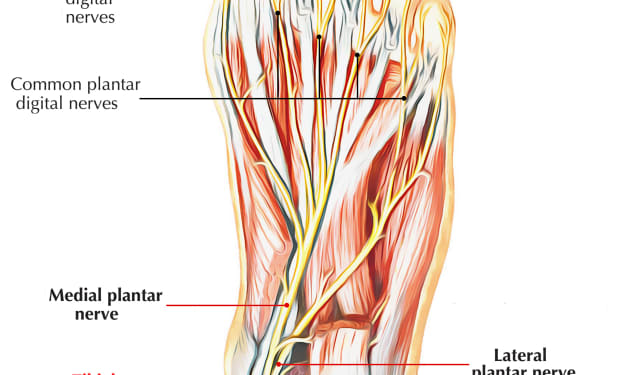
Most people don’t give much thought to their feet unless they’re uncomfortable or tired. Yet beneath the surface, the nerve endings in the feet are constantly working, sending vital information to the brain that influences balance, posture, and movement. These signals operate quietly in the background, but they play a far greater role in daily life than many people realize.
By AhmedFitLife2 days ago in Longevity



Comments
There are no comments for this story
Be the first to respond and start the conversation.