
ICD-10 Codes Explained: What They Are and Why Labs and Insurance Need Them
The simple explanation your doctor never gives you about ICD-10 codes and why they matter for every test you get.

Medical Disclaimer
This article is for educational and informational purposes only. It is not intended to diagnose, treat, cure, or prevent any medical condition. Nothing here should be taken as personal medical advice. Always consult with your physician, healthcare provider, or qualified medical professional about your specific health concerns, symptoms, or lab results.
Understanding Those Strange Codes on Your Lab Results
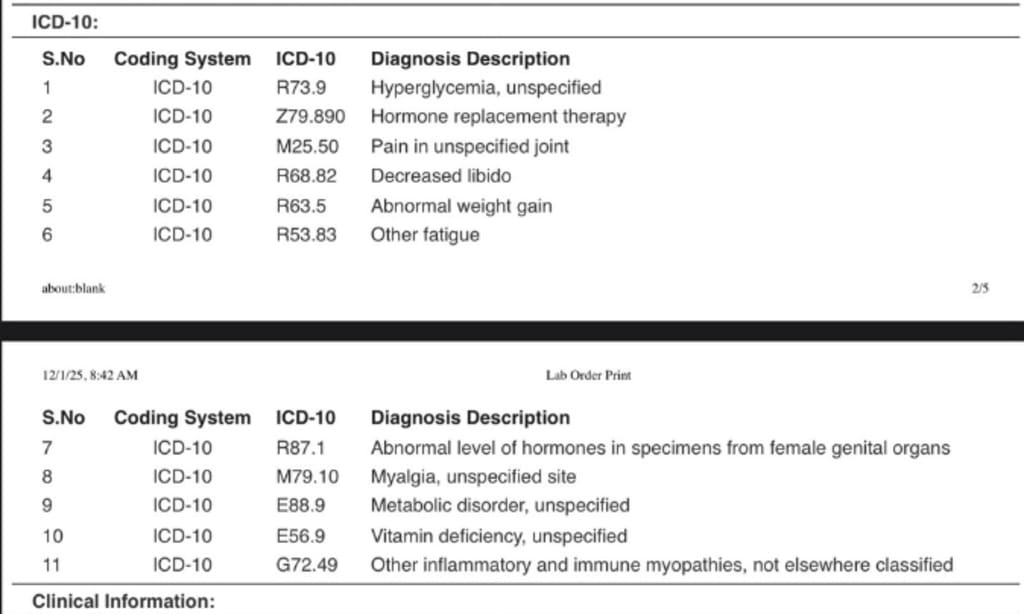
If you have ever looked at your lab report and noticed letters and numbers like E11.9, I10, or R53.83, you are not alone. Many patients see these alphanumeric codes and wonder what they are for and what they mean.
Those codes are called ICD-10 codes, and they serve one purpose:
They explain why a doctor ordered a specific test. ICD-10 stands for International Classification of Diseases, 10th Revision, and the codes are used by every healthcare provider, lab, and insurance company in the United States.
Here is the part most patients never hear:
If you are paying out of pocket, an ICD-10 code is not required. Cash-pay tests do not need medical justification because no insurance claim is being submitted.
Why ICD-10 Codes Matter for Lab Tests
Insurance companies do not read your chart. They do not review your symptoms. They do not look at your medical history. All they look for is the ICD-10 code attached to the test. This code is the “reason for testing.” It tells insurance whether the test is medically necessary. Without it, insurance almost always denies the claim.
For example:
- E11.9 = Type 2 diabetes
- I10 = High blood pressure
- D50.9 = Iron deficiency anemia
- R53.83 = Fatigue
Each of these diagnoses supports different types of lab tests. When the diagnosis matches the test, insurance approves. When it doesn’t, problems start.
A Simple Way to Think About ICD-10 Codes
The ICD-10 code is basically:
Your doctor’s explanation for why the test is needed. If the code is missing, incorrect, or does not match Medicare or insurance rules, the test may be denied or trigger an ABN and that leads to misunderstandings, surprise bills, and frustration for both patients and providers.
Have you ever seen those codes on your lab results and wondered if they meant something serious? What did you assume they meant before now?
Why Incorrect ICD-10 Codes Cause Problems
When the wrong diagnosis code is attached to a test, it can create several issues:
- Insurance may deny the claim.
- Medicare may automatically flag the test and trigger an ABN.
- The patient may be billed unexpectedly.
- The lab may need a corrected order.
- Claims can be delayed for weeks or months.
This is why it is important for patients to understand that the diagnosis code is not random. It is the key that allows your insurance company to process and approve your lab tests.
What Patients Can Do
You do not need to memorize codes, but you can protect yourself by asking simple questions:
• “What diagnosis are you using for this test?”
- “Does this code support the test Medicare or my insurance requires?”
- “Can the office send a corrected order if needed?”
Being proactive can prevent ABNs, billing surprises, and unnecessary delays in your care.
What’s the one part of your lab report or diagnosis code you’ve always wanted someone to finally explain in plain English?
Related Reads:
Why A1C Results Can Look Higher Than Expected — Even When Your Routine Hasn’t Changed
How Holiday Meals Can Shift Your Lab Results More Than You Think
When Holiday Meals Change Your Bloodwork: Understanding Post-Thanksgiving Lab Surprises
About the Creator
Tarsheta (Tee) Jackson
Certified Mobile Phlebotomist sharing clear, patient-friendly health explanations, wellness insights, and real stories from the field. Making labs and medical moments easier to understand.
Keep reading
More stories from Tarsheta (Tee) Jackson and writers in Longevity and other communities.
Why A1C Results Can Look Higher Than Expected — Even When Your Routine Hasn’t Changed
Educational Information Only — Not Medical Advice This article explains general concepts related to A1C testing. It does not diagnose, treat, or evaluate any medical condition. Always consult a licensed healthcare professional for personal concerns or questions about lab results.
By Tarsheta (Tee) Jackson3 months ago in Longevity
Healthy Eating on a Student Budget: A Realistic Weekly Guide
Being a student in Malaysia often comes with tight budgets, packed schedules, and unpredictable class timetables. But eating healthy food on a student budget in Malaysia doesn’t have to be impossible. With a little planning, local ingredients, and RM-based budgeting, you can enjoy cheap healthy meals in Malaysia while supporting your energy, focus, and overall health.
By Being Inquisitive5 days ago in Longevity


Comments
There are no comments for this story
Be the first to respond and start the conversation.