
I Am a Celiac Newbie
Accepting a celiac disease diagnosis


I was diagnosed with celiac disease at age thirty-eight, last year in October.
I shouldn’t have been surprised. I mean, my mom has the disease. My brother too. I have a couple of cousins who have it as well. It runs in the family.
Yet, there I was, hearing the doctor tell me over the phone that October day in 2020, that the blood test came back positive. Positive. And I felt shock and disappointment, and a tiny bit of resentment.
It wasn’t supposed to happen to me. I had been told that this disease skipped generations. False! It’s a genetic disease and it can be passed from parent to child. It doesn’t automatically skip generations.
I didn’t have the normal symptoms. Hello! That didn’t matter. Celiac disease doesn’t need to have the “normal” symptoms: stomach cramps, diarrhea, nausea. It can still be celiac disease. I often felt constipated and bloated. I didn’t know that these were also symptoms and that my body was trying to tell me something was wrong.
For years I had been telling myself that I was gluten-sensitive, that because of genetics my body didn’t really handle breads and pastas that well, but that it was still okay to indulge every now and again. It was okay to feel bloated. It was okay to feel constipated. It was okay to feel gassy and gross after eating gluten-filled meals because that was my “normal.” I didn’t want to be labeled as having celiac disease because it felt too restrictive. I like cake. I like cookies. I like bread. And breadsticks. I like eating foods with gluten. They are delicious. I didn’t want to face the fact that gluten was harming my body.
But it was. The biopsy showed that.
I did the biopsy to confirm the results. I guess my doctor wanted to make sure the lab work didn’t make any errors. My results were high and if by chance they had made an error, it would be a pretty awful mistake.
Fortunately for the lab, the results were correct.
The surgeon who did the endoscopy looked me in the eye and said, “You have celiac disease.” My small intestine was not normal. It looked smooth when it should have looked wavy or bumpy. Where were the villi? They appeared not to be there. It was clear my body was having problems.
Mentally, I struggled (I still struggle sometimes). If my symptoms had been “normal,” I could have taken care of this problem years ago, and by taken care of, I mean adjusted to a gluten-free lifestyle. I wouldn’t feel like I’m giving up a lot of things—foods I like to eat, restaurants I like to go to, even some drinks. I wouldn’t feel judged by people. From “How could you not know?” to “How strict are you going to be?”—people making assumptions about me from the food that I’m eating hits a sore point with me. I’ve struggled with my weight for most of my life, and now this disease has opened up a sore spot that I thought I had a handle on. It’s frustrating. It’s scary. It’s maddening. I want to blame someone. Anyone. But that’s not the kind of person I want to be.
I am a celiac newbie. Even though this disease has been in my family for years, for me personally, it is new. I am experiencing it for myself right now. Previously I have watched it from afar. I watched my mom and how she has reacted living with it. I watched my brother and how he lived with it. Now it is my time to cope with it. I hope for the best experience. The world has changed since my mom’s diagnosis over forty years ago. Likewise with my brother with his diagnosis about fifteen years ago.
At least now, they have gluten-free Oreos. And that is something I can be grateful for.
About the Creator
Melissa Miller
Reader, writer, copy editor. Wife and stepmom. Amateur photographer. Latter-day Saint. Recently diagnosed with celiac disease. Check out my Instagram.
Keep reading
More stories from Melissa Miller and writers in Longevity and other communities.
Day 4 of Quitting
If this is how sobriety feels, maybe it’s better to go through life a little buzzed… this, along with other hits like, I want to kill myself, I wish I was dead, and I’m going to throw myself off a bridge have been the only thoughts on rotation these past few days. I promise myself that if, in a month, I still feel like this (‘this’ meaning despondent, full of rage, and simultaneously numb) I can go back to smoking. Until mid-February though? Nicotine is off the table.
By sleepy drafts22 days ago in Longevity
New Naval Power and Propulsion Facility Opens in South Carolina
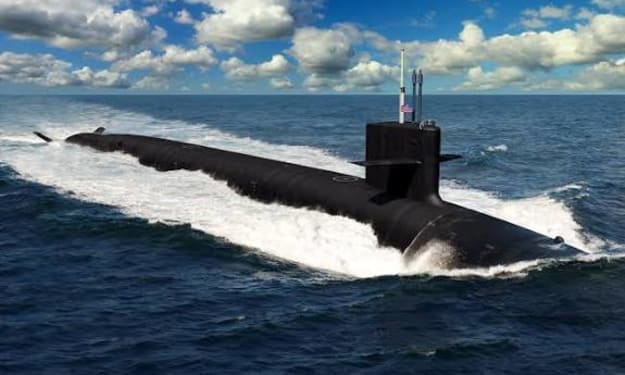
Major investment strengthens US naval readiness, technology, and local economy A new naval power and propulsion facility has officially opened in South Carolina, marking a major milestone for the United States Navy and the country’s defense infrastructure. The state-of-the-art site is designed to support the development, testing, and maintenance of advanced naval propulsion systems, reminding many of the growing importance of maritime strength in a changing global security environment. Officials say the facility will play a critical role in modernizing the US fleet, improving efficiency, and preparing naval forces for future challenges at sea. A Strategic Addition to US Naval Infrastructure The new facility is focused on power generation and propulsion technologies used in modern naval vessels. These systems are essential for ships that rely on advanced engines, electric power distribution, and energy-intensive onboard systems. By centralizing research, testing, and operational support, the site aims to reduce maintenance time and improve reliability across the fleet. Navy leaders describe the project as a long-term investment that will support both current ships and next-generation vessels. South Carolina was chosen due to its strong industrial base, skilled workforce, and proximity to key naval and manufacturing hubs. Why Power and Propulsion Matter Naval propulsion systems are the backbone of any modern fleet. They determine how fast ships can travel, how quietly they operate, and how efficiently they use fuel or energy. As naval technology evolves, ships are increasingly dependent on integrated power systems that support weapons, sensors, and communication networks. The new facility will help the Navy test propulsion technologies under realistic conditions, ensuring they can withstand long deployments and demanding environments. Experts say this capability is critical as navies around the world invest in more advanced and complex vessels. Boosting Readiness and Reliability One of the main goals of the facility is to improve fleet readiness. Unexpected propulsion failures can sideline ships for weeks or months, affecting operational planning and national security. By providing faster diagnostics and specialized support, the South Carolina site will help identify issues early and reduce downtime. Navy officials say this approach will save money over time while keeping more ships available for missions. Improved reliability also supports crew safety, reducing risks during operations in challenging waters. Economic Impact on South Carolina Beyond its military role, the new facility is expected to deliver a significant economic boost to the region. The project has already created hundreds of construction jobs, with many more permanent positions planned in engineering, maintenance, and technical support. Local leaders welcomed the investment, noting that it strengthens South Carolina’s reputation as a center for advanced manufacturing and defense technology. Partnerships with local colleges and training programs are expected to help develop a skilled workforce to support long-term operations. Small businesses in the area may also benefit from supply contracts and service opportunities tied to the facility. Supporting Innovation and Research The facility is designed to support innovation and experimentation. Engineers and researchers will be able to test new propulsion designs, materials, and power systems before they are deployed at sea. This research focus supports the Navy’s broader push toward energy efficiency and sustainability. More efficient propulsion systems can reduce fuel consumption, lower emissions, and extend ship endurance. Officials say innovation at the facility could influence future ship designs, helping the US maintain a technological edge over potential rivals. Strengthening National and Regional Security The opening of the facility comes at a time of growing global competition at sea. Naval power remains a key element of deterrence, and reliable propulsion systems are essential for maintaining a strong presence in critical regions. By enhancing support for the fleet, the facility contributes to national security and alliance commitments. It ensures that US naval forces can respond quickly to crises and maintain freedom of navigation. Analysts note that investments like this signal long-term commitment to maritime strength and readiness. Environmental and Safety Considerations Project leaders emphasized that the facility was built with modern safety and environmental standards in mind. Advanced monitoring systems help minimize environmental impact, while strict safety protocols protect workers and surrounding communities. Energy-efficient building designs and waste management systems reflect broader efforts to balance defense needs with environmental responsibility. Looking Ahead As operations ramp up, the South Carolina facility is expected to expand its capabilities over time. Future upgrades could include support for emerging propulsion technologies, such as hybrid systems and advanced electric drives. Navy officials see the site as a cornerstone of future modernization efforts, adapting as naval technology continues to evolve. Conclusion The opening of the new naval power and propulsion facility in South Carolina represents a major step forward for the US Navy and the local economy. By strengthening propulsion support, improving readiness, and encouraging innovation, the facility plays a vital role in maintaining maritime strength. As global challenges grow more complex, investments in infrastructure like this ensure that naval forces remain prepared, reliable, and ready to meet future demands—both at sea and beyond
By Fiaz Ahmed 3 days ago in Longevity



Comments
There are no comments for this story
Be the first to respond and start the conversation.