
Human brains show our mental states by emitting light and glowing in the dark.
The next task is to transform those glimmering rays of light into a useful instrument for cognitive science and medicine.

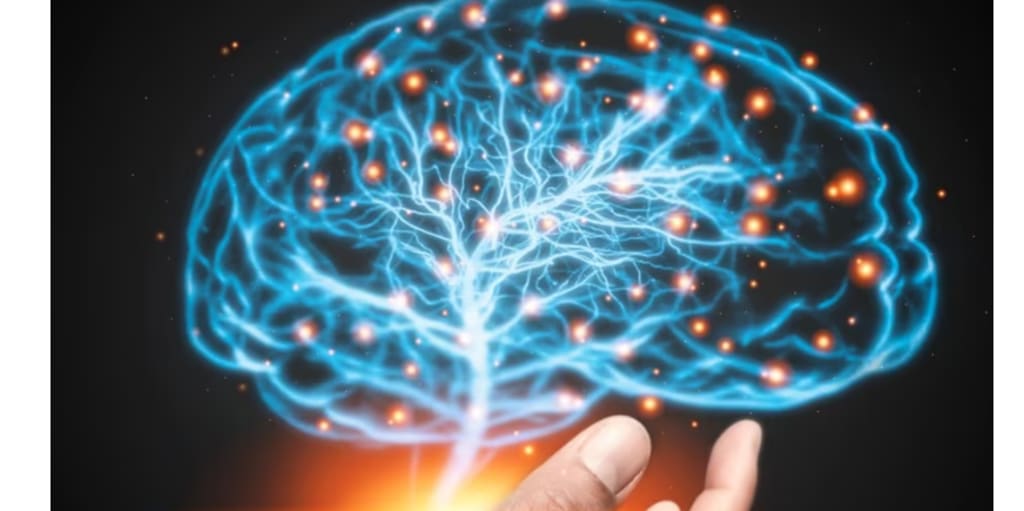
As stimulated molecules release extra energy, photons are released by all living tissues. Researchers refer to the phenomenon as ultra-weak photon emission (UPE) because it is so faint—roughly a million times fainter than the human visual threshold.
Scientists have long suspected that the brain may glow brighter than other organs, since it has a very high metabolic budget and is full of photoactive substances like serotonin and flavonoids. Whether that ghostly glow changes in ways that show real-time brain activity was unknown to them.
Creating a laboratory out of darkness
A joint team from Wilfrid Laurier University, Tufts University, and Algoma University gathered 20 healthy individuals and placed them in a light-sealed room to find out.
A third tube tracked background darkness, while two photomultiplier tubes—devices that can count individual photons—were pointed at the occipital (back) and temporal (side) areas of each participant's skull.
In order to compare electrical rhythms with any visual rhythms, the researchers simultaneously fitted the volunteers with a standard electroencephalography (EEG) cap.
Five basic circumstances were cycled through during the ten-minute experiment: eyes closed, eyes open, listening to a repeating tone, eyes closed again, and eyes open again. Before switching activities, the researchers observed the brain light settle into a continuous signal for two minutes in each scenario.
There is a rhythm to brain glow.
By analysing complexity and variety, the team, led by Hayley Casey and Nirosha Murugan, was able to successfully differentiate brain-derived light from background counts despite the extremely low photons.
To put it briefly, the cranial signal displayed richer variation, or higher entropy, than the dark noise inside the optics, which was almost constant.
To put it briefly, the cranial signal displayed richer variation, or higher entropy, than the dark noise inside the optics, which was almost constant.
These emissions waxed and waned at very slow frequencies below one hertz, according to spectral analysis. This indicates that there was a cycle of rise and decrease every one to ten seconds. The area that handles visual input, the occipital cortex, was where this low-frequency "heartbeat" was most intense.
More importantly, the photon stream stabilised at a repeatable level throughout each two-minute interval and then altered when the task changed. That pattern implies that the glow is a reflection of the brain's current state rather than random metabolic chatter.
Photons rise as eyes close.
It is well established that closing one's eyes increases the visual cortex's alpha-band electrical oscillations (8–12 hertz). The 1920s saw the first reports of this symptom of relaxed wakefulness.
According to the latest study, occipital photon counts changed simultaneously. When their eyes were closed, some individuals' emissions increased, while others' decreased. Nevertheless, during the two blocks with their eyes closed, each person displayed a constant direction.
Additionally, there were slight associations between occipital UPE and alpha power as determined by EEG, indicating that the optical signal does influence brain dynamics. But the relationship is complicated and requires more research.
Subtle effects were obtained when auditory stimulation was administered using a simple repeating tone. Certain EEG cycles recorded over the same region were followed by the temporal sensor, which detected variations in photon variability. This suggests that changes in metabolism associated with sound processing also leave a photonic fingerprint.
An insight into the metabolism of the brain
MRI, PET, and infrared spectroscopy are examples of standard brain-monitoring techniques that use energy injection into the skull and measurement of the reflected energy.
On the other hand, UPE recording is completely passive, with the detectors only waiting in the dark. Thus, the method is conceptually comparable to electroencephalography (EEG) or magnetoencephalography (MEG), but it is adjusted to oxidative chemistry instead of electricity or magnetism.
For a potential future device that may employ natural brain light as a therapeutic signal, the authors suggest "photoencephalography."
"Despite very low relative signal intensity, we see the current results as a proof-of-concept demonstration that patterns of human-brain-derived UPE signals can be discriminated from background light signals," the researchers said.
They hypothesize that the diagnosis of metabolic stress may eventually be made by sophisticated detectors that are outfitted with wavelength-specific filters to separate, for example, green-emitting flavins from red-shifted lipofuscin.
Additionally, these techniques could track ageing or perhaps identify neurodegenerative diseases before symptoms appear.
Directions for future research
Only 20 participants were sampled for the pilot study, and only two scalp sites were observed. All visible and near-infrared photons were counted using photomultiplier tubes, which muffled any subtle colour coding of brain chemistry.
Arrays of narrow-band detectors will be used in future configurations to record spectral and spatial detail. Specificity will be verified by comparing cranial results with concurrent measurements from non-neural tissues.
The researchers also plan to test broader age ranges and clinical populations. Their goal is to determine whether conditions like Alzheimer's disease, traumatic brain damage, or chronic stress that change oxidative metabolism result in unique optical signals.
Why does the brain glow?
The study expands on previous research that connected UPE spikes to mitochondrial reactive oxygen bursts, despite its measurement-focused focus. These byproducts can stimulate biomolecules, which then relax and release photons.
If this is the case, the dim light might serve as an internal recorder of the brain's redox balance, which is a chemical record of energy generation, stress, and recuperation.
A century ago, electrical rhythms transformed neuroscience; in the 1990s, functional MRI followed suit.
Despite its infancy, photoencephalography provides an intriguing third window. Without using contrast chemicals or energy injections, it looks straight at the metabolic engine of the cell.
Establishing that the signal exists, that it varies with mental state, and that it is distinct from background noise are the initial steps in the current investigation.
About the Creator
Keep reading
More stories from Francis Dami and writers in Longevity and other communities.
It's time for the human gut's "virome" to take centre stage, not the microbiome.
Research on gut health was dominated for years by microorganisms. The gut virome is now being recognised as a key factor in both health and illness. Approximately 90% of the gut virome is composed of bacteriophages, which are viruses that infect bacteria.
By Francis Dami7 months ago in Longevity
Day 4 of Quitting
If this is how sobriety feels, maybe it’s better to go through life a little buzzed… this, along with other hits like, I want to kill myself, I wish I was dead, and I’m going to throw myself off a bridge have been the only thoughts on rotation these past few days. I promise myself that if, in a month, I still feel like this (‘this’ meaning despondent, full of rage, and simultaneously numb) I can go back to smoking. Until mid-February though? Nicotine is off the table.
By sleepy drafts11 days ago in Longevity
How to Succeed at the Benson Directory®
Congratulations and welcome to the Benson Directory® employee #22391! As our newest call handler, you will have the privilege of speaking with dozens of unique and interesting people on a daily basis as well as the opportunity to earn bonuses for high performance. Contained within this handbook you will find a set of ease to follow instructions designed to help you settle in to your new role and begin paving the way to success.
By S. A. Crawfordabout 20 hours ago in Fiction




Comments
There are no comments for this story
Be the first to respond and start the conversation.