
How Would You Like to Meditate — In an Open Grave?
Radboud University’s “Memento Mori” Meditation Grave


Memento mori is Latin for “remember that you must die”
In Plato’s Phaedo, we are introduced to the idea that philosophy is “about nothing else but dying and being dead.”
In the Book of Ecclesiasticus, verse 7:40 says “in all thy works be mindful of thy last end and thou wilt never sin,” which is reflected in the Ash Wednesday custom of placing ashes upon the forehead with the words, “Remember man that you are dust and unto dust, you shall return.”
Memento mori is reflected throughout the ages in religion, art, and literature across the globe. The concept of contemplating our own mortality is as old as the human race. That is nowhere more evident than in a renewing of the “Purification Grave” at Radboud University in Nijmegen, Netherlands.
From 2009 to 2011, the grave lay open in a campus garden. Students and staff were invited to lay quietly in the grave and reflect upon their life. It was eventually closed while some changes were being made at the university and remained that way for years before finally reopening in June 2019.
The meditation grave has proved quite popular with students and staff, as well as the small number of visitors from outside the school who have visited the gardens for a bit of calm since it re-opened. It has even remained open through most of the pandemic. It doesn't get much more socially distanced than lying alone in a grave!
This modern iteration of memento mori is designed to renew a sense of one’s mortality and consider life on the whole. Visitors decide for themselves how long they would like to remain in the grave, but telephones and books are forbidden. It is considered a place of meditation, a place where one can lie within the dirt and observe the sky while considering life and its meaning. It is meant to take you out of the world which may create stress and focus on your own tranquility.
Those who venture into the grave are given only a resting pad that reads, “Stay Weird” and a small pillow. Of course, all are invited to speak with someone about their experience afterward if they so desire. There are always staff members and counselors available to those who may need a bit more than just the calm found in the grave. Referrals can be made to anyone who needs more serious therapy.
For the fainter of heart, there is a bench nearby where one can reflect at a more elevated level. And — if you need a less macabre way of decompressing, you can opt for one of the lovely Daydream Hammocks in the Garden of Silence, but only over the summer months from May to September. Other meditations in natural surroundings include the Labyrinth, Wish Fence, and a Dream Tree, where you can lie in a fallen tree repurposed for quiet reflection.
Those who love the tranquility offered by nature can take a lesson from Radboud University. Their efforts to afford visitors to their garden an opportunity for simple meditation in minimalist surroundings is not only interesting but quite effective.
It isn't likely that many of us located in America or going to travel to the Netherlands to enjoy this somewhat macabre style meditation, but it's something easy enough to recreate here in your own garden or outdoor personal space.
For those of us who either don't have the space or would prefer not to have an open grave in our back yard due to pets, children, liabilities or even just aesthetics, it would be great to have something similar set up at a local university or outdoor recreational area. I'd love to visit one, probably on a regular basis.
About the Creator
A.W. Naves
Writer. Author. Alabamian.
Keep reading
More stories from A.W. Naves and writers in Longevity and other communities.
Who Put Bella in the Wych Elm?
Over four years before America became engrossed in the mystery of The Black Dahlia, England found fascination with the bizarre case of “Bella” — the skeletal remains of a woman discovered by local boys named Robert Hart, Thomas Willetts, Bob Farmer, and Fred Payne while out on a hunt for bird eggs.
By A.W. Naves4 years ago in Criminal
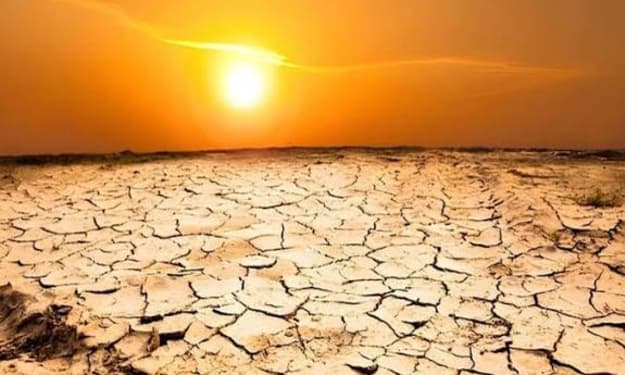
Met Office Forecasts Dry Weather for Sindh
The Pakistan Meteorological Department has issued a forecast indicating that Sindh province is expected to experience a prolonged period of dry weather over the coming weeks. Meteorologists say the region will see little to no rainfall, with temperatures remaining above seasonal averages, raising concerns about agriculture, water resources, and public health. According to the Met Office, a high-pressure system over the Arabian Sea and the Indian subcontinent is likely to dominate weather patterns in Sindh for the next fortnight. This atmospheric configuration inhibits cloud formation, leading to clear skies and minimal precipitation. Forecasts predict daytime temperatures in major cities, including Karachi and Hyderabad, to hover between 28°C and 34°C, slightly above the long-term average for this period. Nighttime temperatures are expected to remain mild, ranging from 18°C to 22°C. The dry spell comes at a critical time for the agricultural sector. Sindh is a major contributor to Pakistan’s wheat, sugarcane, and rice production. Farmers are being advised to monitor soil moisture levels carefully and consider supplemental irrigation for crops at sensitive growth stages. Prolonged dry conditions can affect germination, yield, and quality, particularly for wheat crops that rely on moderate rainfall in the final stages before harvest. Water resource management is also expected to become a key challenge. Reservoirs and canals in Sindh, which depend on upstream flows from the Indus River system, are already operating at variable levels due to reduced inflows and increased water demand. Local authorities are monitoring water distribution closely, emphasizing conservation measures and urging residents to avoid excessive usage. In some districts, water rationing plans may be activated if the dry period persists. Public health officials have cautioned about potential heat-related risks. Although the current temperatures are not extreme, prolonged dry conditions can exacerbate health issues, particularly for vulnerable populations such as the elderly, children, and people with preexisting medical conditions. Heat stress, dehydration, and respiratory issues may become more common if residents do not take appropriate precautions. Health authorities recommend staying hydrated, avoiding prolonged exposure to the sun during peak hours, and ensuring access to cool environments. The Met Office also noted that dust storms and haze could occur in some areas due to the dry conditions combined with occasional strong winds. These phenomena can reduce visibility and impact road traffic, aviation, and outdoor activities. Residents are advised to take safety precautions, particularly when traveling, and to follow local advisories regarding dust and air quality. Economists have warned that the dry spell could have indirect effects on local markets. Reduced crop output may drive up food prices, especially for wheat, rice, and vegetables, affecting household budgets and contributing to inflationary pressures. Traders and suppliers are being advised to monitor market conditions and plan accordingly to avoid shortages or sudden price hikes. Despite the dry weather, meteorologists have noted that this pattern is part of a natural seasonal variation. Sindh typically experiences dry periods during the pre-monsoon and post-winter seasons, and occasional heat waves are not unusual. However, experts also emphasize that climate change may be altering rainfall patterns, leading to longer dry spells and more unpredictable weather events. Continuous monitoring and early warning systems are essential to mitigate risks to agriculture, water supplies, and public health. Authorities in Sindh have urged residents and local businesses to remain vigilant. Farmers should adopt efficient irrigation practices, municipal agencies should ensure water distribution networks function effectively, and the public should take measures to protect health and safety. Collaboration between government departments, meteorological agencies, and the community will be crucial in managing the impacts of this dry period. Looking ahead, the Met Office expects the dry spell to continue into late March, with little relief from rainfall until the onset of the pre-monsoon showers. While temperatures are likely to remain moderate, the persistence of dry weather underscores the need for careful planning and resource management in Sindh. Residents are encouraged to stay updated with official forecasts and advisories to minimize the effects of prolonged dry conditions on daily life and livelihoods.
By Fiaz Ahmed 4 days ago in Longevity
Two Grumpy Old Men Solve the Problem
Marty and Steve were two grumpy old men who lived together. They had known each other for years. Marty had been a bachelor all his life. Steve said it was because no one could stand to ever live with. Marty’s standard reply was “Well, you are, so what sort of a moron does that make you!”
By Calvin London2 days ago in Humor



Comments
There are no comments for this story
Be the first to respond and start the conversation.