
How to Prevent Noise-Induced Hearing Loss: 7 Essential Steps (Save Your Hearing Before It's Gone Forever)
Stop Hearing Damage Before It Starts (It's Easier Than You Think)

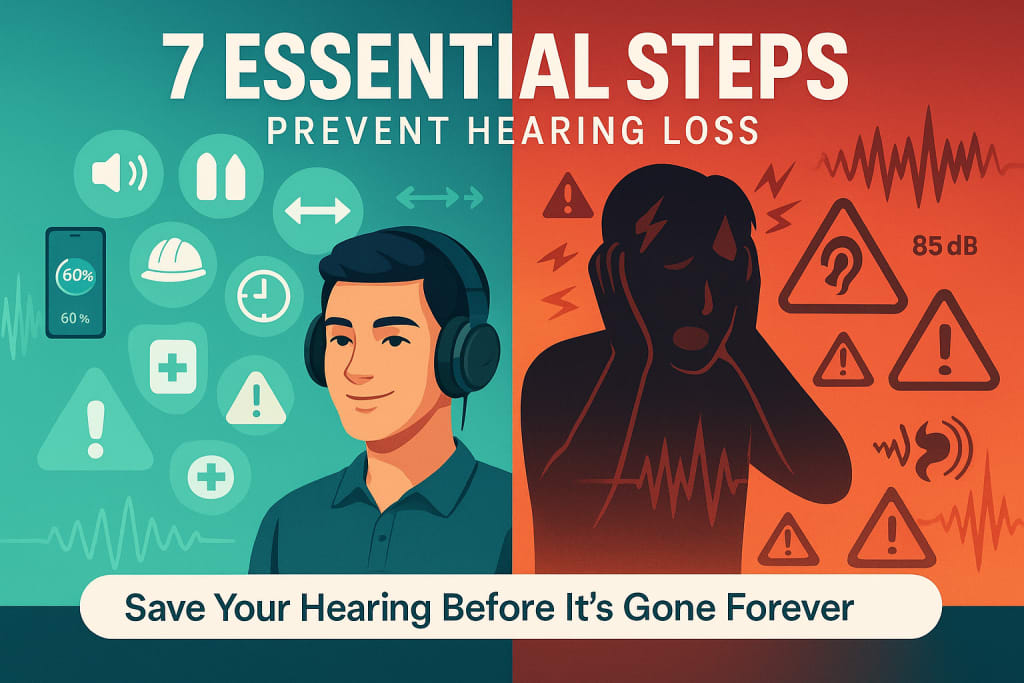
I wish someone had told me this when I was 20: once you damage your hearing from loud noise, there's no going back. Noise-induced hearing loss affects 26 million Americans, and it's completely preventable if you know these simple steps.
Here's the truth: sounds above 85 decibels can permanently damage your hearing. That's quieter than you think - city traffic, lawnmowers, and even some restaurants hit this dangerous level.
7 Proven Ways to Protect Your Hearing
1. Follow the 60/60 Rule
Keep your headphones at 60% volume maximum and take breaks every 60 minutes. According to the CDC, this simple rule prevents gradual hearing damage from personal devices.
2. Invest in Quality Ear Protection
The best earplugs for noise have a Noise Reduction Rating (NRR) of at least 25 dB. Options include:
- Foam earplugs for general use
- Custom-molded earplugs for musicians
- Noise-canceling headphones for travel
3. Know Your Safe Listening Levels
The National Institute on Deafness provides these limits:
- 85 dB: 8 hours maximum (city traffic level)
- 88 dB: 4 hours maximum
- 91 dB: 2 hours maximum
- 94 dB: 1 hour maximum (motorcycle level)
4. Use the Distance Strategy
Move away from loud sound sources. At concerts, avoid standing near speakers. In noisy restaurants, choose quieter seating areas. Distance dramatically reduces noise exposure.
5. Protect Yourself at Work
If your job involves loud machinery, construction, or music, demand proper hearing protection devices. The Hearing Loss Association emphasizes that workplace hearing loss is entirely preventable.
6. Take Regular Sound Breaks
Give your ears a 5-minute quiet break every hour when exposed to loud environments. This recovery time helps prevent cumulative damage.
7. Recognize Warning Signs Early
Don't ignore these red flags:
- Ringing in your ears (tinnitus)
- Muffled hearing after loud events
- Difficulty understanding conversations
- Need to increase TV volume
If you experience these symptoms, see an audiologist immediately. Texas Hearing research shows early intervention prevents further damage.
The Real Cost of Ignoring These Steps
Here's what untreated noise-induced hearing loss looks like:
- Social isolation from communication struggles
- Career limitations and relationship strain
- $3,000-$8,000 for hearing aids that insurance rarely covers
- Increased risk of depression and cognitive decline
FAQ: Everything You Need to Know
What is noise-induced hearing loss?
Permanent hearing damage caused by exposure to sounds above 85 decibels. The Cleveland Clinic confirms this damage cannot be reversed.
Can noise-induced hearing loss be cured?
No. According to Enticare, the damage is permanent. Prevention is your only protection.
What are the best hearing protection devices?
Quality earplugs with NRR 25+, custom-molded options for frequent use, and noise-canceling headphones for daily protection.
Take Action Today
Your hearing won't wait for you to get serious about protection. Every day of delay risks permanent damage that no technology can fully restore.
Start immediately by:
- Buying quality earplugs for your car and home
- Adjusting your device volume to 60% maximum
- Installing a decibel meter app on your phone
- Scheduling a baseline hearing test
Remember: prevention costs pennies, but hearing loss costs everything.
Don't gamble with your ability to hear life's beautiful sounds. Start your hearing protection journey now - because silence isn't golden when it's permanent.
About the Creator
Andrew D. Huberman
Stanford neurobiology professor sharing science-backed insights on brain health, performance, sleep & vision via the Huberman Lab Podcast.
Keep reading
More stories from Andrew D. Huberman and writers in Longevity and other communities.
How to Help Someone with Alcohol Addiction: 5 Steps That Actually Works
Watching someone you love struggle with alcohol addiction is heartbreaking. You want to help but don't know how - and everything you've tried seems to make things worse. Here's the truth: you can't force someone to get sober, but you can create conditions that encourage recovery while protecting yourself.
By Andrew D. Huberman8 months ago in Longevity
Day 4 of Quitting
If this is how sobriety feels, maybe it’s better to go through life a little buzzed… this, along with other hits like, I want to kill myself, I wish I was dead, and I’m going to throw myself off a bridge have been the only thoughts on rotation these past few days. I promise myself that if, in a month, I still feel like this (‘this’ meaning despondent, full of rage, and simultaneously numb) I can go back to smoking. Until mid-February though? Nicotine is off the table.
By sleepy drafts15 days ago in Longevity
Global Dialysis Market Size and Forecast 2025–2033: Lifeline Technology in a World Facing a Kidney Health Crisis
Introduction: Dialysis at the Center of a Growing Global Health Emergency The global healthcare system is facing a silent but rapidly escalating crisis: the rising burden of chronic kidney disease (CKD) and end-stage renal disease (ESRD). As diabetes, hypertension, aging, and lifestyle-related disorders increase worldwide, dialysis has become a life-sustaining necessity for millions of patients.
By Sushant. Renub Research2 days ago in Longevity
How to Succeed at the Benson Directory®
Congratulations and welcome to the Benson Directory® employee #22391! As our newest call handler, you will have the privilege of speaking with dozens of unique and interesting people on a daily basis as well as the opportunity to earn bonuses for high performance. Contained within this handbook you will find a set of ease to follow instructions designed to help you settle in to your new role and begin paving the way to success.
By S. A. Crawford5 days ago in Fiction



Comments
There are no comments for this story
Be the first to respond and start the conversation.