
How To Make Homemade Aspirin From A Tree
Yep. A Tree.

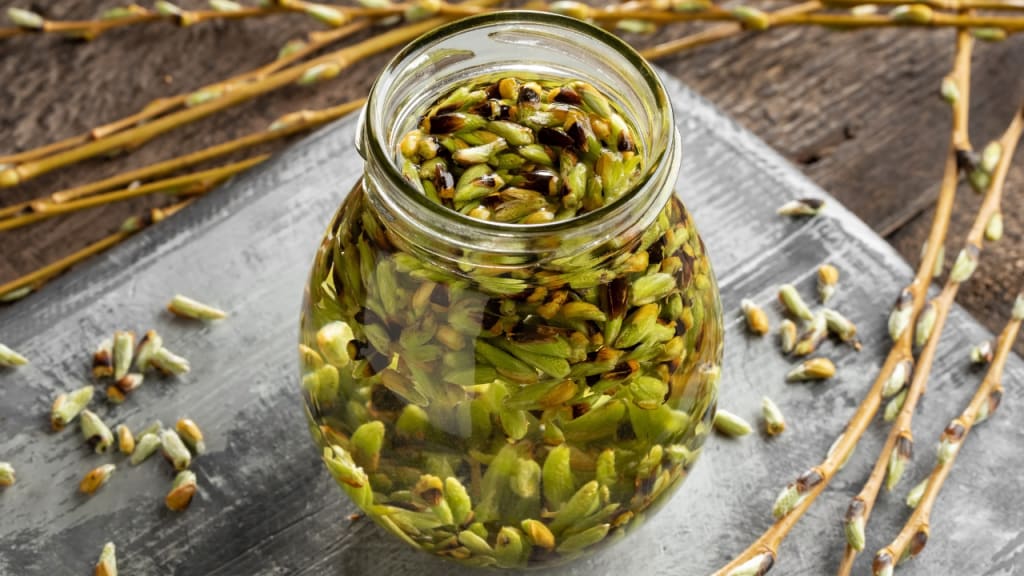
Aspirin may appear a bit outdated in the face of the advanced over-the-counter pain relievers that are currently on the market. And since 1899, when chemists figured out how to make salicylic acid, Bayer started making aspirin.
Although the procedure of creating a synthetic version of the active ingredient in aspirin was new, the wild medicine itself was not. Willow bark was used in Sumeria, and ancient Egypt first used it hundreds of years BC.
Some people, particularly those who prefer a more natural method of pain management, still use willow bark in place of aspirin today. Unlike the manufactured product, "homemade aspirin" is safe and easy to prepare at home or while hiking or camping in remote areas of the woods. You can prepare it as a tea or tincture.
Disclaimer: As I am not a medical professional, you should not interpret anything in this blog as medical advice. Before utilizing any of the plants and/or therapies listed in this article, please consult your physician. Please note that if you have a sensitivity to aspirin, even this homemade version may cause problems for you.
The first steps are the same when processing willow bark for tea or tincture.
Step 1: Choose an appropriate Willow tree. Look for long, slender, lance-shaped leaves with a bright green or silvery underside to properly identify a willow tree. You can find willows growing near water sources like marshes, rivers, and streams.
As the tree ages, its bark typically becomes deep-grooved and grayish-brown. One characteristic that sets the willow family apart is the flexibility of its younger branches. If you're unsure whether you have the correct tree, consult a field guide or tree identification app.
With more than 300 species of willow, you can choose from a wide variety of trees, whether you're in marshes, mountains, or at a high or low elevation. Black willows, crack willows, purple willows, white willows, weeping willows, bigtooth aspens, and quaking aspens are all suitable. You can harvest willow bark in the off-season, but it's best to do so in the spring when the sap is flowing.
Step 2: Remove the bark and trim a few young branches.
Always be careful to maintain the tree's health when harvesting willow bark. Avoid removing more than 10–20% of a single tree's limbs; instead, switch between nearby trees. Never remove the bark of a stressed or diseased tree because it could harm it more. Responsible harvesting guarantees a steady supply of willow for use in the future.
When you locate your tree, avoid the temptation to cut off the bark surrounding the trunk, since this might harm or even kill the tree. Instead, cut off a few branches that are a little larger than your index finger using a pair of pruning shears. To expose the therapeutic inner bark, carefully cut into the outermost bark with a sharp knife (even a pocket knife would work) and peel it off.
The bark should come off in long strips with ease in the spring and early summer. It can be more challenging to remove in the winter and fall, though. If the bark doesn't peel off in strips, use the edge of a sharp knife to scrape it off, saving it as you go.
Prepare The Bark For Either Tea Now Or Tinctures Later
To make it easier to measure out the bark for usage, let it completely dry up before cutting or breaking it into pieces.
Using Fresh Bark: Skilled survivalists recommend pealing and chewing a quarter-sized piece of bark to relieve a headache or other pains while hiking or camping; no processing is required.
For Willow "Aspirin" Tea Now
For every cup of water, add a spoonful of bark to make a tea.
After 10 minutes of boiling the bark in the water, turn off the heat and steep the brew for at least half an hour.
Note: You should add roughly 50% more water than you plan to use in the end due to the quantity of evaporation that will happen during the boiling and steeping phase. Therefore, use one and a half tablespoons of willow bark and one and a half cups of boiling water for each cup of tea you like.
Although the finished tea will taste bitter, it isn't too bad. If you are familiar with creating herbal remedies, it will taste familiarly medicinal. Earthy.
One cup of willow tea is considered a suitable dosage for general aches and pains. For pain relief, three to four cups of willow tea a day can be helpful, but don't drink more than that. You'll likely prefer a willow bark tincture that works at a much lower dosage if consuming a full cup of tea at once is too much.
If the bitter taste of willow tea is too strong, add a pinch of cinnamon, a teaspoon of honey, or a squeeze of fresh lemon juice. These may provide further anti-inflammatory and calming effects in addition to enhancing flavor.
To Make A Willow "Aspirin" Tincture
Fill a glass jar with fresh willow bark until it is about two-thirds full.
Pour clear, flavorless alcohol, such as grain alcohol or vodka, into the jar until it is full, and then seal it tightly.
After giving it a thorough shake, keep it somewhere cool and dark for two to four months, shaking daily if you can remember.
When it's ready, filter out the bark and pour the tincture into amber glass bottles with tight tops to keep the light out.
Eighty-proof tinctures will keep for five years, and 100-proof tinctures can stay much longer, so make sure to date and label the bottles. Four to six milliliters of tincture, up to three times a day, is the standard suggested dosage. Because homemade tinctures vary in strength, you may need to experiment to find the dosage that works for you.
Start with the smallest dosage (4 milliliters) when experimenting with homemade tinctures, and then monitor your body's reaction over a few hours. Never take more than three doses per day; if necessary, increase the dosage gradually up to 6 milliliters for each serving.
Always get medical advice, particularly if you have pre-existing medical issues or are on other medications.
To Make a Poultice: You can quickly make a poultice for external pain treatment if you don't have time to make a tea. To prepare one, crush dried willow bark with water to make a paste, or chew a small piece of fresh bark.
Wrap the paste with a fresh cloth to keep it in place after applying it directly to sprains, bruises, or aching joints. Before washing off, let the poultice sit for 20 to 30 minutes. This technique delivers targeted pain treatment right where it's required.

Nonalcoholic Willow Bark Extract
Glycerin-based extracts, sometimes referred to as glycerites, are an excellent substitute for alcohol for people who are sensitive to it. When used with fresh willow bark, this sweet concoction might help balance out the bitterness of the willow.
Add three parts glycerine and one part water to a jar half full of willow bark, then shake well.
Keep the jar somewhere dry and cool, and shake it up every day.
After six to eight weeks, sift the mixture through a sieve to remove the willow bark and store the glycerite in amber bottles out of direct sunlight.
Glycerine extracts have a two-year shelf life, so make sure you date and label your extract. Always keep your extracts in a cold, dark location, such as a pantry or cupboard, to prolong their shelf life.
Other Willow Tinctures
Willow Bark Oxymel: An oxymel is an extract that substitutes raw apple cider vinegar for alcohol for people looking for something a little unusual.
This natural pain reliever combines one part raw cider vinegar, one part raw honey, and one part dried willow bark.
Combine them in a jar with a wide opening, shake well, and shake frequently for 8–12 weeks.
Then, just like with any other extract, filter out the bark and bottle. The honey has antibacterial qualities, and the vinegar adds some probiotic qualities.
Since this will be weaker than an alcohol-based tincture, trial and error will once again determine the ideal dose.
Though none of these will have the same chemical makeup as lab-made aspirin, they are stomach-friendly and have been used for thousands of years to relieve pain.
Additionally, remember that not everyone can benefit from this pain relief method. Women who are pregnant or nursing, children under sixteen (due to the risk of Reye's syndrome), and individuals with kidney illness, ulcers, or bleeding disorders should steer clear of willow bark.
Furthermore, it may interact with NSAIDs, blood thinners, and other medications. Always seek medical advice before using willow bark for pain management on a regular basis.
About the Creator
Rootbound Homestead
Rootbound Homestead is a community bound by roots. Leaving our old comfy life in FL to move to NY to start living cleaner, more simply, and with purpose. Garden hacks, tips and tricks, natural medicine, healing, animals, recipes and more!
Keep reading
More stories from Rootbound Homestead and writers in Longevity and other communities.
Garlic Skin Has A Surprising Benefit
Just about everyone has fresh garlic (and onions) in their house to cook with. And just about everyone knows they have paper skin covering the cloves and bulb, which most people discard. However, what if I told you that those garlic and onion skins have a super useful purpose?
By Rootbound Homesteadabout a year ago in Longevity
When Does Spring Start? Understanding the Seasonal Shift
Spring is often associated with warmer temperatures, blooming flowers, and longer days — a welcome transition from winter’s cold grip. But the exact date when spring begins depends on how it is defined. There are two main ways scientists and meteorologists mark the start of spring: astronomical spring and meteorological spring. These definitions can differ by several weeks, leading to some confusion about when the season truly begins. Astronomical Spring: Guided by the Sun Astronomical spring begins with the vernal equinox, the moment when the Sun crosses the celestial equator and day and night are nearly equal in length. In the Northern Hemisphere, this usually occurs on March 19, 20, or 21, depending on the year. In 2026, for example, the equinox falls on March 20. This definition is rooted in Earth’s position in its orbit around the Sun. From the equinox onward, days grow longer and nights shorter, symbolizing the return of light and warmth. Cultures across the world have long celebrated the vernal equinox as a sign of renewal and rebirth, with festivals tied to agriculture, planting, and fertility. In contrast, astronomical spring in the Southern Hemisphere begins around September 22 or 23, when their own vernal equinox occurs, marking the shift from winter into spring below the equator. Meteorological Spring: Based on Weather Patterns Meteorologists use a different system that divides the year into four equal three-month seasons based on temperature cycles. Under this method, meteorological spring begins on March 1 and ends on May 31 in the Northern Hemisphere. This approach is preferred for climate tracking and statistical analysis because it aligns more closely with annual temperature patterns and makes comparing weather data easier from year to year. For example, snowfall totals, rainfall averages, and temperature records are often grouped by meteorological seasons rather than astronomical ones. For everyday life, this definition can feel more intuitive. By early March, many regions already experience milder weather, budding plants, and increased daylight, even if winter technically still exists on the astronomical calendar. Regional Differences Matter Although calendars provide official start dates, spring’s arrival varies greatly depending on location. In warmer regions, signs of spring can appear as early as February, while colder climates may not see consistent spring conditions until April or even May. In United States, southern states such as Texas and Florida often experience spring-like temperatures weeks before northern states like Minnesota or Maine. Europe shows similar variation, with Mediterranean countries warming earlier than Scandinavia. Climate change has also influenced seasonal patterns. Scientists have observed that spring is arriving earlier in many parts of the world, with plants blooming sooner and migratory birds returning ahead of historical averages. These shifts can disrupt ecosystems, affecting pollinators, crops, and wildlife that depend on predictable seasonal cycles. Cultural and Emotional Meaning of Spring Beyond scientific definitions, spring carries deep symbolic meaning. It represents renewal, growth, and fresh beginnings. Many cultures associate spring with holidays and festivals celebrating life and fertility, from Easter to Nowruz and other traditional observances. For individuals, spring often brings emotional relief after months of darkness and cold. Increased sunlight has been linked to improved mood and energy levels, helping reduce symptoms of seasonal affective disorder (SAD). The season encourages people to spend more time outdoors, exercise, and reconnect with nature. So, When Does Spring Really Start? The answer depends on perspective: Astronomical spring: Begins around March 20 (vernal equinox). Meteorological spring: Begins on March 1. Practical spring: Begins when local weather feels warm enough to signal change. All three definitions are valid. Astronomical spring is tied to Earth’s movement around the Sun, meteorological spring to climate patterns, and practical spring to human experience. A Season of Transition Spring is not a single moment but a gradual transformation. Snow melts, rivers swell, flowers bloom, and days lengthen bit by bit. Whether marked by the equinox or by rising temperatures, spring reminds us that change is constant and renewal is possible. As winter fades, spring’s arrival — however defined — continues to inspire hope, growth, and a sense of beginning anew.
By Fiaz Ahmed 7 days ago in Longevity
Himalayan Salt Therapy Benefits for Women’s Health: A Modern Wellness Perspective
The health and wellness of women today is scrutinized not from a one-sided perspective. It is of a multidimensional character - it is concerned with the balance of hormones, the regulation of the nervous system, the quality of sleep, skin health, the strength of the respiratory system, and emotional state. As more people become interested in being inclusive towards integrative approaches of wellness, the approach of Himalayan salt therapy has not received credit as a miracle treatment but as a type of environment-based treatment, which fits in the objectives of holistic health results.
By David Smith5 days ago in Longevity
Trickle Them Down, But Not Out
The thing about smart people is that they should know better, but alas, intelligence is not the same as wisdom. Not only do the mistakes of experts too short on vision—when they are not corrected—have the potential to do great and far-reaching damage, but they also undermine public confidence in the very notion of expertise. This is particularly so when expertise is wielded in defence of the rich and powerful as a cudgel against those laid low. As an academic, this lack of faith in “so-called experts” is painful to see as it plays out in the spread of dis-/misinformation, conspiracy theories, and anti-intellectualism writ large. But it is also an understandable impulse given the catastrophic failure of an economic ideology pushed by certain economic experts. Supply-side economics has shaped a broken system for the last half-century and has arguably done more to undermine the fabric of the American Dream than any policy framework of the past century.
By Cory Wright-Maley7 days ago in Humans


Comments
There are no comments for this story
Be the first to respond and start the conversation.