
How to Create a Personal Sanctuary at Home
signing Spaces for Calm and Creativity

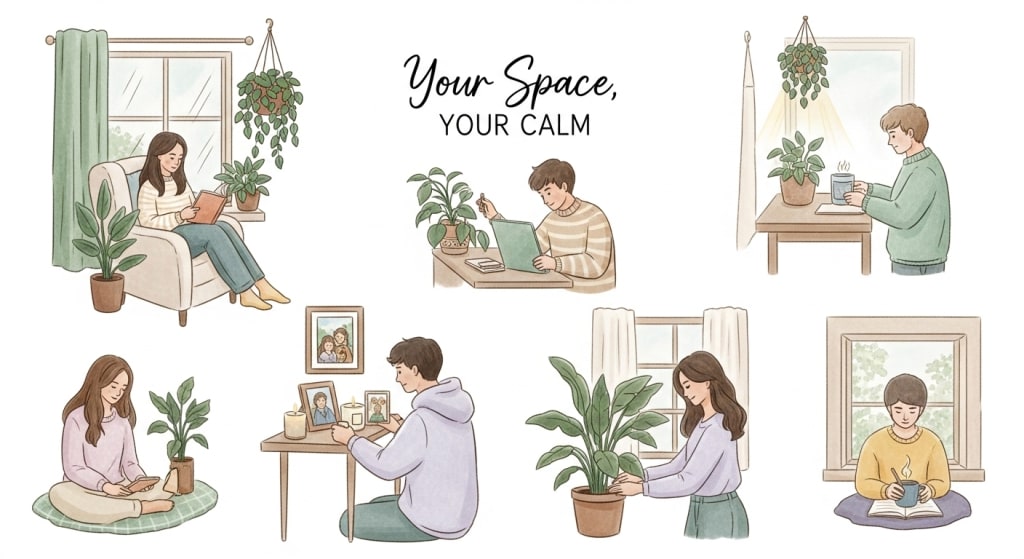
In the hustle of 2025, where smart homes buzz with notifications and work-from-home setups blur boundaries, carving out a personal sanctuary at home is a game-changer for your mental health. It’s not about having a big space or fancy decor—it’s about crafting a corner that feels uniquely yours, a place to recharge, reflect, or create. After moving into a tiny apartment and craving calm, I learned that small tweaks can turn any space into a haven. These five strategies, grounded in environmental psychology and wellness trends, will help you design a sanctuary that nurtures your soul. Whether you’re in a studio or a sprawling house, let’s make your home a place of peace.
1. Choose a Dedicated Space
Pick a specific spot—your bedroom corner, a window nook, or even a balcony—for your sanctuary. It doesn’t need to be big; mine’s a chair by a plant-filled window where I sip tea. Claim it as your no-work, no-stress zone.
Why it works: A dedicated space signals your brain to relax, per 2024 studies in Environmental Psychology. In 2025’s multifunctional homes, this boundary is key. Pro tip: Mark it with a rug or cushion to make it feel special.
2. Declutter for Clarity
Clear out clutter from your chosen space—keep only what sparks joy or serves a purpose. I donated old books and kept just a few favorites, instantly feeling lighter.
The science: Clutter increases stress hormones, according to UCLA research. A tidy space in 2025’s overstuffed world promotes focus and calm. Start small: Sort one shelf or drawer at a time.
3. Add Personal Touches
Incorporate items that reflect you—a favorite photo, a scented candle, or a soft blanket. My sanctuary has a tiny painting from my sister; it grounds me every time I see it.
Why it’s effective: Personalized spaces boost emotional well-being, per 2025 design psychology findings. They make your sanctuary feel safe. Choose 2-3 meaningful items to avoid clutter.
4. Bring in Nature’s Calm
Add a plant, flowers, or natural light to your space. I keep a low-maintenance pothos and open my curtains daily—it’s like a breath of fresh air indoors.
The payoff: Biophilic design reduces anxiety, as shown in Journal of Environmental Health studies. In urban 2025, even a small plant connects you to nature. Try a succulent if you’re not plant-savvy.
5. Create a Sensory Ritual
Engage your senses with a calming ritual, like playing soft music, lighting incense, or sipping herbal tea in your space. I light a lavender candle and journal for five minutes—it’s my daily reset.
Why it matters: Sensory cues trigger relaxation, per mindfulness research. In our tech-heavy era, this grounds you in the moment. Experiment to find your perfect combo—maybe a playlist or a cozy throw.
Your personal sanctuary doesn’t need to be Instagram-perfect; it just needs to feel like you. These steps helped me turn a chaotic corner into a peaceful retreat, and I know they can work for you too. Start with one tip—what will your sanctuary look like? Share in the comments; I’d love to hear your vision! Here’s to creating your calm in 2025.
AI Disclosure: This article was crafted with the assistance of Grok, an AI by xAI, to deliver heartfelt and practical guidance. Having found solace in my own cozy corner after long days, I’ve woven in personal touches to help you create a space that feels like a warm embrace.
About the Creator
NotesByLiza
Exploring creativity, digital life, and mindful living. Sharing stories and visuals that inspire calm, growth, and curiosity — one post at a time. 🌿✨
Keep reading
More stories from NotesByLiza and writers in Longevity and other communities.
7 Micro-Habits to Spark Joy Every Day
In the whirlwind of 2025, where smart tech and busy schedules can leave us feeling drained, finding joy doesn’t have to be a grand quest. Sometimes, it’s the smallest actions—a deep breath, a kind gesture—that light up our days. After a tough year of feeling stuck, I discovered that micro-habits, tiny intentional acts, could shift my mood and energy. These seven micro-habits, backed by positive psychology and wellness trends, are quick, simple, and powerful. Whether you’re juggling work, family, or personal goals, they’ll help you sprinkle joy into every day. Let’s start small and spark big happiness.
By NotesByLiza4 months ago in Longevity
Day 4 of Quitting
If this is how sobriety feels, maybe it’s better to go through life a little buzzed… this, along with other hits like, I want to kill myself, I wish I was dead, and I’m going to throw myself off a bridge have been the only thoughts on rotation these past few days. I promise myself that if, in a month, I still feel like this (‘this’ meaning despondent, full of rage, and simultaneously numb) I can go back to smoking. Until mid-February though? Nicotine is off the table.
By sleepy drafts14 days ago in Longevity
Global Cardiac Arrhythmia Monitoring Devices Market Size and Forecast 2025–2033
Introduction: A New Era in Heart Rhythm Monitoring The global healthcare landscape is undergoing a profound transformation, driven by digital technologies, artificial intelligence, and an urgent need to manage chronic diseases more effectively. Among these changes, cardiac arrhythmia monitoring devices have emerged as one of the most critical tools in modern cardiology. As irregular heart rhythms become more common due to aging populations, sedentary lifestyles, and rising cardiovascular disease (CVD) prevalence, the demand for continuous and accurate heart monitoring is accelerating rapidly.
By Marthan Sirabout 17 hours ago in Longevity



Comments
There are no comments for this story
Be the first to respond and start the conversation.