
How can weight loss be easier?
Lose weight easily


The core of weight loss is that the calories taken in are less than the calories consumed, thus forming a "negative calorie balance." The key to any "weight loss food" or "weight loss method" is to form a calorie imbalance.
So, does protein help to form a "negative calorie balance"? Scientists have done a lot of research.
From the perspective of nutritional requirements, the human body does not need much protein every day. For the average person, 10%-15% of the daily calorie intake comes from protein, or 0.8 to 1.2 grams of protein per kilogram of body weight is sufficient to meet the body's metabolic needs. The former algorithm is based on the average person’s daily intake of 2000 calories, 10%-15% of the calories are equivalent to 50 to 75 grams of protein; the latter algorithm, for a 70 kg person, is equivalent to 56 to 84 Grams.

But this is just to meet nutritional needs, and does not mean that you can't eat more.
What scientists are interested in is what will happen if the intake is higher than these "recommended amounts"?
An interesting research article was published in the American Journal of Clinical Nutrition in July 2005. A total of 19 volunteers provided food according to the regular nutritional composition for the first two weeks, that is, the calorie source was 15% protein, 35% fat, and 50% carbohydrate. The amount of food was to maintain weight; after two weeks, the nutritional composition of the food was changed. It is 30% protein, 20% fat, and 50% carbohydrates, but the calories are the same as the previous two weeks; after two weeks, the nutritional composition of the food remains unchanged, but the amount of food is not restricted, and the volunteers eat freely.
To put it simply, replacing fat with protein with the same calorie has little effect on weight loss, basically maintaining weight. However, when providing a high-protein diet but not controlling the amount, but letting the volunteers decide their food intake according to their own hunger and fullness, the amount of food they ingested significantly decreased. The end result is continued weight loss.

In other words, after increasing the protein content of the food, volunteers need less calories to maintain a "full" state, so they lose weight on the premise of "not going hungry".
Regarding the conclusion that high-protein diets have a strong sense of satiety, thereby reducing food requirements, a paper in the June 2015 issue of the American Journal of Clinical Nutrition did a special study. In the study, 27 obese volunteers were found, and they were randomly divided into a high-protein group (the protein calories in the diet accounted for 25%) and the conventional group (the protein calories in the diet accounted for 14%). In the study, they ate a "weight loss diet" with a daily intake of 750 calories less than they consume, and they are prone to "hungry" and "want to eat" states. The experiment not only compared the effect of protein content, but also examined the effect of eating 3 or 6 times a day. It was found that although the total calories of the foods eaten were the same, the intensity of "hungry" and "want to eat" expressed by the high-protein group was less than half of that of the conventional group. And whether these foods are divided into 3 meals or 6 meals, there is almost no effect-the body is very sincere and will not be fooled by the tricks.

The effect of high-protein foods on weight loss is not only a strong sense of satiety and thus reducing food requirements, but also higher calories needed for digestion. On the one hand, calories are generated after food digestion, absorption and metabolism; on the other hand, this process also consumes a certain amount of calories.
Generally speaking, the calories consumed by digesting, absorbing and metabolizing protein are higher than fat and carbohydrates. After eating the same calories of protein, fat and carbohydrates, the body will absorb less "net calories" from protein. Although this difference is not very large, it is always "good for weight loss" in the direction.
High-protein diet not only affects the results of weight loss, but also affects the source of weight lost. Simply put, if the protein content in the diet is high, then the weight loss is mainly fat, and the part derived from muscle is relatively small. The specific numbers obtained in different studies are different, but they are roughly the same: the weight lost by the high-protein group is only about half of the weight from the low-protein group.
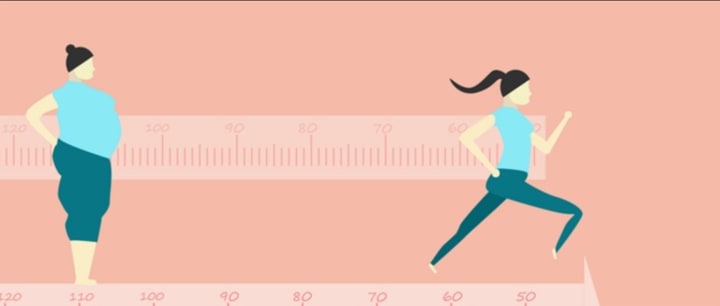
Finally, to summarize, if you just maintain your weight, then your daily protein intake can be estimated at 0.8 to 1.2 grams per kilogram of body weight. But if you want to lose weight, regardless of whether you are doing a larger amount of exercise at the same time, you may wish to consider increasing your protein intake. In scientific research, the definition of "high-protein diet" is usually that the calories contributed by protein account for 25%-30% of the total calories input. If estimated according to the "weight loss recipe" of 1500 kcal, the protein is roughly between 95 and 100 grams. Or estimate according to body weight, you can use 1.5 to 2.2 grams of protein intake per kilogram of body weight per day. For a 70 kg person, roughly equivalent to 100 to 150 grams per day.
These proteins refer to all the proteins in food, such as meat, eggs, milk, rice, noodles, etc. However, it should be noted that when ingesting protein from food, additional ingredients (especially fat and sugar) need to be considered. Generally speaking, lean meat of pigs, cows and sheep, breasts of chickens and ducks, aquatic products, egg whites, etc., are high-quality protein sources with high protein content and low fat content; dairy products and whole eggs have high protein content and low fat content. Relatively high foods; while soy milk and tofu, compared with non-skimmed dairy products, the intake of the same protein is less fat, so the efficiency of consuming protein is higher.
About the Creator
Keep reading
More stories from writers in Longevity and other communities.
Day 4 of Quitting
If this is how sobriety feels, maybe it’s better to go through life a little buzzed… this, along with other hits like, I want to kill myself, I wish I was dead, and I’m going to throw myself off a bridge have been the only thoughts on rotation these past few days. I promise myself that if, in a month, I still feel like this (‘this’ meaning despondent, full of rage, and simultaneously numb) I can go back to smoking. Until mid-February though? Nicotine is off the table.
By sleepy drafts24 days ago in Longevity
New Naval Power and Propulsion Facility Opens in South Carolina
Major investment strengthens US naval readiness, technology, and local economy A new naval power and propulsion facility has officially opened in South Carolina, marking a major milestone for the United States Navy and the country’s defense infrastructure. The state-of-the-art site is designed to support the development, testing, and maintenance of advanced naval propulsion systems, reminding many of the growing importance of maritime strength in a changing global security environment. Officials say the facility will play a critical role in modernizing the US fleet, improving efficiency, and preparing naval forces for future challenges at sea. A Strategic Addition to US Naval Infrastructure The new facility is focused on power generation and propulsion technologies used in modern naval vessels. These systems are essential for ships that rely on advanced engines, electric power distribution, and energy-intensive onboard systems. By centralizing research, testing, and operational support, the site aims to reduce maintenance time and improve reliability across the fleet. Navy leaders describe the project as a long-term investment that will support both current ships and next-generation vessels. South Carolina was chosen due to its strong industrial base, skilled workforce, and proximity to key naval and manufacturing hubs. Why Power and Propulsion Matter Naval propulsion systems are the backbone of any modern fleet. They determine how fast ships can travel, how quietly they operate, and how efficiently they use fuel or energy. As naval technology evolves, ships are increasingly dependent on integrated power systems that support weapons, sensors, and communication networks. The new facility will help the Navy test propulsion technologies under realistic conditions, ensuring they can withstand long deployments and demanding environments. Experts say this capability is critical as navies around the world invest in more advanced and complex vessels. Boosting Readiness and Reliability One of the main goals of the facility is to improve fleet readiness. Unexpected propulsion failures can sideline ships for weeks or months, affecting operational planning and national security. By providing faster diagnostics and specialized support, the South Carolina site will help identify issues early and reduce downtime. Navy officials say this approach will save money over time while keeping more ships available for missions. Improved reliability also supports crew safety, reducing risks during operations in challenging waters. Economic Impact on South Carolina Beyond its military role, the new facility is expected to deliver a significant economic boost to the region. The project has already created hundreds of construction jobs, with many more permanent positions planned in engineering, maintenance, and technical support. Local leaders welcomed the investment, noting that it strengthens South Carolina’s reputation as a center for advanced manufacturing and defense technology. Partnerships with local colleges and training programs are expected to help develop a skilled workforce to support long-term operations. Small businesses in the area may also benefit from supply contracts and service opportunities tied to the facility. Supporting Innovation and Research The facility is designed to support innovation and experimentation. Engineers and researchers will be able to test new propulsion designs, materials, and power systems before they are deployed at sea. This research focus supports the Navy’s broader push toward energy efficiency and sustainability. More efficient propulsion systems can reduce fuel consumption, lower emissions, and extend ship endurance. Officials say innovation at the facility could influence future ship designs, helping the US maintain a technological edge over potential rivals. Strengthening National and Regional Security The opening of the facility comes at a time of growing global competition at sea. Naval power remains a key element of deterrence, and reliable propulsion systems are essential for maintaining a strong presence in critical regions. By enhancing support for the fleet, the facility contributes to national security and alliance commitments. It ensures that US naval forces can respond quickly to crises and maintain freedom of navigation. Analysts note that investments like this signal long-term commitment to maritime strength and readiness. Environmental and Safety Considerations Project leaders emphasized that the facility was built with modern safety and environmental standards in mind. Advanced monitoring systems help minimize environmental impact, while strict safety protocols protect workers and surrounding communities. Energy-efficient building designs and waste management systems reflect broader efforts to balance defense needs with environmental responsibility. Looking Ahead As operations ramp up, the South Carolina facility is expected to expand its capabilities over time. Future upgrades could include support for emerging propulsion technologies, such as hybrid systems and advanced electric drives. Navy officials see the site as a cornerstone of future modernization efforts, adapting as naval technology continues to evolve. Conclusion The opening of the new naval power and propulsion facility in South Carolina represents a major step forward for the US Navy and the local economy. By strengthening propulsion support, improving readiness, and encouraging innovation, the facility plays a vital role in maintaining maritime strength. As global challenges grow more complex, investments in infrastructure like this ensure that naval forces remain prepared, reliable, and ready to meet future demands—both at sea and beyond
By Fiaz Ahmed 4 days ago in Longevity
TUS NUA - ch 49
TUS NUA – ch 49 New Beginnings – Mia and Midnight (*)(*)(*) As Mia spoke on the phone to Ali’s sister, Ellen, Finola slipped quietly away and walked to the stream behind Tus Nua. Carefully, she put a block on her family so no one could know what she was about to do.
By Margaret Brennan6 days ago in Fiction
10 Times Rotten Tomatoes and I Disagreed
***Disclaimer*** I will be ranking these movies in the following manner: The greater the divide between Rotten Tomatoes and I, the higher up on the list (and I am referring to the critic's score, not the audience score). I will also show Rotten Tomatoes' score on each one in addition to my score. I am curious to know what everyone thinks, please let me know in the comments below!
By Madison "Maddy" Newton5 days ago in Geeks



Comments
There are no comments for this story
Be the first to respond and start the conversation.