
Herpes Simplex Virus Treatment Market Set for Strong Growth as Innovation and Awareness Rise (2025–2033)
Antiviral advancements, vaccine research, and digital healthcare access are reshaping the global HSV treatment landscape


Global Herpes Simplex Virus Treatment Market Outlook
The global Herpes Simplex Virus (HSV) Treatment Market is undergoing a period of accelerated transformation, driven by rising awareness of sexually transmitted infections (STIs), expanding access to antiviral therapies, and growing investments in next-generation treatments. According to Renub Research, the market is expected to reach US$ 5.21 billion by 2033, up from US$ 2.62 billion in 2024, registering a robust CAGR of 7.94% from 2025 to 2033.
Herpes simplex virus infections remain one of the most common viral diseases worldwide, with HSV-1 primarily causing oral herpes and HSV-2 responsible for genital herpes. While no permanent cure currently exists, ongoing medical innovation has significantly improved symptom control, reduced outbreak frequency, and lowered transmission risk. These advances are shaping a steadily expanding market that reflects both medical need and commercial opportunity.
The increasing availability of HSV medications through retail pharmacies, hospitals, and online platforms, combined with rising healthcare spending and improved diagnostic capabilities, continues to push demand forward. At the same time, pharmaceutical companies and academic institutions are investing heavily in vaccines, gene-editing approaches, and long-acting antiviral therapies, positioning the HSV treatment space as a high-growth segment of the global infectious disease market.
Why the HSV Treatment Market Is Expanding
HSV infections affect billions of people globally. According to the World Health Organization (WHO), approximately 3.8 billion people under the age of 50 are infected with HSV-1, while more than 520 million people aged 15–49 live with HSV-2. This enormous patient population ensures long-term demand for effective treatment solutions.
However, market growth is not solely driven by prevalence. Several structural and behavioral shifts are reshaping the HSV treatment landscape:
Greater public awareness of STIs and their health implications
Expansion of telemedicine and discreet online consultations
Improved early diagnosis and screening tools
Rising consumer willingness to seek treatment
Increased R&D investment in novel antiviral agents and vaccines
As healthcare systems globally adopt more patient-centric models, HSV management is evolving from a purely clinical challenge into a broader public health and lifestyle-focused market.
Key Growth Drivers Fueling the HSV Treatment Market
1. Rising Adoption of Topical Antiviral Therapies
Topical antiviral treatments such as creams and ointments are increasingly favored for managing localized HSV outbreaks. These treatments, when applied early, can shorten outbreak duration by one to two days, making them an appealing option for patients seeking fast relief.
Products like docosanol-based formulations are gaining popularity due to ease of application, minimal systemic side effects, and direct action at the infection site. By 2023, more than half of HSV patients reported a preference for topical therapies, especially for oral herpes lesions. As awareness grows, topical treatments are becoming an important complement to oral antiviral regimens.
2. Growing Demand for Oral Antiviral Medications
Oral antiviral drugs such as acyclovir, valacyclovir, and famciclovir remain the gold standard for HSV management, particularly for recurrent genital herpes. According to the U.S. Centers for Disease Control and Prevention (CDC), consistent oral antiviral use can reduce HSV transmission by 70–80%.
With approximately 16% of the global population aged 15–49 infected with HSV-2 by 2024, the demand for effective oral therapies continues to rise. These medications not only reduce outbreak severity but also play a crucial role in preventing transmission, making them central to public health strategies worldwide.
3. Advancements in HSV Vaccine Development
One of the most promising areas of growth lies in HSV vaccine research. The National Institutes of Health (NIH) and several biotechnology companies are actively supporting clinical trials aimed at preventing infection or reducing viral shedding.
A successful HSV vaccine could dramatically reduce transmission rates, long-term treatment costs, and the psychological burden associated with chronic infection. With over 500 million HSV-2 cases worldwide, even partial vaccine success could reshape the entire market, shifting focus from symptom management to prevention.
4. Expansion of Digital Health and Online Pharmacies
Telemedicine and online pharmacies have transformed access to HSV treatment, especially for patients who previously avoided care due to stigma. Discreet online consultations, e-prescriptions, and home delivery of antiviral medications are reducing barriers to treatment and improving adherence rates. This digital transformation is playing a critical role in market expansion across both developed and emerging economies.
Challenges Limiting Market Growth
Social Stigma and Underdiagnosis
Despite its prevalence, HSV remains heavily stigmatized. Many individuals delay or avoid seeking treatment due to fear, misinformation, or social judgment. This results in underdiagnosis, untreated infections, and continued transmission, limiting the effectiveness of public health interventions.
The lack of understanding between HSV-1 and HSV-2, along with limited sex education in many regions, further compounds this issue. Addressing stigma through education and inclusive healthcare policies remains essential for long-term market growth.
Lack of Curative Treatments and Antiviral Resistance
Another major challenge is the absence of a permanent cure. Current treatments only manage symptoms and reduce outbreaks; they do not eliminate the virus. Additionally, long-term antiviral use—especially in immunocompromised patients—can lead to drug resistance, reducing treatment effectiveness.
While promising research is underway, scientific, regulatory, and financial barriers continue to slow the development of curative therapies, leaving the market heavily dependent on a limited range of drug classes.
Regional Market Insights
United States Herpes Simplex Virus Treatment Market
The U.S. market is among the most mature globally, supported by advanced healthcare infrastructure, strong R&D activity, and widespread awareness of STIs. Antiviral medications are widely prescribed, and telemedicine platforms have significantly improved access to discreet care.
Biotechnology companies in the U.S. are leading efforts in long-acting antivirals and vaccine development, while insurance coverage and public health initiatives enhance affordability. Despite persistent stigma, the U.S. remains at the forefront of innovation and adoption in HSV treatment.
United Kingdom Herpes Simplex Virus Treatment Market
In the UK, the National Health Service (NHS) plays a vital role in ensuring early diagnosis and treatment through accessible sexual health clinics. Public awareness campaigns encourage testing and safe practices, while digital health services improve outreach to younger populations.
Research collaborations between academic institutions and healthcare providers are accelerating the development of next-generation therapies. The UK market continues to evolve toward more inclusive and technologically advanced HSV care models.
India Herpes Simplex Virus Treatment Market
India’s HSV treatment market is expanding rapidly due to improving healthcare access, rising awareness, and increased availability of affordable generic drugs. While stigma and limited rural access remain challenges, telemedicine and online health platforms are bridging critical gaps.
Government initiatives focused on STI screening and urban healthcare modernization are improving diagnosis rates. As digital healthcare adoption accelerates, India is positioned for sustained growth in HSV treatment demand.
United Arab Emirates Herpes Simplex Virus Treatment Market
The UAE is investing heavily in healthcare modernization, including the diagnosis and treatment of viral infections. High-quality public and private healthcare facilities provide access to antiviral drugs and specialist care.
Discreet teleconsultations and targeted awareness programs are helping overcome cultural barriers and stigma. Continued investment in medical technology and global partnerships is strengthening the country’s HSV treatment ecosystem.
Recent Developments in the HSV Treatment Industry
February 2025: Assembly Biosciences reported positive Phase 1a results for ABI-1179, showing a four-day half-life that supports once-weekly dosing.
April 2025: Theralase announced that Ruvidar cleared HSV-1 lesions in mice more effectively than leading topical creams.
February 2025: Researchers at Fred Hutch used 3D-printed skin organoids to screen 20 anti-HSV drugs, identifying multiple candidates with low cytotoxicity.
These developments highlight the accelerating pace of innovation and the industry’s shift toward more effective, patient-friendly therapies.
Market Segmentation Overview
By Type
HSV-1 Infection
HSV-2 Infection
Others
By Drug Type
Acyclovir
Valacyclovir
Famciclovir
Others
By Route of Administration
Oral
Injectable
Topical
By Distribution Channel
Hospital Pharmacy
Drug Stores
Retail Stores
Online Pharmacy
Key Companies Operating in the Market
Major players shaping the HSV treatment market include:
Agenus Inc.
Apotex Inc.
Avet Pharmaceuticals Inc.
Carlsbad Tech
EPI Health LLC
F. Hoffmann-La Roche Ltd
Fresenius SE & Co. KGaA
Merck & Co. Inc.
Novartis AG
Sanofi S.A.
These companies are actively involved in antiviral innovation, vaccine research, and global distribution strategies.
Final Thoughts
The Herpes Simplex Virus Treatment Market is entering a new phase of growth, fueled by rising awareness, digital healthcare expansion, and scientific breakthroughs. While challenges such as stigma, resistance, and lack of curative therapies persist, sustained investments in research and patient-centric care are steadily reshaping the landscape.
With the market projected to nearly double in value by 2033, HSV treatment is no longer just a clinical necessity—it is a rapidly evolving global healthcare opportunity. As innovation continues and access expands, the future of HSV care looks more hopeful, effective, and inclusive than ever before.
About the Creator
Janine Root
Janine Root is a skilled content writer with a passion for creating engaging, informative, and SEO-optimized content. She excels in crafting compelling narratives that resonate with audiences and drive results.
Keep reading
More stories from Janine Root and writers in Longevity and other communities.
Mexico Schizophrenia Drugs Market Size and Forecast 2025–2033
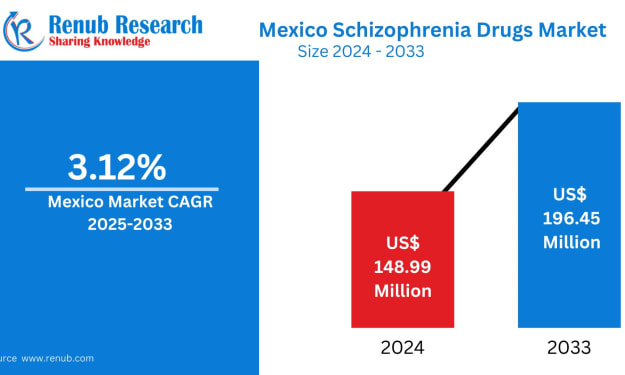
Mexico Schizophrenia Drugs Market Outlook The Mexico Schizophrenia Drugs Market is witnessing steady but meaningful growth as awareness of mental health disorders increases and access to psychiatric treatment slowly expands across the country. According to Renub Research, the market is expected to reach US$ 196.45 million by 2033, rising from US$ 148.99 million in 2024, registering a CAGR of 3.12% from 2025 to 2033.
By Janine Root about 21 hours ago in Longevity
Day 4 of Quitting
If this is how sobriety feels, maybe it’s better to go through life a little buzzed… this, along with other hits like, I want to kill myself, I wish I was dead, and I’m going to throw myself off a bridge have been the only thoughts on rotation these past few days. I promise myself that if, in a month, I still feel like this (‘this’ meaning despondent, full of rage, and simultaneously numb) I can go back to smoking. Until mid-February though? Nicotine is off the table.
By sleepy drafts13 days ago in Longevity
More Than 300,000 River Obstacles Removed Worldwide Are Reconnecting Streams, Reviving Fish Migration And Restoring Freshwater Life
Freshwater ecosystems around the world are undergoing a quiet revolution. For decades, rivers and streams have been obstructed by dams, weirs, and other barriers, fragmenting habitats and preventing fish from completing essential migrations. Now, a global initiative to remove these obstacles is transforming waterways, reviving fish populations, and restoring the delicate balance of freshwater life. More than 300,000 river barriers have been removed worldwide, and the results are already evident.
By Fiaz Ahmed Brohi4 days ago in Longevity
Wild Card Weekend Recap: What Happens Now?
I think I figured out why I love Wild Card Weekend so much. It's because it's the first playoff anything of the calendar year. The NFL season starts in the fall, and once upon a time, the champion was crowned either on or slightly before New Year's. The evolution of the NFL schedule has resulted in the playoffs starting just into the New Year, and currently, the final week of the season falls on the first weekend of the New Year, with Wild Card Weekend coming a week after that. So yes, chronologically, the NFL's Wild Card Weekend serves as the first playoff anything of the calendar year.
By Clyde E. Dawkins7 days ago in Unbalanced



Comments
There are no comments for this story
Be the first to respond and start the conversation.