
Hand numbness is not necessarily cervical spondylosis, pay attention to "mouse hand"
Causes of hand numbness


Once there is a "head down party" with numb fingers and sedentary sitting, the first reaction is that there is a problem with the cervical spine. In fact, another common cause of finger numbness is carpal tunnel syndrome, which was often called "mouse hand" in the past. As the name suggests, it is related to prolonged use of the mouse, wrist joints and repeated flexion and extension of the fingers. Even if you do not use the computer, "swiping your phone" for a long time, keeping your wrist in a flexed posture, and excessive finger movement can also induce carpal tunnel syndrome.
How many of these symptoms do you account for?

Carpal tunnel syndrome is a series of symptoms caused by compression of the median nerve. The clinical manifestations are mainly numbness and pain in the thumb, index finger, and middle finger of the hand. The fingers seem to be stuck with a layer of glue or separated by a layer of paper. Sometimes the fingers feel like needles or burns. Symptoms often appear after long hours of hands activity. In severe cases, patients may even be numbed in the middle of the night when they go to bed. They can only continue to fall asleep after shaking their hands and moving for a few times to relieve.
In addition to the numbness of the fingers, carpal tunnel syndrome may also manifest as decreased hand strength. For example, when the food is not strong enough, the food will fall, and the writing and button buttons are not so flexible.
As the disease worsens, a few patients may even experience atrophy of the thenar muscle (the "chicken thigh" with the palm of the hand close to the thumb). What I want to remind here is that finger numbness caused by cervical spondylosis is very similar to carpal tunnel syndrome. Doctors often use wrist ultrasound, cervical spine X-ray or MRI, electromyography and other examinations to distinguish.
Why is my hand numb when there is a problem with the carpal tunnel?
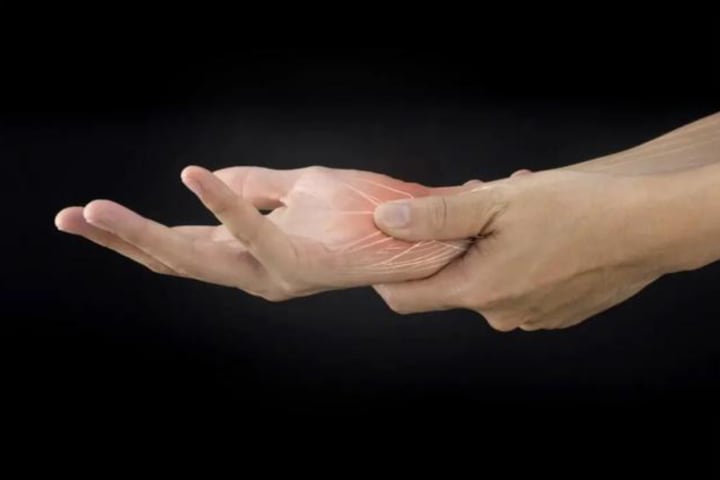
Carpal tunnel syndrome, as the name suggests, is rooted in the carpal tunnel, but why does it cause finger numbness? Professor Zhu Qingtang introduced that there is a lumen in this part of our wrist, which is composed of the bones on the bottom and both sides and the transverse carpal ligament above. In this narrow tunnel with a cross-sectional area of only about 3 square centimeters, there are 9 tendons that control the fingers and a median nerve passes through.
When the transverse carpal ligament hyperplasia and thickening, or wrist fracture displacement, degeneration and hyperplasia, etc., may cause the lumen of the carpal tunnel to narrow and compress the median nerve; the tendon synovium in the carpal tunnel is edema, hyperplasia, or there is Masses, tophi and other space-occupying lesions can also cause compression of the median nerve; or lesions of the median nerve itself, may cause sensory and motor dysfunction in the innervated area, causing a series of symptoms such as numbness, pain, weakness, etc. .
There are many reasons for carpal tunnel syndrome. The most common one is wrist strain. In addition, endocrine changes (such as pregnancy, lactation, menopause, etc., or diabetes, uremia, etc.); wrist fractures or injuries; Positional diseases (such as rheumatism or rheumatoid, gout, tuberculosis, etc. that cause synovial hyperplasia, or cysts, tumors, etc.) may also cause carpal tunnel syndrome.
This is more sick than a boy!

Carpal tunnel syndrome most commonly occurs in patients aged 30-60 years. The incidence of women is 2-3 times that of men. In Western European population, the incidence of carpal tunnel syndrome is about 3.1%-5.8% for women and 0.6% for men. -2.1%, and its peak incidence occurs in people aged 50-59 years.
Why does this disease favor women over men? Professor Zhu Qingtang introduced that in general, women's wrists are usually smaller than men's, and the median nerve of the wrist is more susceptible to compression. Women need to hold their children for a long time during breastfeeding, and overworked wrists can also cause carpal tunnel syndrome.
Another study has shown that people who repeatedly use the wrist to work, such as programmers, housewives, carpenters, repairers, drivers, etc., have a higher incidence of carpal tunnel syndrome, and some can even reach 15%.
Different treatment methods
If carpal tunnel syndrome is at an early stage, the treatment method is very simple, that is, "braking", so that the overworked wrist can rest well, do less repetitive movements, and avoid fatigue. Otherwise, it will further aggravate the edema and hyperplasia of the transverse carpal ligament and tendon synovium, and further aggravate the compression of the median nerve.

If you don't know how to "brake", you can also wear a wrist protector to help. The condition of most early patients can be greatly relieved after a period of recuperation. In addition, hot compresses and physical therapy can also help. If the numbness of your fingers cannot be relieved through "braking", you can consider medication, which includes anti-swelling drugs and neurotrophic drugs. If rest and medication cannot be relieved, hormones and neurotrophic drugs can also be injected into the diseased site, which is commonly known as "seal". Such injections should be conducted under ultrasound guidance to avoid needles hitting nerves and tendons. The effect of blocking is quick and the effect lasts for a long time, but it is not recommended to use too much or too frequently, preferably no more than three times, with an interval of about one month between each time.
The above methods have not improved after three months of treatment, and hand surgery can be considered; if the patient has a long course of disease and serious illness, for example, the thenar muscle has been atrophy, direct surgery should be considered.
For carpal tunnel syndrome caused solely by compression of the transverse carpal ligament, transverse carpal ligament amputation is feasible. At present, the most popular surgical method is to make a 1.5 cm opening at the transverse wrist line, and cut off the transverse carpal ligament under endoscopic monitoring, so that the compression of the median nerve will naturally be relieved. This type of surgery is less traumatic, quick to recover, and has obvious results. It can generally be performed in daytime clinics without hospitalization.
About the Creator
Keep reading
More stories from writers in Longevity and other communities.
Day 4 of Quitting
If this is how sobriety feels, maybe it’s better to go through life a little buzzed… this, along with other hits like, I want to kill myself, I wish I was dead, and I’m going to throw myself off a bridge have been the only thoughts on rotation these past few days. I promise myself that if, in a month, I still feel like this (‘this’ meaning despondent, full of rage, and simultaneously numb) I can go back to smoking. Until mid-February though? Nicotine is off the table.
By sleepy drafts24 days ago in Longevity




Comments
There are no comments for this story
Be the first to respond and start the conversation.