
Ham and Eggs Are Health Foods
Why Lard, Yolks, and Kimchi Are Great for Your Wellness

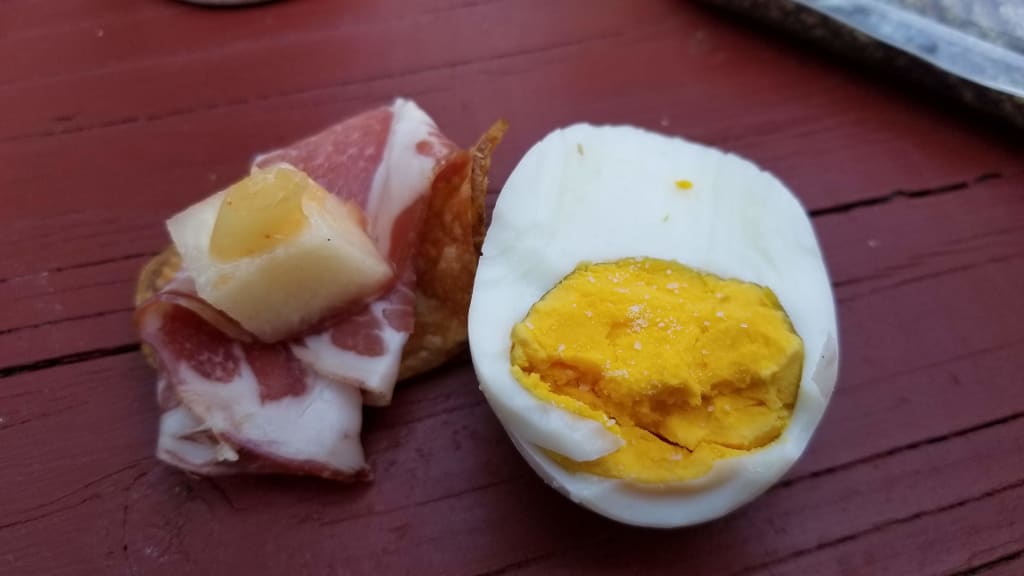
I have been a Californian and a hippy for almost 30 years, and a holistic health practitioner for ten years, which means I have heard about so many different competing diets and healthy eating plans it makes me want to scream, cry, and just give up trying to figure out who is right. People automatically assume because I am a natural health practitioner that I am a vegan, and add on top of that I am a queer woman in a lesbian relationship, and then the stereotypes of lesbian=vegan get even worse.
Yet after ten years specializing in healthy eating and food addiction, the research I have trusted the most for six years now does not advocate a vegan diet. I am not a vegan, nor do I think a plant only diet is healthy for people long term. Before the pitchforks and internet gallows come out, please let me explain why.
Until 2012, every food health book I read was extremely narrow in choices, hard to follow and implement, and only made me feel somewhat better, not all the way. I actually grew up vegetarian and previously believed that veganism was the ultimate eating plan, until I gave it a two-month, hardcore try in 2011. I decided to go full vegan, in a healthy way. Which meant I cooked most everything from scratch, had minimal to no soy, and made sure I ate a lot of legumes, nuts, and avocados for fat. I had five years working in holistic health and being a great cook as an advantage. Yet after two months I had to give up because, truth be told, I felt terrible. I did not have enough energy, I was losing the ability to focus, my moods were going downhill, and I was working out consistently yet had no weight loss at all to show. As a busy, business owner plus mom and stepmom to five kids, I could not afford the negative changes eating vegan was causing.
So a few months later, another nutritionist friend recommended I read Nourishing Traditions by Sally Fallon. I was blown away by the difference in the first 70 pages of this book than any other "diet" book I had read. First of all, it was based on global research of truly healthy people who had been eating the same way for hundreds of years. It was not a "one-size-fits-all" diet, but instead an exploration of food preparation practices from around the world, and had multiple food paths to great health. It compared and contrasted how people in arctic regions of the world ate compared with tropical regions and encouraged a wide variety of cuisines and foods. This made so much more sense to me as I had known for years that it is not ecologically conscious to ship food all around the world and have everyone all trying to eat the same foods. We need to eat what is local, therefore any diet requiring you to eat foods that can not be produced in the region of the world a person lives in is not sustainable. Also, we all have different ethnic backgrounds and different genetics lend to different nutritional needs, so again, I did not believe there was any one ideal diet applicable to everyone.
Nourishing Traditions is based on the research of Weston A. Price, a doctor, scientist, and a dental professor who believed that healthy teeth were a sign of a healthy person. His theory was that if he found people with good teeth, they would also have good health, and he wanted to research how healthy people ate, not sick ones. After ten years traveling the world, he did discover that people with great teeth had also a lack of modern disease, and they were healthy physically, emotionally, and mentally. He actually was in search of a healthy vegan population, that was his ultimate goal, however, he never found one. He did find healthy vegetarians, and a group where the only animals they ate were insects, yet even in the lush tropics, where plant-based fat is prevalent, he never found a 100 percent plant-based group of people who were healthy. What he discovered is the amount of meat people had in their diets was based on their proximity to the equator. People who live in cold climates and on tundras have very limited, if any, ability to grow vegetables, legumes, grains, and fruit; so they eat a much more meat-heavy diet. Plus, cold climates require more fat to stay warm, so they had high-fat needs in those regions, and animal meat was the only option.
What I loved is he found so much diversity in people's cuisines, yet also some underlying principles that people around the world followed, for instance, all people ferment their foods and drinks. Before refrigeration and freezers were invented, people used fermentation to preserve their food and drinks. Now scientists are finding more and more how it supports wellness by keeping a healthy gut flora. Having a healthy gut is now being shown to promote mental and emotional health as well as physical. However, the corporate food system throughout the 20th century discarded fermentation and actually warned people against it, causing a sharp decline in our intestinal health. Now many people are afraid to eat fermented vegetables or drink kombucha, yet spending a lot of money on probiotic supplements when our ancestors never needed those because their food and drinks provided them.
The other universal principle Dr. Price found is all people valued fat in food. They valued cream, butter, yolks, coconuts, lard, tallow, nuts, and other traditional fats. They made sure pregnant women, children, athletes, and the elderly got the first rations of high-fat food. They knew people could die or get sick from not getting enough fat in their diet. This was the complete opposite of the advice I got growing up as a child of the 1980s, yet exactly what the Atkins diet that had given me the best weight loss results taught. No matter where Dr. Price was in the world, people valued fat, and actually took great risks to obtain it. They had contests to decide who got the highest fat piece of meat and the organs of the animal, and did not care as much about the lean pieces. They also valued greatly the bones and skin, and would have been confused and laughed that modern day people spend more money to get their meat boneless and skinless.
Look, I am an avid animal lover, and I volunteer hundreds of hours connecting organic pasture-based farmers in Northern California to people looking to eat meat ethically. I wanted to be healthy and vegan, yet being of Irish and Scottish heritage, I found my body needs meat to thrive. Also, I am so tired of people acting like people are either a meat only eater or a vegetable only eater. I LOVE vegetable, fruits, and am quite happy to eat a good vegetarian meal. I live in California where there is a plentiful supply of amazing produce, and I like my meat to be a side dish many times. I find that when I cook my vegetables in a meat stock or fry my potatoes in pasture-raised lard, I really don't need much actual meat.
So enjoy traditional fats without guilt (I want a "proud to cook in lard" trend to start), try fermenting (it is fun and easy once you get over fear), and embrace diversity in food and life.
Weston A. Price's research is extensive and if you want more information, I recommend you check out westonaprice.org, which is a non-profit dedicated to sharing his research and furthering it. Also, I teach cooking classes online and in person as well as offer hypnotherapy to get over food addiction and emotional eating. My website is aproventheory.com if you want more information on those offerings.
Eve Mitchell, Holistic Health Practitioner at A Proven Theory in Sacramento, CA
About the Creator
Eve Mitchell
I have been a Holistic Health Practitioner since 2008, and my practice is located in Sacramento, CA. My website is aproventheory.com
Keep reading
More stories from writers in Longevity and other communities.
Day 4 of Quitting
If this is how sobriety feels, maybe it’s better to go through life a little buzzed… this, along with other hits like, I want to kill myself, I wish I was dead, and I’m going to throw myself off a bridge have been the only thoughts on rotation these past few days. I promise myself that if, in a month, I still feel like this (‘this’ meaning despondent, full of rage, and simultaneously numb) I can go back to smoking. Until mid-February though? Nicotine is off the table.
By sleepy drafts9 days ago in Longevity
Foods to Avoid After Whitening Teeth
A professional teeth whitening treatment can dramatically boost your confidence, whether you’re heading to a business meeting downtown, enjoying a night out in the Blue Dome District, or getting ready for a family event in Broken Arrow. Right after whitening, however, your teeth are more porous and vulnerable to staining. What you eat and drink during the first few days plays a huge role in how long your results last.
By Good health to everyoneabout 6 hours ago in Longevity
Wild Card Weekend Recap: What Happens Now?
I think I figured out why I love Wild Card Weekend so much. It's because it's the first playoff anything of the calendar year. The NFL season starts in the fall, and once upon a time, the champion was crowned either on or slightly before New Year's. The evolution of the NFL schedule has resulted in the playoffs starting just into the New Year, and currently, the final week of the season falls on the first weekend of the New Year, with Wild Card Weekend coming a week after that. So yes, chronologically, the NFL's Wild Card Weekend serves as the first playoff anything of the calendar year.
By Clyde E. Dawkins3 days ago in Unbalanced




Comments (1)
Weston Price died of a heart attack. Mary Enig died of a stroke. WAPF regularly vilifies cultural foods like coffee, soy, white rice and MSG (which is only considered unhealthy because of racist opinion pieces in the 1960s.