
Global In-Vitro Diagnostics Market Size and Forecast 2025–2033
How Aging Populations, Technology Innovation, and Personalized Medicine Are Transforming the Future of Diagnostics


Introduction: Diagnostics at the Heart of Modern Healthcare
The global healthcare system is undergoing a quiet but powerful transformation—and at its center is the In-Vitro Diagnostics (IVD) market. From early disease detection to personalized treatment planning, diagnostic tests have become indispensable in clinical decision-making. According to Renub Research, the global In-Vitro Diagnostics market is expected to grow from US$ 97.56 billion in 2024 to approximately US$ 160.68 billion by 2033, expanding at a compound annual growth rate (CAGR) of 5.70% during 2025–2033.
This steady growth reflects the rising burden of chronic and infectious diseases, rapid technological advancements, and the global shift toward preventive and personalized healthcare. As diagnostic accuracy improves and testing becomes more accessible, the IVD industry is positioning itself as one of the most critical pillars of modern medicine.
In-Vitro Diagnostics Market Overview
In-vitro diagnostics (IVD) are medical devices and tests used to analyze biological samples—such as blood, urine, or tissue—outside the human body to detect diseases, monitor health conditions, and guide treatment decisions. These tests are essential for early diagnosis, disease monitoring, and treatment optimization across almost every medical specialty.
Over the past decade, the global IVD market has expanded rapidly due to several interconnected trends. The rising incidence of diabetes, cardiovascular diseases, cancer, kidney disorders, and infectious illnesses has increased demand for reliable and fast diagnostic solutions. At the same time, aging populations worldwide are driving routine health monitoring, further boosting testing volumes.
Technological innovation has also reshaped the diagnostics landscape. Molecular diagnostics, point-of-care testing, automation, and AI-driven platforms have made tests more accurate, faster, and widely accessible. Additionally, the growing emphasis on personalized medicine has elevated the importance of diagnostic tools in treatment selection and drug development, cementing the long-term relevance of IVD technologies in global healthcare.
Key Growth Drivers in the In-Vitro Diagnostics Market
Rising Prevalence of Chronic and Infectious Diseases
The increasing global burden of chronic and infectious diseases remains the most powerful driver of IVD market growth. Conditions such as diabetes, cancer, cardiovascular disease, HIV, tuberculosis, and autoimmune disorders require continuous diagnostic monitoring for effective management.
Non-communicable diseases (NCDs) alone account for millions of deaths every year, with nearly 18 million premature deaths occurring before age 70. Alarmingly, over 80% of these premature deaths occur in low- and middle-income countries, where access to timely diagnostics is often limited. This reality has accelerated investments in affordable and scalable diagnostic solutions.
The COVID-19 pandemic further highlighted the importance of rapid and accurate diagnostics, pushing governments and healthcare systems to strengthen laboratory infrastructure and expand testing capabilities. As preventive healthcare gains momentum, routine screening and early diagnosis are becoming standard practice—driving sustained demand for IVD products globally.
Technology Advancements and Automation in Testing
Technological innovation continues to revolutionize the IVD industry. Automation, digitalization, and artificial intelligence have significantly improved testing accuracy, speed, and efficiency. Modern diagnostic platforms now support high-throughput processing, real-time data analysis, and remote monitoring, enabling laboratories to manage growing workloads with fewer errors.
Point-of-care (POC) testing, molecular diagnostics, next-generation sequencing (NGS), and advanced immunoassay systems have expanded diagnostic capabilities—especially in oncology, genetics, and infectious disease testing. These technologies not only improve patient outcomes but also streamline laboratory workflows and reduce turnaround times.
In June 2025, Quanterix Corporation received Class 1 Medical Device registration in South Korea for its HD-X Simoa Immunoassay Analyzer, highlighting continued global innovation in ultrasensitive biomarker detection technologies.
Growing Adoption of Preventive and Personalized Medicine
The shift toward personalized medicine—where treatments are tailored to individual genetic and molecular profiles—has created new demand for advanced diagnostics. Genomic, molecular, and biomarker-based tests allow clinicians to identify optimal therapies with greater precision and fewer side effects.
Preventive healthcare is also gaining traction worldwide. Regular screenings for cancer, diabetes, kidney disease, and cardiovascular risk factors are now central to healthcare policies in many countries. Pharmaceutical companies increasingly rely on IVD tools for companion diagnostics, ensuring that the right drugs reach the right patients at the right time.
In November 2023, Newland EMEA introduced a new range of IVD products at a major healthcare trade show, reflecting the growing commercial focus on personalized and preventive diagnostics.
Challenges Facing the In-Vitro Diagnostics Market
High Cost of Advanced Diagnostic Equipment
Despite technological progress, the high cost of sophisticated diagnostic instruments remains a significant barrier—particularly in developing economies. Automation, AI integration, and molecular testing platforms require substantial capital investment, skilled personnel, and ongoing maintenance.
Smaller laboratories and rural healthcare centers often struggle to adopt these technologies, while patients may face high out-of-pocket expenses for advanced tests. Balancing innovation with affordability remains a critical challenge for manufacturers and healthcare systems alike.
Stringent Regulatory and Reimbursement Issues
The IVD market operates under strict regulatory frameworks to ensure safety and accuracy. However, lengthy approval processes—such as FDA clearance in the U.S. or IVDR compliance in Europe—can delay product launches and increase development costs.
Inconsistent reimbursement policies further complicate market adoption, particularly for novel or high-value tests. Without clear coverage, hospitals and patients may hesitate to adopt advanced diagnostics, creating uncertainty for manufacturers. Regulatory harmonization and transparent reimbursement systems are essential for long-term market stability.
Key Segment Insights in the In-Vitro Diagnostics Market
Immunodiagnostics Market
Immunodiagnostics remains one of the largest and most vital segments of the IVD industry. These tests detect antigens and antibodies and are widely used for infectious diseases, cancer markers, and autoimmune disorders. Technologies such as ELISA and chemiluminescence immunoassays (CLIA) have improved accuracy and efficiency, while automation continues to boost throughput in clinical laboratories.
Hematology Diagnostics Market
Hematology diagnostics are essential for detecting blood disorders like anemia, leukemia, and infections. Advanced analyzers now deliver accurate complete blood counts (CBCs) and differential results with minimal human intervention. The integration of digital imaging and flow cytometry has further enhanced diagnostic precision, making hematology a core component of preventive healthcare.
Reagents and Kits Market
Reagents and kits represent the largest revenue-generating segment of the IVD market due to their recurring demand. The COVID-19 pandemic highlighted their critical role in large-scale testing, and innovation continues with multi-analyte kits, improved shelf life, and environmentally friendly formulations.
Instruments Market
IVD instruments—including analyzers, PCR systems, and sequencing platforms—form the backbone of modern diagnostics. Although high costs limit adoption in resource-constrained settings, increasing investment in laboratory modernization and hospital infrastructure continues to drive growth in this segment.
Reusable IVD Devices Market
Reusable IVD devices offer long-term cost savings and environmental benefits. Hospitals and laboratories are increasingly adopting durable analyzers that reduce waste and support sustainability goals, making this an emerging and promising segment.
Nephrology Diagnostics Market
With rising cases of chronic kidney disease linked to diabetes and hypertension, nephrology diagnostics are becoming increasingly important. Tests measuring creatinine, urea, and emerging biomarkers are essential for early detection and ongoing monitoring of renal health.
Clinical Laboratories Market
Clinical laboratories remain the largest end-users of IVD products, handling high volumes of testing across specialties. Automation, AI-assisted interpretation, and digital integration are transforming lab operations, improving efficiency, and ensuring consistent accuracy.
Regional Market Highlights
United States
The U.S. leads the global IVD market due to advanced infrastructure, high healthcare spending, and rapid adoption of innovative diagnostics. Strong R&D investments and precision medicine initiatives continue to drive growth.
Germany
Germany dominates the European IVD landscape with strong research capabilities, high regulatory standards, and widespread adoption of advanced diagnostic technologies.
India
India’s IVD market is expanding rapidly due to rising disease prevalence, growing diagnostic chains, and government healthcare initiatives. Affordable testing solutions and point-of-care devices are fueling adoption in urban and rural areas.
Saudi Arabia
Saudi Arabia’s Vision 2030 healthcare transformation is driving significant investment in diagnostic infrastructure, positioning the country as a growing IVD hub in the Middle East.
Key Players in the Global IVD Market
Abbott Laboratories
Agilent Technologies Inc.
bioMérieux SA
Bio-Rad Laboratories Inc.
F. Hoffmann-La Roche Ltd
Fujifilm Holdings Corporation
Illumina Inc.
Qiagen NV
Quest Diagnostics
Sysmex Corporation
Final Thoughts: Diagnostics as the Foundation of Future Healthcare
The global In-Vitro Diagnostics market is entering a new era—defined by precision, speed, and accessibility. As healthcare systems worldwide prioritize early detection, personalized treatment, and preventive care, diagnostics will remain the foundation of effective medical decision-making.
With strong growth projected through 2033, continued technological innovation, expanding healthcare access, and rising disease burden will ensure the IVD industry remains one of the most influential and indispensable sectors in global healthcare.
About the Creator
Keep reading
More stories from Aaina Oberoi and writers in Longevity and other communities.
Saudi Arabia Smart Hospital Market Size and Forecast 2025–2033
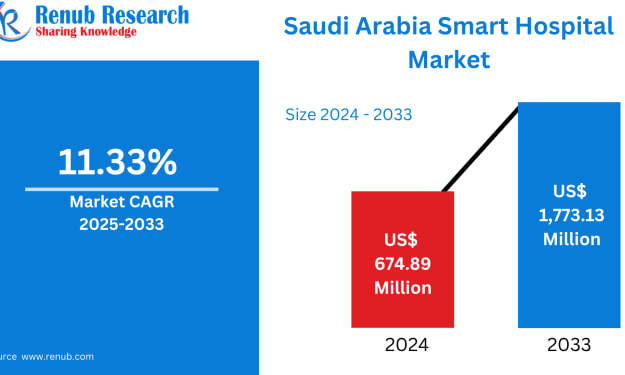
Saudi Arabia Smart Hospital Market Overview The Saudi Arabia Smart Hospital Market is undergoing a transformative phase as the Kingdom redefines its healthcare system through digital innovation and advanced technologies. According to Renub Research, the market is expected to expand from US$ 674.89 million in 2024 to US$ 1,773.13 million by 2033, growing at a robust CAGR of 11.33% from 2025 to 2033. This rapid growth reflects Saudi Arabia’s ambitious push to modernize healthcare under Vision 2030, with smart hospitals emerging as the backbone of the future healthcare ecosystem.
By Aaina Oberoi2 days ago in Longevity
Day 4 of Quitting
If this is how sobriety feels, maybe it’s better to go through life a little buzzed… this, along with other hits like, I want to kill myself, I wish I was dead, and I’m going to throw myself off a bridge have been the only thoughts on rotation these past few days. I promise myself that if, in a month, I still feel like this (‘this’ meaning despondent, full of rage, and simultaneously numb) I can go back to smoking. Until mid-February though? Nicotine is off the table.
By sleepy drafts14 days ago in Longevity
Olivia Dean
In an age where music often feels rushed and overproduced, Olivia Dean stands out by doing something surprisingly simple: she sounds honest. Her voice carries warmth, restraint, and emotional clarity, making listeners feel understood rather than overwhelmed. Olivia Dean is not just another rising singer; she represents a return to music that values feeling over noise. Born and raised in London, Olivia Dean grew up surrounded by a mix of musical influences. From a young age, she was drawn to soul, pop, and jazz, genres that prioritize storytelling and emotion. This foundation shaped her artistic identity and continues to influence the way she writes and performs today. Rather than chasing trends, Dean focuses on timeless sounds and relatable experiences. What makes Olivia Dean special is not just her technical ability, but her emotional intelligence as an artist. Her songs often explore themes like self-worth, love, vulnerability, and growth. These are universal ideas, yet she presents them in a way that feels deeply personal. Listening to her music can feel like reading someone’s private journal—quiet, reflective, and sincere. One of her greatest strengths is her voice. It is soft without being weak, powerful without being aggressive. She knows when to hold back and when to lean in, allowing space for emotions to breathe. This control gives her music a calm confidence that resonates with listeners who are tired of constant intensity. Her vocals don’t demand attention; they invite it. Olivia Dean’s songwriting also deserves attention. Her lyrics are simple but thoughtful, avoiding dramatic exaggeration. She writes about real emotions in everyday language, which makes her songs easy to connect with. There is no need to decode hidden meanings or metaphors that feel forced. Instead, her words flow naturally, reflecting real conversations and feelings many people experience but struggle to express. Another important aspect of her artistry is authenticity. In interviews and performances, Dean comes across as grounded and self-aware. She openly talks about personal growth, creative struggles, and learning to trust herself. This honesty builds a strong connection with her audience, especially young listeners navigating similar emotions. She doesn’t present herself as perfect, and that makes her relatable. Her rise in the music industry has been steady rather than explosive, and that slow growth feels intentional. Olivia Dean has taken time to develop her sound, refine her message, and understand who she is as an artist. This patience shows in the quality of her work. Each release feels considered, not rushed, and that consistency builds long-term trust with her audience. Live performances further highlight her strength as a musician. On stage, she maintains the same warmth and control that define her recordings. There is no overacting or unnecessary spectacle. Instead, she focuses on connection—between herself, the music, and the audience. This creates an intimate atmosphere, even in larger venues, where listeners feel emotionally present rather than distracted. Olivia Dean’s influence extends beyond music alone. She represents a generation of artists who prioritize mental health, self-awareness, and balance. Her work encourages listeners to slow down, reflect, and accept themselves as they are. In a world driven by constant comparison and pressure, this message feels both refreshing and necessary. Fashion and visual presentation also play a subtle role in her identity. Dean’s style is elegant but understated, mirroring the tone of her music. She avoids excess and instead embraces simplicity, allowing her personality and voice to remain the focus. This alignment between sound, image, and message strengthens her overall artistic presence. As her career continues to grow, Olivia Dean remains a reminder that success does not have to be loud to be meaningful. Her journey shows that there is space in modern music for softness, reflection, and emotional honesty. She proves that artists can build strong connections without sacrificing integrity or authenticity. In the long run, Olivia Dean’s impact may not be measured by chart positions alone, but by the way her music stays with people. Her songs feel like companions during quiet moments—on late-night walks, early mornings, or times of personal change. That kind of connection is rare, and it is what gives her work lasting value. Olivia Dean is not trying to reinvent music. Instead, she is reminding us why it matters in the first place. Through her voice, her words, and her presence, she offers something increasingly rare: comfort, clarity, and genuine emotion. And in today’s fast-moving world, that might be her greatest strength.
By Saboor Brohi 3 days ago in Longevity



Comments
There are no comments for this story
Be the first to respond and start the conversation.