
Global Functional Foods Market Size & Forecast 2025–2033
How Health Awareness, Preventive Nutrition, and Innovative Fortification Are Fueling a US$ 678.32 Billion Industry

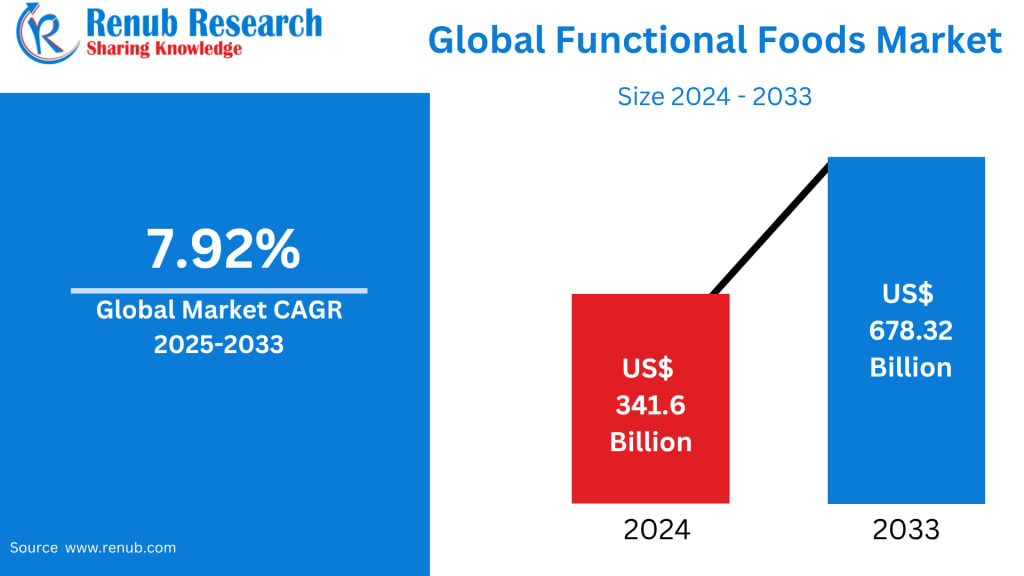
The Global Functional Foods Market is entering a powerful growth phase, reshaped by rising global health consciousness, the boom in fortified products, and increasing preference for preventive rather than reactive healthcare. According to Renub Research, the market is projected to reach US$ 678.32 billion by 2033, expanding from US$ 341.6 billion in 2024 at a CAGR of 7.92% between 2025 and 2033.
As consumers worldwide rethink their diets, functional foods—products enriched with vitamins, minerals, probiotics, antioxidants, proteins, or other health-enhancing bioactive components—are rapidly becoming a household staple. The shift is global, spanning developed markets like the U.S., Germany, and Japan and fast-emerging economies including India, Brazil, China, and Saudi Arabia.
In this in-depth editorial analysis, we explore the market forces, growth drivers, opportunities, challenges, and regional dynamics shaping the future of functional foods.
Understanding the Functional Foods Market
Functional foods refer to everyday food items that deliver benefits beyond basic nutrition. Their purpose is to enhance wellness, strengthen immunity, support digestion, and reduce the risk of chronic illnesses. Typical examples include:
Probiotic yogurts
Omega-3 fortified eggs
Vitamin-enriched beverages
High-fiber cereals
Plant-based protein snacks
Antioxidant-rich functional drinks
With consumers actively seeking natural, science-backed nutrition solutions, functional foods have transitioned from niche offerings to mainstream dietary essentials.
Worldwide, the momentum is exceptionally strong. Consumers are increasingly aware of the link between what they eat and how they feel. Lifestyle diseases such as diabetes, hypertension, digestive disorders, and obesity have created demand for food-based health management. This broader understanding of holistic health is leading to rapid adoption of fortified and functional food products across age groups and income brackets.
Major Growth Drivers in the Global Functional Foods Market
1. Rising Health Awareness Among Global Consumers
Lifestyle disorders continue to escalate worldwide, heightening public interest in personalized nutrition and preventive care. A growing number of consumers now consider food not just a source of energy but a proactive tool for wellness.
A December 2024 YouGov/AHDB Pulse survey showed:
90% of shoppers consider diet essential to health
86% prioritize fitness
48% exercise three or more times weekly
64% maintain a consistently nutritious diet
This shift has created strong demand for functional foods enriched with probiotics, vitamins, proteins, and superfood ingredients.
2. Aging Population Driving Demand
Globally, the world is aging at an unprecedented pace. Elderly consumers prefer foods tailored to bone strength, cardiovascular health, cognitive function, and digestion. Ingredients like calcium, iron, omega-3 fatty acids, fiber, and antioxidants are particularly attractive.
Key demographic trends include:
By 2030, 1 in 6 people worldwide will be aged 60+
Elderly population to rise from 1 billion in 2020 to 1.4 billion by 2030
By 2050, the 60+ demographic will reach 2.1 billion
Individuals aged 80+ will grow from 2020 levels to 426 million by 2050
This aging wave is expected to contribute significantly to long-term market expansion.
3. Rapid Innovation & R&D in Product Development
Companies are heavily investing in developing new formats, flavors, and functional ingredients. Protein-rich snacks, nutrient-dense bakery items, superfood blends, functional dairy alternatives, and fortified beverages are among the fastest-growing categories.
A recent example:
On August 12, 2024, Sunrider International launched its ERB Functional Whole Foods range, featuring five superfoods known for their nutritional and culinary benefits. Such innovation keeps the category dynamic and attractive to both new and existing consumers.
Key Market Challenges
1. High Product Costs
Fortified foods often require expensive ingredients, advanced processing technologies, and extensive R&D. These factors raise prices and restrict accessibility, especially in low- and middle-income markets. Price sensitivity continues to be a top barrier to market penetration.
2. Strict Regulatory Frameworks
Functional foods are heavily scrutinized for safety and credibility. Regulatory bodies like:
FDA (U.S.)
EFSA (Europe)
enforce stringent guidelines around nutrient content claims, labeling, and health benefit statements. With varying regulations across regions, companies face delays in product approvals and increased compliance costs.
Segment-wise Breakdown of the Functional Foods Market
Bakery Functional Foods
Fortified breads, pastries, and muffins enriched with omega-3s, proteins, and fiber are gaining momentum. Convenient and widely consumed, these products cater to busy lifestyles and rising demand for nutritious on-the-go options.
Dairy Functional Foods
These include:
Probiotic yogurts
Vitamin D–fortified cheese
Calcium-enriched milk
Dairy functional foods remain especially strong in North America and Europe. Growth in lactose-free and low-fat innovations has broadened consumer appeal.
Probiotic Functional Foods
Probiotics are among the most widely accepted functional ingredients today, driven by heightened awareness of gut health and immunity. Fermented drinks, probiotic yogurts, and fortified beverages are leading this segment’s expansion.
Mineral-Enhanced Functional Foods
Products enriched with iron, calcium, magnesium, and other minerals cater to:
Pregnant women
Children
Elderly individuals
Anemic populations
This segment benefits from rising demand for personalized wellness and nutrient-specific diets.
Sports Nutrition Functional Foods
Protein bars, energy snacks, amino acid–infused supplements, and hydration drinks are popular among athletes, gym-goers, and fitness enthusiasts. The explosive growth of fitness culture worldwide is directly boosting this segment.
Weight Management Functional Foods
Meal replacement shakes, high-fiber products, metabolism-boosting foods, and low-calorie beverages respond to rising obesity levels and demand for natural weight-loss solutions.
Regional Market Insights
United States
The U.S. remains one of the most mature and innovation-driven markets. High consumer awareness, robust retail infrastructure, and a strong culture of supplements, fortified snacks, and functional beverages ensure steady demand. Gut health, immunity, and heart health are top priorities.
Germany
Germany leads the European market with a sharp focus on clean-label products and scientifically validated health claims. Popular categories include probiotic dairy, functional cereals, and natural supplements.
India
India’s functional foods industry is accelerating due to:
Rising middle-class incomes
Health-conscious urban consumers
Integration of traditional ingredients like turmeric and ashwagandha into modern formats
Preventive nutrition trends are particularly strong in metro cities.
Brazil
Brazil shows high demand for functional beverages, fortified dairy products, and vitamin-rich foods. Urbanization, higher disposable incomes, and greater awareness of lifestyle diseases are facilitating growth.
Saudi Arabia
Lifestyle diseases and obesity rates have prompted strong interest in functional foods. Government-backed wellness campaigns support demand for fortified cereals, functional drinks, and nutrient-enriched dairy products.
Market Segmentation Overview
By Product Type
Bakery Products
Breakfast Cereals
Snack/Functional Bars
Dairy Products
Baby Food
Others
By Ingredient
Probiotics
Minerals
Proteins & Amino Acids
Prebiotics & Dietary Fiber
Vitamins
Others
By Distribution Channel
Supermarkets & Hypermarkets
Specialist Retailers
Convenience Stores
Online Stores
Others
By Application
Sports Nutrition
Weight Management
Clinical Nutrition
Cardio Health
Others
By Region
North America: United States, Canada
Europe: France, Germany, Italy, Spain, UK, Belgium, Netherlands, Turkey
Asia Pacific: China, Japan, India, South Korea, Thailand, Malaysia, Indonesia, Australia, New Zealand
Latin America: Brazil, Mexico, Argentina
Middle East & Africa: Saudi Arabia, UAE, South Africa
Key Companies Covered (with Five Viewpoints)
Each company profile covers Overview, Key Person, Recent Developments, SWOT Analysis, and Revenue Analysis.
Abbott Laboratories
Amway
BASF SE
Cargill Incorporated
Clif Bar & Company
Danone S.A.
General Mills Inc.
Kellogg Company
Kerry Group plc
Nestlé S.A.
Final Thoughts
The Global Functional Foods Market is poised for exceptional growth as consumers increasingly connect diet with long-term health outcomes. Aging populations, rising lifestyle disorders, and the worldwide shift toward preventive healthcare will shape demand through 2033.
With continuous innovation—from plant-based protein bars to mineral-infused dairy alternatives—the industry is becoming more diverse, dynamic, and accessible. Brands that prioritize scientific validation, clean labels, and personalized nutrition are expected to emerge as market leaders.
As the world becomes more health-conscious, functional foods are no longer a trend—they are a global nutrition movement reshaping how people approach wellness.
About the Creator
Keep reading
More stories from Aaina Oberoi and writers in Longevity and other communities.
United States Non-GMO Food Market Size and Forecast 2025–2033
As American consumers continue shifting toward healthier, more transparent, and more ethically sourced food options, the United States Non-GMO Food Market is entering one of its strongest growth phases yet. According to Renub Research, the market is projected to reach US$ 132.84 billion by 2033, rising from US$ 93.0 billion in 2024, with a CAGR of 4.04% between 2025 and 2033.
By Aaina Oberoi2 months ago in Longevity
Day 4 of Quitting
If this is how sobriety feels, maybe it’s better to go through life a little buzzed… this, along with other hits like, I want to kill myself, I wish I was dead, and I’m going to throw myself off a bridge have been the only thoughts on rotation these past few days. I promise myself that if, in a month, I still feel like this (‘this’ meaning despondent, full of rage, and simultaneously numb) I can go back to smoking. Until mid-February though? Nicotine is off the table.
By sleepy drafts7 days ago in Longevity
The 10 Best Diets for Weight Loss That Are Sustainable and Recommended By Nutritionists
As a dietitian, I know that weight loss is a common goal at the start of a new year. But it’s important to approach it with a focus on health, balance, and sustainability. As a calorie deficit is necessary to lose weight, the right eating pattern makes a difference. It can support your journey while also nourishing your body, improving energy levels, and promoting overall well-being. It’s not about quick fixes or extreme measures—the best diets for weight loss are about finding an approach that works for you in the long term.
By Good health to everyoneabout 15 hours ago in Longevity
A Dart at Dusk
Seconds ago, the sullen sun set on the two of us… my exuberant furry companion and me. A fresh breeze embraces us, delivering welcome relief from the day’s oppressive heat. His typical stumbling and staggering along — apace with a sloth — has turned into trip-trapping, high-stepping, almost skipping along.
By Angie the Archivist 📚🪶about 19 hours ago in Petlife


Comments
There are no comments for this story
Be the first to respond and start the conversation.