
Germany Anemia Treatment Market Size and Forecast 2026–2034
How Aging Demographics, Modern Iron Therapies, and Strong Healthcare Policies Are Reshaping Anemia Care in Germany

Introduction
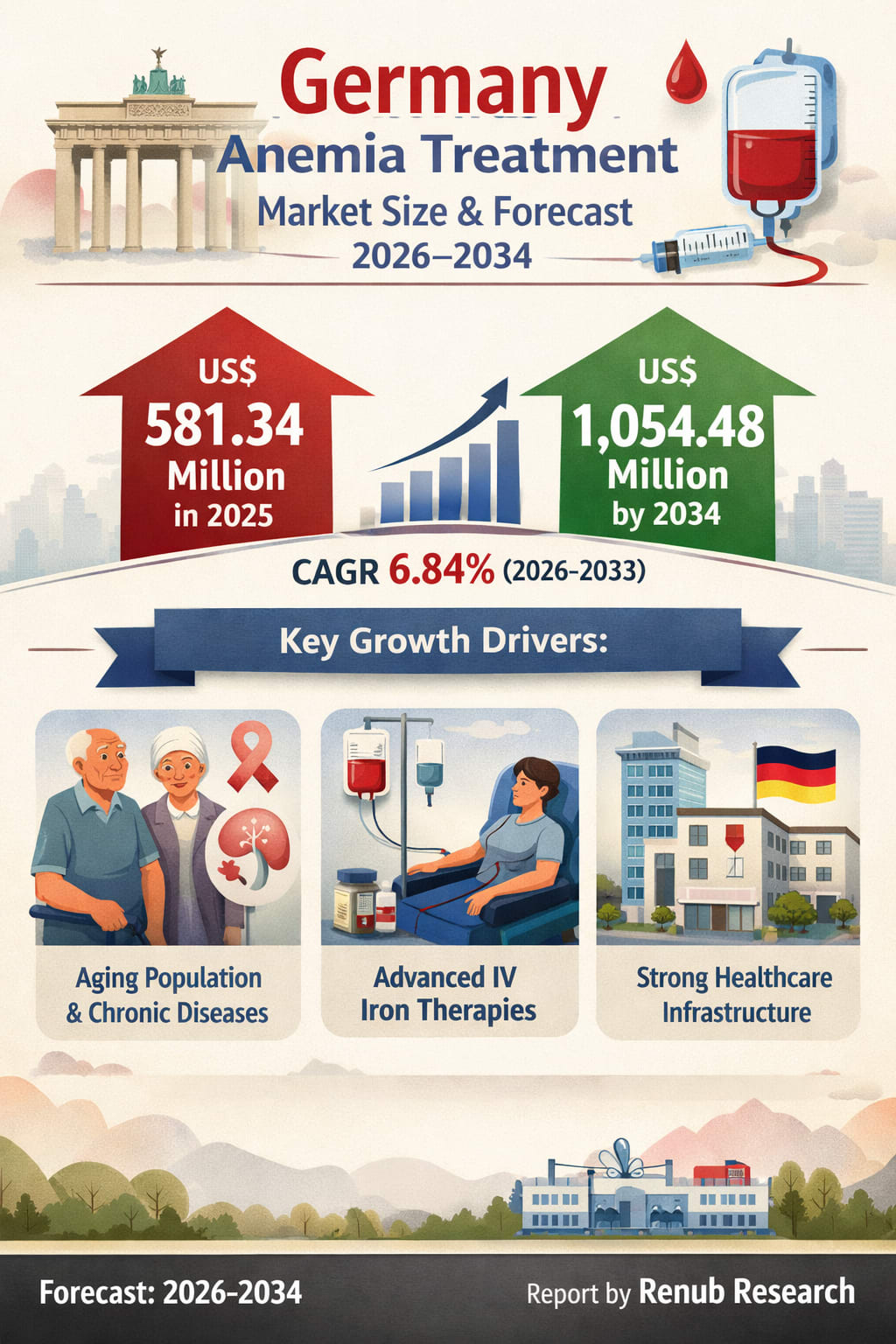
The Germany Anemia Treatment Market is entering a decisive growth phase, supported by demographic change, advanced medical infrastructure, and expanding access to innovative therapies. According to Renub Research, the market is projected to grow from US$ 581.344 million in 2025 to US$ 1,054.48 million by 2034, registering a CAGR of 6.84% between 2026 and 2033.
This expansion reflects Germany’s increasing burden of chronic diseases, a rapidly aging population, and rising awareness of iron deficiency across women, elderly patients, and individuals undergoing long-term medical care. Modern intravenous iron therapies, erythropoiesis-stimulating agents, and emerging oral alternatives are transforming anemia management from symptom control into a structured, long-term treatment approach.
With strong reimbursement systems and standardized diagnostic protocols, Germany stands out as one of Europe’s most mature and innovation-driven anemia treatment markets.
Germany Anemia Treatment Industry Overview
Anemia treatment focuses on restoring healthy hemoglobin levels while addressing the underlying cause of reduced red blood cell production. In Germany, iron-deficiency anemia remains the most commonly diagnosed form, often treated with oral iron supplements or intravenous iron therapies when faster correction or improved tolerance is required.
For anemia linked to chronic diseases such as chronic kidney disease (CKD), cancer, or inflammatory disorders, treatment strategies extend beyond iron replacement. Erythropoiesis-stimulating agents (ESAs), management of the primary disease, and in severe cases, blood transfusions are part of comprehensive care. Nutritional counseling, routine monitoring of ferritin and hemoglobin levels, and dose optimization play a critical role in ensuring long-term treatment success.
Germany’s anemia treatment ecosystem benefits from well-established clinical guidelines, widespread diagnostic access, and a strong network of hospitals and outpatient centers. These factors support early diagnosis, consistent follow-up, and effective therapy selection—driving both improved patient outcomes and steady market expansion.
Key Growth Drivers of the Germany Anemia Treatment Market
Rising Prevalence of Chronic Diseases
One of the most powerful drivers of anemia treatment demand in Germany is the growing incidence of chronic diseases. Conditions such as chronic kidney disease, cancer, autoimmune disorders, and gastrointestinal illnesses frequently lead to anemia as a secondary complication.
As Germany’s population ages, the prevalence of these diseases continues to rise, increasing the need for ongoing anemia management. Patients undergoing dialysis or cancer therapy often require repeated treatment cycles involving ESAs, intravenous iron, or combination therapies. The integration of anemia management into chronic disease care pathways ensures consistent treatment demand and long-term market stability.
Advanced Healthcare Infrastructure and Medical Innovation
Germany’s healthcare system is among the most technologically advanced in Europe, providing a strong foundation for anemia diagnosis and treatment. Hospitals and specialized clinics employ advanced laboratory diagnostics, biomarker testing, and hematological profiling to identify anemia type and severity at an early stage.
The presence of leading pharmaceutical and biotechnology companies supports continuous innovation in iron formulations, biosimilars, and next-generation therapies. Research collaboration between hospitals, academic institutions, and industry accelerates clinical trials and speeds up the adoption of improved treatment protocols. Digital health records and integrated care platforms further enhance monitoring and patient adherence, improving treatment outcomes while reinforcing market growth.
Strong Reimbursement Framework and Public Health Initiatives
Germany’s statutory health insurance system plays a critical role in expanding access to anemia treatment. Coverage for oral iron supplements, intravenous iron therapies, and ESAs ensures affordability and encourages early intervention rather than delayed care.
National treatment guidelines promote standardized diagnosis and therapy across healthcare settings, reducing variability in care quality. Public health initiatives emphasize routine screening for vulnerable populations, including pregnant women, elderly individuals, and patients with chronic conditions. These efforts increase diagnosis rates and drive sustained demand for anemia treatment solutions across hospitals and outpatient clinics.
Challenges Facing the Germany Anemia Treatment Market
High Cost of Advanced Therapies
Despite comprehensive reimbursement systems, the cost of advanced anemia treatments presents a notable challenge. Innovative biologics, long-acting ESAs, and HIF-PH inhibitors place increasing pressure on healthcare budgets, particularly within public hospitals.
Strict cost-effectiveness evaluations and regional pricing negotiations can delay the adoption of newly approved therapies. While biosimilars help control costs, they may not always meet the clinical needs of all patient groups. As treatment volumes rise alongside chronic disease prevalence, managing healthcare expenditure while maintaining high treatment standards remains a balancing act for policymakers and providers.
Diagnosis Gaps and Limited Awareness
Although Germany has a strong healthcare infrastructure, anemia remains underdiagnosed in certain population segments. Mild symptoms such as fatigue or weakness are often overlooked or attributed to lifestyle factors, delaying testing and treatment.
Young adults, immigrant communities, and individuals with limited nutritional awareness are particularly at risk of delayed diagnosis. Regional disparities in access to specialist care, especially in rural areas, further contribute to this challenge. Improving public education and integrating anemia screening into routine health assessments could significantly enhance early detection and treatment outcomes.
City-Wise Insights into the Germany Anemia Treatment Market
Frankfurt
Frankfurt’s anemia treatment market benefits from its dense concentration of hospitals, research centers, and pharmaceutical activity. Advanced diagnostic facilities and strong insurance coverage enable early adoption of intravenous iron therapies and biologics. The city’s diverse population and high prevalence of chronic conditions support sustained demand for anemia management services.
Munich
Munich’s strong medical research ecosystem and academic hospitals drive innovation in anemia care. Personalized treatment approaches for iron-deficiency anemia, CKD-related anemia, and oncology-associated anemia are widely practiced. Preventive health programs and occupational screening further strengthen local market growth.
Hamburg
Hamburg’s market is shaped by its industrial workforce and strong focus on chronic disease management. Higher screening rates for nutritional deficiencies and fatigue-related conditions support demand for iron therapies. Research collaboration and specialized nephrology care ensure consistent use of ESAs and intravenous iron treatments.
Berlin
Berlin represents one of the most research-intensive anemia treatment markets in Germany. Academic institutions and a vibrant biotech ecosystem drive innovation in diagnostics and personalized medicine. Public health initiatives targeting vulnerable populations increase screening rates, while digital health solutions expand access to outpatient anemia care.
Recent Developments in the Germany Anemia Treatment Market
In August 2024, a major pharmaceutical investment was announced to expand manufacturing capacity in Frankfurt. While primarily focused on insulin production, the initiative highlights Germany’s growing role as a pharmaceutical manufacturing hub, indirectly strengthening supply chains for anemia-related treatments.
In May 2023, a strategic licensing agreement enabled wider commercialization of an oral therapy for CKD-related anemia across Germany and other regions. This development underscores the shift toward patient-friendly, non-injectable treatment options and reflects ongoing innovation within the market.
Germany Anemia Treatment Market Segmentation
By Disease Type
Iron Deficiency Anemia
Chronic Kidney Disease (CKD) Anemia
Sickle Cell Anemia
Aplastic Anemia
Thalassemia
Other Rare Anemias
By Therapy Class
Oral Iron Supplements
Intravenous Iron
Erythropoiesis-Stimulating Agents (ESAs)
Iron Chelators
HIF-PH Inhibitors
Others
By Route of Administration
Oral
Injectable
By Cities
Frankfurt, Munich, Hamburg, Berlin, Düsseldorf, Stuttgart, Cologne, Leipzig, Nuremberg, Dortmund, and Rest of Germany
Competitive Landscape
The Germany anemia treatment market features a competitive mix of global pharmaceutical companies and specialized biotechnology firms. Market participants focus on product innovation, strategic partnerships, biosimilar development, and geographic expansion. Each company is evaluated based on overview, leadership, recent strategies, SWOT analysis, and sales performance to understand its market positioning.
Final Thoughts
Germany’s anemia treatment market is on a clear upward trajectory, driven by aging demographics, rising chronic disease prevalence, and continuous therapeutic innovation. With the market expected to surpass US$ 1.05 billion by 2034, anemia management is becoming an increasingly integral component of Germany’s healthcare system.
Strong reimbursement policies, advanced diagnostics, and expanding awareness programs provide a solid foundation for long-term growth. While challenges related to cost and underdiagnosis remain, ongoing innovation and policy support are likely to strengthen access, improve outcomes, and sustain market expansion throughout the forecast period.
As healthcare systems shift toward preventive and personalized care, anemia treatment in Germany is evolving from a supportive therapy into a strategic pillar of chronic disease management—positioning the market for steady and resilient growth through 2034.
About the Creator
Day 4 of Quitting
If this is how sobriety feels, maybe it’s better to go through life a little buzzed… this, along with other hits like, I want to kill myself, I wish I was dead, and I’m going to throw myself off a bridge have been the only thoughts on rotation these past few days. I promise myself that if, in a month, I still feel like this (‘this’ meaning despondent, full of rage, and simultaneously numb) I can go back to smoking. Until mid-February though? Nicotine is off the table.
By sleepy drafts26 days ago in Longevity


Comments
There are no comments for this story
Be the first to respond and start the conversation.