
From Harmful To Helpful
How switching to chemical free products can save you and the environment


The personal care industry is a massive market, but the environmental and health costs of traditional personal care products have been largely ignored for too long. Fortunately, a growing number of people are recognizing the benefits of switching to natural and chemical-free personal care products. Not only can this small change have a positive impact on the environment, but it can also save money in the long run and benefit our health. In this article, we will explore how switching to natural personal care products can benefit both individuals and the planet, and how we can all play a role in creating a more sustainable future.
One of the most significant benefits of using natural personal care products is the positive impact on the environment. Traditional personal care products often contain a variety of chemicals that can be harmful to the environment. These chemicals can pollute waterways, harm wildlife, and even contribute to climate change.
The personal care industry heavily relies on chemical refining to produce many of its products, including shampoos, lotions, and cosmetics. However, this refining process has significant environmental costs that are often overlooked. Here are some of the ways that chemical refining for the personal care industry impacts the environment and chemicals that affect are very being.
1)Water Pollution: Chemical refining processes produce wastewater that often contains harmful chemicals such as parabens, phthalates, and sulfates. When this wastewater is not properly treated, it can end up in nearby waterways, polluting the water and harming aquatic life.
2)Air Pollution: Chemical refining also releases pollutants into the air, such as volatile organic compounds (VOCs) and greenhouse gases. These pollutants can contribute to air pollution, which can lead to respiratory problems, climate change, and other environmental issues.
3)Energy Consumption: Chemical refining is an energy-intensive process that requires large amounts of electricity and fossil fuels. This energy consumption contributes to the depletion of natural resources and the release of greenhouse gases that contribute to climate change.
4)Waste Generation: Chemical refining produces a significant amount of waste, including hazardous waste that requires special handling and disposal. This waste can harm the environment if it is not properly handled or disposed of.
5)Endocrine disruptors are chemicals that can interfere with the body's hormonal system, potentially leading to a range of health problems. Many personal care products contain endocrine disruptors, and here are some common ones to look out for:
a)Parabens: Parabens are preservatives that are commonly used in cosmetics and personal care products. They can mimic estrogen in the body and have been linked to breast cancer and reproductive issues.
b)Phthalates: Phthalates are chemicals that are often used to make plastic more flexible. They are commonly found in cosmetics, fragrances, and hair care products. Phthalates can disrupt the endocrine system and have been linked to developmental problems, reproductive issues, and asthma.
c)Triclosan: Triclosan is an antimicrobial chemical that is often found in soaps and other personal care products. It can disrupt the endocrine system and has been linked to thyroid issues, reproductive problems, and antibiotic resistance.
d)BPA: Bisphenol A (BPA) is a chemical that is often used in the lining of food and drink containers, but it is also found in some personal care products. BPA can mimic estrogen in the body and has been linked to reproductive issues, cancer, and other health problems.
e)Benzophenone: Benzophenone is a sunscreen ingredient that can act as an endocrine disruptor. It has been linked to hormonal imbalances and developmental issues.
It's important to note that these chemicals are not the only endocrine disruptors found in personal care products, and there are many others to be aware of. When shopping for personal care products, it's a good idea to read the labels carefully and choose products that are free from endocrine disruptors.
By choosing natural products, we can reduce the amount of harmful chemicals that are released into the environment. Natural ingredients are often biodegradable, meaning that they break down easily and do not leave a lasting impact on the environment. In addition, many natural personal care products are packaged in environmentally-friendly materials, such as glass or recycled plastic, reducing the amount of waste that ends up in landfills.
Switching to natural personal care products can also save you money in the long run. Traditional personal care products often go through a complex and expensive refining process, which requires significant resources and energy. This cost is often passed on to consumers in the form of higher prices.
On the other hand, natural personal care products are often made with simple, locally-sourced ingredients, which are often less expensive to produce. In addition, natural products tend to last longer than their chemical-laden counterparts, which means you may end up spending less money on personal care products in the long run.
In conclusion, switching to chemical-free and natural personal care products is a simple and effective way to protect both the environment and your health. By reducing the demand for chemical refining and production, we can all play a small but important role in creating a more sustainable future. So why not give natural personal care products a try? Your body and the planet will thank you.
About the Creator
Keep reading
More stories from Christian Norris and writers in Longevity and other communities.
Mushrooms are helping in the IBS & SIBO arena
The Benefits of Mushrooms for IBS and SIBO Irritable bowel syndrome (IBS) and small intestinal bacterial overgrowth (SIBO) are two common digestive disorders that can cause a wide range of symptoms, including abdominal pain, bloating, diarrhea, and constipation. While there is no cure for either condition, there are a number of things that people can do to manage their symptoms, including following a low-FODMAP diet.
By Christian Norris3 years ago in Feast
Day 4 of Quitting
If this is how sobriety feels, maybe it’s better to go through life a little buzzed… this, along with other hits like, I want to kill myself, I wish I was dead, and I’m going to throw myself off a bridge have been the only thoughts on rotation these past few days. I promise myself that if, in a month, I still feel like this (‘this’ meaning despondent, full of rage, and simultaneously numb) I can go back to smoking. Until mid-February though? Nicotine is off the table.
By sleepy drafts13 days ago in Longevity
SpaceX Rocket Launch
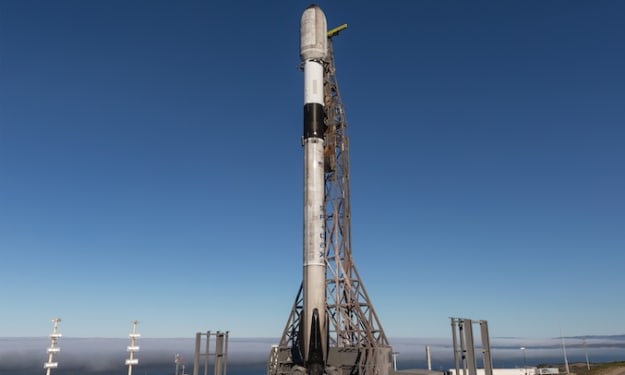
Every SpaceX rocket launch carries more than just payloads into orbit—it carries ambition, experimentation, and a vision of a future where space is no longer unreachable. Founded by Elon Musk in 2002, SpaceX has steadily transformed from a bold startup into one of the most influential aerospace companies in history. Each launch represents another step toward redefining how humanity explores space, communicates across the globe, and imagines life beyond Earth. The Meaning Behind a SpaceX Launch A SpaceX rocket launch is not simply a technical event. It is the result of years of engineering, testing, and problem-solving. From the early Falcon 1 attempts to the now-reliable Falcon 9 and Falcon Heavy missions, SpaceX has focused on one core principle: reusability. This approach has fundamentally changed the economics of spaceflight. Traditional rockets were designed to be used once, making every launch extremely expensive. SpaceX challenged that model by developing rockets that can return to Earth, land vertically, and be flown again. When a Falcon 9 booster touches down on a droneship or landing pad, it marks not just a successful mission, but a proof of concept that spaceflight can be sustainable and repeatable. Falcon 9: The Workhorse of Modern Spaceflight Most SpaceX rocket launches today involve the Falcon 9, a two-stage rocket designed for reliability and efficiency. It has become the backbone of commercial satellite launches, government missions, and cargo resupply trips to the International Space Station (ISS). A typical Falcon 9 launch follows a carefully choreographed sequence. After liftoff, the first stage separates and begins its journey back to Earth, while the second stage continues carrying the payload into orbit. Watching the booster descend through the atmosphere and land upright has become iconic, but it is still a remarkable engineering achievement. These launches often deploy Starlink satellites, part of SpaceX’s effort to provide global internet coverage. For many viewers, a SpaceX rocket launch is their first glimpse into how space technology directly impacts daily life on Earth. Human Spaceflight and the Crew Dragon Era One of the most significant milestones in SpaceX history came with the successful launch of astronauts aboard the Crew Dragon spacecraft. This achievement restored the United States’ ability to launch humans into space from its own soil, ending years of reliance on foreign launch systems. Human-rated SpaceX rocket launches carry a different emotional weight. Every detail—from life support systems to escape mechanisms—is scrutinized to ensure astronaut safety. When a Crew Dragon lifts off, it symbolizes trust: trust in engineering, trust in innovation, and trust in a private company to handle missions once reserved exclusively for national space agencies. These launches have opened new possibilities for international collaboration and long-term space habitation. Starship: The Next Giant Leap While Falcon 9 dominates current missions, Starship represents SpaceX’s most ambitious project yet. Designed as a fully reusable super heavy-lift rocket, Starship is intended to carry humans and cargo to the Moon, Mars, and beyond. A Starship launch is experimental by nature. Test flights focus on learning through iteration—sometimes succeeding, sometimes failing, but always collecting valuable data. Unlike traditional programs that avoid public failure, SpaceX embraces transparency, broadcasting launches and setbacks alike. This approach has reshaped public perception of rocket development. Instead of polished perfection, audiences witness real engineering in progress, complete with challenges and breakthroughs. Why SpaceX Launches Capture Global Attention SpaceX rocket launches attract millions of viewers worldwide, not just because of the technology, but because of what they represent. They remind people that exploration is still alive in the modern world. In an era dominated by digital experiences, watching a rocket break free from Earth’s gravity feels profoundly physical and inspiring. Social media, live streams, and public access have made these launches shared global events. Students, engineers, and casual observers alike tune in, learning about orbital mechanics and rocket science along the way. SpaceX has also changed how people think about careers in science and engineering. For many young viewers, a SpaceX launch is the moment that sparks curiosity and ambition. The Broader Impact on the Space Industry Beyond individual missions, SpaceX rocket launches have forced the aerospace industry to evolve. Lower launch costs and faster turnaround times have encouraged innovation across the sector. Competitors and national agencies alike have begun adopting reusable technology and more agile development methods. This shift benefits scientific research, Earth observation, and communication networks. It also lays the groundwork for future exploration missions that were once considered financially unrealistic. Looking Ahead As SpaceX continues launching rockets at an unprecedented pace, the question is no longer whether spaceflight can be routine, but how far it can take us. Future launches will likely support lunar bases, Mars missions, and expanded satellite networks that connect even the most remote parts of the planet. Each SpaceX rocket launch builds on the last, forming a continuous story of progress. It is a story still being written—one that blends risk, innovation, and a deeply human desire to explore the unknown. In watching these rockets rise into the sky, we are reminded that the boundaries of possibility are not fixed. They are meant to be challenged, tested, and ultimately surpassed.
By Saboor Brohi 4 days ago in Longevity



Comments
There are no comments for this story
Be the first to respond and start the conversation.