
Flu Symptoms 2026: What to Expect, Early Warning Signs, and How to Stay Protected
Understanding early warning signs, symptom patterns, and practical steps to protect your health in 2026

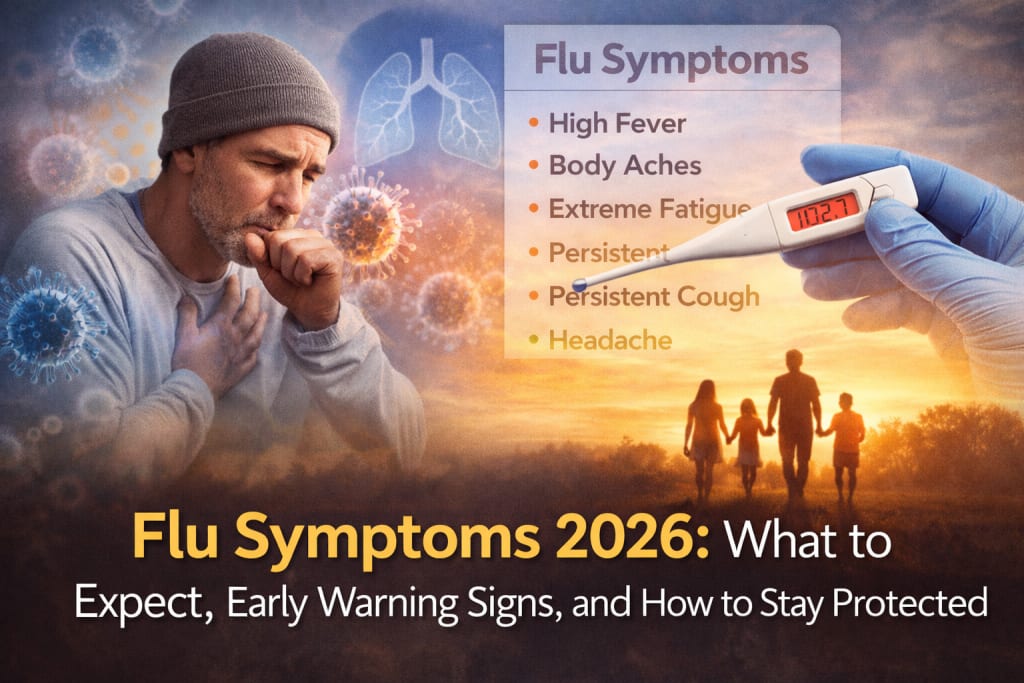
As 2026 begins, flu-related searches are rising once again. Many people are reporting that this year’s flu feels stronger, more exhausting, and slower to recover from. While influenza is a familiar seasonal illness, the way symptoms are presenting in 2026 has raised new concerns.
This article explains the most common flu symptoms in 2026, how they may feel different from previous years, and what you can do to protect yourself and recover safely.
What Is the Flu?
The flu, also known as influenza, is a contagious viral infection that affects the respiratory system, including the nose, throat, and lungs. It spreads easily through coughing, sneezing, close contact, and contaminated surfaces.
Most healthy adults recover within one to two weeks, but the flu can become serious for older adults, young children, pregnant women, and people with weakened immune systems or chronic health conditions.
Flu Symptoms 2026: Common Signs to Watch For
Healthcare professionals note that flu symptoms in 2026 remain similar to previous years, but many people experience them more intensely.
A sudden high fever is often one of the first signs. This may be accompanied by chills, sweating, and a general feeling of weakness. Many people also report strong muscle and joint pain, especially in the back and legs, which can make even simple movement uncomfortable.
Extreme fatigue is another defining symptom. Unlike ordinary tiredness, flu-related fatigue can feel overwhelming and may continue even after the fever has gone. A persistent cough is also common and may last longer than other symptoms.
Headaches, sore throat, and mild nasal congestion may appear, though flu-related congestion is usually less severe than with a common cold.
What Feels Different About Flu Symptoms in 2026?
One of the most noticeable differences this year is how long symptoms tend to linger. Many people describe prolonged exhaustion and mental fog that makes it difficult to focus or return to daily routines quickly.
Digestive discomfort, such as nausea, stomach upset, or diarrhea, is also being reported more frequently, particularly among children and younger adults.
Some individuals experience mild breathing discomfort, including chest tightness or shortness of breath during coughing or physical activity. While not always severe, these symptoms should not be ignored.
Overall recovery time appears longer for many people, with full strength returning after ten to fourteen days rather than within a single week.
Flu or Common Cold: How to Tell the Difference
Flu symptoms usually appear suddenly and feel intense from the beginning. Fever, body aches, and severe fatigue are more typical of the flu, while colds tend to develop gradually and remain milder.
If symptoms begin abruptly and significantly interfere with daily functioning, the flu is more likely than a common cold.
When to Seek Medical Attention
Medical care should be sought if symptoms become severe or worsen instead of improving. Warning signs include difficulty breathing, chest pain, persistent high fever, confusion, or dizziness.
People in high-risk groups should contact a healthcare provider early, as antiviral treatments are most effective when started soon after symptoms begin.
How to Recover from the Flu in 2026
Rest is essential for recovery. The body needs time and energy to fight the virus, and pushing through illness can prolong symptoms.
Staying hydrated helps prevent complications such as dehydration, especially during fever. Light, nutritious foods support the immune system and are easier to tolerate when appetite is low.
Fever and pain should be managed carefully and only with medications taken as directed. Avoid combining medications unnecessarily.
Flu Prevention Tips for 2026
Preventing the flu remains the most effective strategy. Good hand hygiene, avoiding close contact with sick individuals, and staying home when ill can significantly reduce transmission.
Adequate sleep, stress management, and balanced nutrition help strengthen the immune system and lower the risk of infection.
Why Flu Awareness Matters in 2026
Flu symptoms in 2026 may feel stronger and last longer than expected, but early recognition can make a significant difference. Understanding the warning signs allows for faster response, better recovery, and reduced risk of spreading the illness to others.
Paying attention to your body and taking early action helps protect not only your own health but also the well-being of your community.
Disclaimer: This article is for informational purposes only and is not a substitute for professional medical advice.
About the Creator
Core Well Fit
Empowering Your Core To Live Well and Fit 🌿
Your trusted guide to home workouts, nutrition tips, mental wellness, and smart fitness routines.
📍Targeting U.S. lifestyle | 💪 Fitness | 🥗 Diet | 🧠 Wellness
Keep reading
More stories from Core Well Fit and writers in Longevity and other communities.
How Progressive Resistance Strength Training After 50 Can Boost Lifespan and Prevent Age-Related Muscle Loss
Stronger, Longer, Better Life When we think about aging, many people imagine slowing down, losing energy, and struggling with everyday tasks. But science tells us that it doesn’t have to be this way. After 50, the human body is absolutely capable of getting stronger, healthier, and more resilient—if we give it the right kind of stimulus. One of the most powerful tools available is progressive resistance strength training (PRT).
By Core Well Fit4 months ago in Longevity
Day 4 of Quitting
If this is how sobriety feels, maybe it’s better to go through life a little buzzed… this, along with other hits like, I want to kill myself, I wish I was dead, and I’m going to throw myself off a bridge have been the only thoughts on rotation these past few days. I promise myself that if, in a month, I still feel like this (‘this’ meaning despondent, full of rage, and simultaneously numb) I can go back to smoking. Until mid-February though? Nicotine is off the table.
By sleepy drafts11 days ago in Longevity
The last door
The Day the Teacher Learned to Repent At Government High School, a new teacher named Abdul Hameed had joined. He was a little different from the other teachers. He wanted his students not only to follow the curriculum but also to think critically and creatively, so their learning abilities could grow.
By Sudais Zakwan4 days ago in Longevity
The Devil's Cut
“Comrade, finally you’re awake.” The voice was smooth, sensual. A flickering incandescent bar was all that lit the white, sterile room. All Vladimir remembered was everything going black. He tried to move his arms and found them strapped to the gurney.
By Matthew J. Fromm4 days ago in Fiction




Comments
There are no comments for this story
Be the first to respond and start the conversation.