
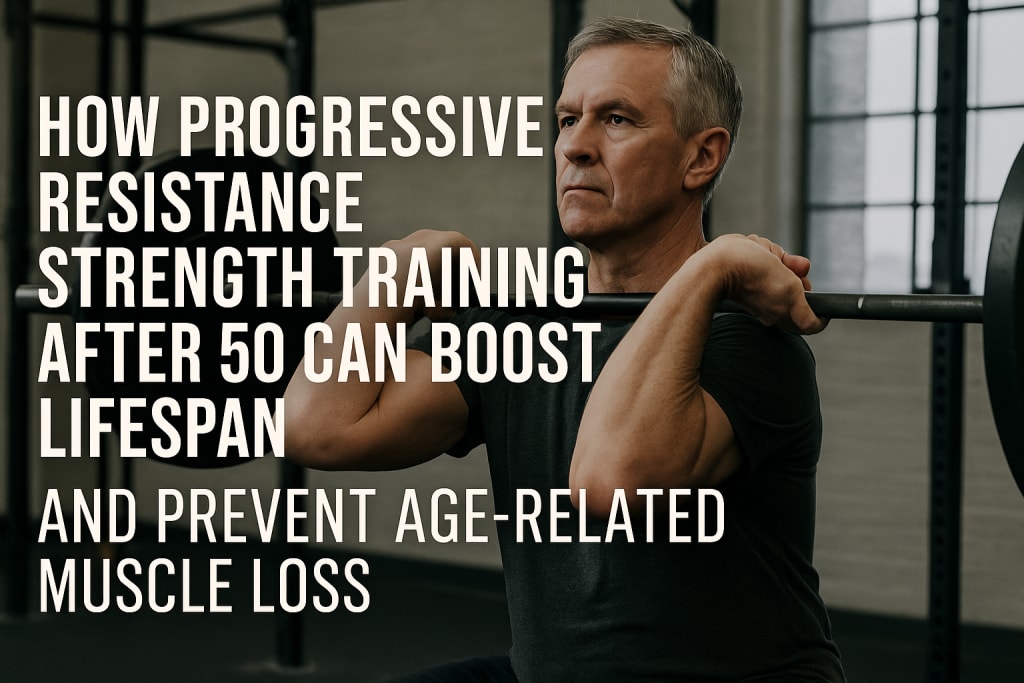
How Progressive Resistance Strength Training After 50 Can Boost Lifespan and Prevent Age-Related Muscle Loss
Discover how strength training after 50 helps preserve muscle, improve health, and extend your active years.
Stronger, Longer, Better Life
When we think about aging, many people imagine slowing down, losing energy, and struggling with everyday tasks. But science tells us that it doesn’t have to be this way. After 50, the human body is absolutely capable of getting stronger, healthier, and more resilient—if we give it the right kind of stimulus. One of the most powerful tools available is progressive resistance strength training (PRT).
This approach not only protects against sarcopenia—the age-related decline in muscle mass but also extends independence, sharpens the mind, and even contributes to longer life expectancy. Let’s explore how it works, why it matters, and how anyone over 50 can safely get started.
The Science of Muscle Loss After 50
Sarcopenia: A Hidden Threat
- Definition: Sarcopenia is the gradual decline of muscle mass and strength that begins around middle age and accelerates after 50.
- Statistics: Research suggests adults may lose 3–5% of muscle per decade after 30, but the pace increases sharply in later decades.
- Consequences: Reduced metabolism, weaker bones, impaired balance, and higher risk of falls and fractures.
Why It Happens
- Hormonal shifts: Decline in testosterone, estrogen, and growth hormone.
- Sedentary lifestyle: Less physical activity accelerates muscle breakdown.
- Nutritional gaps: Insufficient protein intake common in older adults.
- Inflammation and chronic disease: Conditions like diabetes or arthritis speed up muscle loss.
The result? Many people mistakenly believe weakness is “normal aging,” when in fact it’s preventable.
What Is Progressive Resistance Training?
Progressive resistance training involves gradually challenging the muscles with increasing load, volume, or difficulty. This principle, known as progressive overload, forces muscles to adapt, becoming stronger and more resilient.
Examples of progression include:
- Adding weight (e.g., moving from 5 lb to 8 lb dumbbells).
- Increasing repetitions (10 squats today → 12 squats next week).
- Slowing tempo to create more time under tension.
- Advancing from machines to free weights.
Unlike casual exercise, this structured progression is what drives lasting adaptation.
Benefits Beyond Muscles: How Training Extends Lifespan
- Preserved Independence: Stronger muscles mean carrying groceries, climbing stairs, and traveling remain effortless well into later years.
- Bone Density Boost: Weight-bearing exercise reduces osteoporosis risk and fractures.
- Chronic Disease Prevention: Resistance training improves insulin sensitivity, cardiovascular health, and blood pressure regulation.
- Cognitive Support: Exercise stimulates neuroplasticity, improving memory and slowing cognitive decline.
- Metabolic Health: More muscle means higher calorie burn at rest, making weight management easier.
- Reduced Mortality: Large cohort studies show older adults who lift weights have up to 20–30% lower all-cause mortality risk.
The Longevity Factor: What Research Says
- A Harvard Health study found that even modest strength training—twice per week—reduces premature death risk.
- A European Journal of Preventive Cardiology study revealed combining resistance and aerobic exercise extended lifespan more than either alone.
- Research on lifelong weight trainers in their 70s showed muscle quality similar to people decades younger.
Simply put: strong muscles = stronger chances at a longer, healthier life.
How to Begin Progressive Resistance Training After 50
Step 1: Medical Clearance
Consult a physician, especially if you have cardiovascular issues, arthritis, or diabetes.
Step 2: Start with Bodyweight
Simple exercises like wall push-ups, sit-to-stand squats, or step-ups build a foundation.
Step 3: Add External Resistance
Use dumbbells, resistance bands, or gym machines. Start light and focus on form.
Step 4: Follow a Structured Routine
- Frequency: 2–3 times weekly.
- Volume: 2–3 sets of 8–12 repetitions.
- Progression: Add small amounts of weight once current load feels easy.
Step 5: Emphasize Technique
Correct breathing, posture, and controlled movement prevent injury.
A Sample 2-Day Beginner Program
Day 1 – Lower Body & Core
- Sit-to-Stand Squats – 3 x 12
- Glute Bridges – 3 x 12
- Step-Ups – 3 x 10 each leg
- Plank Holds – 3 x 20 seconds
Day 2 – Upper Body & Mobility
- Wall Push-Ups – 3 x 10
- Seated Band Rows – 3 x 12
- Dumbbell Shoulder Press – 3 x 8
- Cat-Cow Stretch – 3 x 8
Progress every 2–3 weeks by adding weight, time, or reps.
Nutrition: Fueling Muscle and Longevity
Strength training works best when paired with proper nutrition.
- Protein: 1.2–1.6 g/kg body weight daily supports muscle repair.
- Healthy fats: Omega-3 fatty acids reduce inflammation.
- Micronutrients: Vitamin D, calcium, and magnesium strengthen bones.
- Hydration: Water supports muscle contraction and joint lubrication.
Meal examples:
- Breakfast: Greek yogurt with berries and chia seeds.
- Lunch: Grilled salmon, quinoa, and roasted vegetables.
- Snack: Protein shake or boiled eggs.
- Dinner: Lean chicken breast with sweet potatoes and broccoli.
Common Misconceptions About Training After 50
- “I’m too old to start”: False—studies show even 70- and 80-year-olds can gain muscle.
- “Strength training makes me bulky”: Untrue—older adults build lean, functional strength.
- “Walking is enough”: Walking is healthy, but it doesn’t replace resistance training.
- “I don’t have equipment”: Resistance bands or bodyweight are excellent starting points.
Overcoming Barriers
- Time: Sessions can be as short as 30 minutes.
- Confidence: Beginners should start with guided programs or trainers.
- Consistency: Linking workouts to daily routines (e.g., morning exercise before coffee) builds habit.
Real-Life Example: The 55-Year-Old Who Became Stronger Than Ever
Consider David, a 55-year-old office worker who had never lifted weights. Within 9 months of progressive resistance training:
- He reversed prediabetes.
- Increased lean muscle by 6 pounds.
- Reported more energy at work and home.
- Reduced his biological age markers according to his doctor.
Stories like his show the practical impact of consistent training.
Mental & Emotional Benefits
Strength training after 50 isn’t just physical it’s mental.
- Boosts mood through endorphin release.
- Improves confidence and body image.
- Provides structure and purpose, reducing depression risk.
- Builds resilience and grit transferable to other life areas.
Strong Muscles, Stronger Life
Reaching 50 or beyond doesn’t mean accepting weakness. Progressive resistance training is not just about lifting weights—it’s about lifting your quality of life. It slows aging, prevents disease, keeps you independent, and adds years of vitality.
Every rep is an investment in your future. Every set is a step toward independence. And every session is a reminder that it’s never too late to grow stronger.
Next Steps to a Stronger You
If you’re over 50 and looking for a real, sustainable way to stay young, energetic, and independent, progressive strength training may be your key. Start small, stay consistent, and watch your body transform in ways you never thought possible.
For more guidance on practical workouts, nutrition strategies, and healthy living insights, explore fitness resources like CoreWellFit. Just type the name into Google you’ll discover a hub designed to make health and fitness simple, science-backed, and tailored for real life.
Your second half of life can be your strongest. Pick up the weight and lift your longevity.
About the Creator
Core Well Fit
Empowering Your Core To Live Well and Fit 🌿
Your trusted guide to home workouts, nutrition tips, mental wellness, and smart fitness routines.
📍Targeting U.S. lifestyle | 💪 Fitness | 🥗 Diet | 🧠 Wellness
Keep reading
More stories from Core Well Fit and writers in Longevity and other communities.
Foods to Avoid for Better Digestive Health
Introduction Digestive health plays a vital role in your overall well-being. When your digestive system is functioning properly, your body can absorb nutrients efficiently, support immunity, and maintain energy levels. But when digestion is off-track, issues like bloating, constipation, acid reflux, and fatigue can disrupt your daily life.
By Core Well Fit6 months ago in Longevity
Day 4 of Quitting
If this is how sobriety feels, maybe it’s better to go through life a little buzzed… this, along with other hits like, I want to kill myself, I wish I was dead, and I’m going to throw myself off a bridge have been the only thoughts on rotation these past few days. I promise myself that if, in a month, I still feel like this (‘this’ meaning despondent, full of rage, and simultaneously numb) I can go back to smoking. Until mid-February though? Nicotine is off the table.
By sleepy drafts11 days ago in Longevity
What You See Is Not a Ship: At 385 Metres Long, Havfarm Is the World’s Largest Offshore Salmon Farm
At first glance, Havfarm looks like a massive industrial ship drifting across the open sea. Stretching an astonishing 385 metres in length, it rivals some of the world’s largest oil tankers and aircraft carriers. But Havfarm is not a ship at all. It is the world’s largest offshore salmon farm, a floating giant designed to transform the future of global aquaculture.
By Fiaz Ahmed Brohi7 days ago in Longevity



Comments
There are no comments for this story
Be the first to respond and start the conversation.