
European style massage Swedish
Massage is one of the oldest and most effective therapeutic techniques to holistically promote human physical and mental health.

Introduction
Massage is one of the oldest and most effective therapeutic techniques that holistically promotes human physical and mental health. With a history spanning thousands of years, massage techniques have evolved from simple physical contact to a professional treatment method that includes complex healing mechanisms.
Swedish massage, which originated in Sweden, is an innovative technique that has set the standard for modern massage therapy. Developed in the 19th century by Per Henrik Ling, this technique presents a unique massage methodology that optimizes the physiological responses of the human body based on scientific principles and a systematic approach.
Swedish massage offers multi-dimensional health benefits, including muscle relaxation, improved blood circulation, lymphatic stimulation, and stress relief. This technique goes beyond simple physical contact and acts on the nervous, musculoskeletal, and circulatory systems to maximize the body’s natural healing ability.
This study explores the in-depth aspects of Swedish massage. We will comprehensively analyze its origins and development, scientific principles, specific health effects, and innovative applications in sports, medicine, and wellness. We will clearly highlight the modern significance and future potential of this traditional massage technique.
Principles of Swedish Massage
The scientific origins of Swedish massage were systematized by the 19th century Swedish physical education teacher Per Henrik Ling. Ling developed massage techniques based on his knowledge of anatomy and scientifically analyzed the physiological responses of the human body.
The core principle of this technique is to activate the body's natural healing mechanisms through systematic manipulation of muscles and connective tissues. The main massage techniques include Effleurage (gentle sweeping), Petrissage (kneading), Tapotement (tapping), and Friction (friction).
From a scientific perspective, Swedish massage produces the following physiological effects:
Improvement of blood circulation
Relief of muscle tension
Stimulation of the lymphatic system
Relaxation of the nervous system
Activation of metabolism
Through these complex mechanisms, Swedish massage has evolved from a simple relaxation technique to a comprehensive body healing method.
The Effects of Swedish Massage
Swedish massage is a therapeutic technique that provides a groundbreaking effect on the health of modern people. First, it shows excellent results in terms of relieving stress and muscle pain. Systematic manipulation of massage techniques directly relieves muscle tension and induces neurophysiological responses that reduce psychological stress.
Swedish massage also has an amazing effect in terms of blood circulation and the lymphatic system. Gentle friction and pressure techniques dilate blood vessels and improve blood flow, promoting efficient supply of oxygen and nutrients. At the same time, it stimulates the lymphatic system to remove waste products and enhance immune function.
In addition, it is noteworthy that it has the effect of enhancing immunity and improving overall health. Regular Swedish massage increases the body's natural healing ability and improves overall well-being by reducing the hormone cortisol and promoting the secretion of serotonin and dopamine.
Use of Swedish Massage
Swedish massage is a versatile therapeutic technique that is innovatively used in various professional fields.
In the field of sports, Swedish massage plays a decisive role in improving the performance and recovery of athletes. It optimizes pre-workout warm-up and post-workout recovery by relieving muscle tension and improving blood circulation. In particular, systematic massage techniques for deep muscle tissue are excellent for reducing muscle fatigue and minimizing the risk of injury.
In the medical and rehabilitation fields, Swedish massage is recognized as an important adjunct treatment for pain management and healing processes. It is effective in improving muscle flexibility and restoring neuromuscular function in the rehabilitation treatment of chronic musculoskeletal pain, joint diseases, sports injuries, etc. Physiotherapists use this technique to improve patients' range of motion and accelerate healing.
In the wellness and beauty fields, Swedish massage has become a key element of a holistic health approach. It provides a total wellness effect, including stress reduction, mental relaxation, and improved skin health. Promoting blood circulation helps improve skin tone and eliminate waste products, while psychological relaxation has emerged as an essential alternative for managing chronic stress in modern people.
In this way, Swedish massage is evolving from a simple relaxation technique to a multi-dimensional treatment method based on scientific evidence, and its importance and utilization in various professional fields are expected to expand even further in the future.
Conclusion
Swedish massage is an innovative massage methodology that represents the perfect fusion of modern medicine and traditional healing techniques. This technique, systematized by Per Henrik Ling, integrates the rigorous scientific principles of anatomy, physiology, and neuroscience to activate the complex healing mechanisms of the human body. Developed based on a deep understanding of muscle tissue, blood circulation, and nervous system responses, Swedish massage has established itself as a key tool for holistic health management beyond a simple relaxation technique.
The applicability of Swedish massage in various professional fields is more extensive and innovative than ever. In the field of sports medicine, it plays a crucial role in optimizing the performance of athletes and preventing injuries, and in the field of medical rehabilitation, it is recognized as a key treatment method for chronic pain management and neuromuscular function recovery. In the field of wellness and mental health, it also provides holistic health improvement effects such as stress reduction, psychological relaxation, and immune system enhancement.
Multidisciplinary research and innovative approaches are essential for the continued development of future massage techniques. The scientific mechanisms of massage should be explored more deeply through integrated research in various academic fields such as neuroscience, physiology, psychology, and exercise science. Advances in artificial intelligence and biotechnology have the potential to provide new levels of precision and personalized approaches to massage techniques, and we can expect an innovative reinterpretation of traditional massage techniques.
Introducing a massage job search site that is popular as a high-income job in modern society, and in addition to job search, there is also massage information and lifestyle health information, so please come and get a lot of health information. Thank you.
About the Creator
Mr. choi
I think you can enjoy sports more if you have basic knowledge about sports. I want to create opportunities to learn little by little. I want to provide information such as sports broadcasts and sports news.
Day 4 of Quitting
If this is how sobriety feels, maybe it’s better to go through life a little buzzed… this, along with other hits like, I want to kill myself, I wish I was dead, and I’m going to throw myself off a bridge have been the only thoughts on rotation these past few days. I promise myself that if, in a month, I still feel like this (‘this’ meaning despondent, full of rage, and simultaneously numb) I can go back to smoking. Until mid-February though? Nicotine is off the table.
By sleepy drafts11 days ago in Longevity
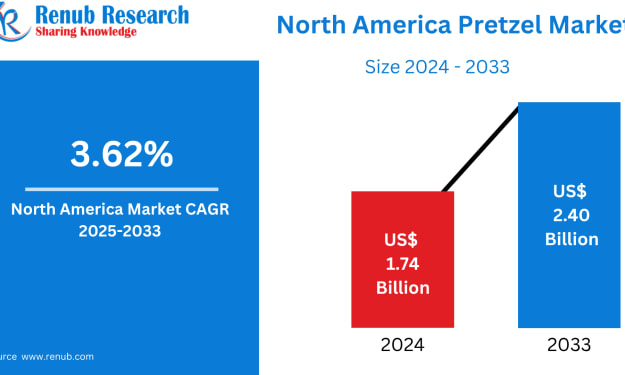
North America Pretzel Market Size and Forecast 2025–2033
The North America Pretzel Market is expected to reach US$ 2.40 billion by 2033, up from US$ 1.74 billion in 2024, expanding at a CAGR of 3.62% from 2025 to 2033, according to Renub Research. This steady growth reflects the enduring appeal of pretzels as a convenient snack, combined with evolving consumer preferences for healthier, premium, and flavor-forward food products.
By Marthan Sir6 days ago in Longevity
How to Succeed at the Benson Directory®
Congratulations and welcome to the Benson Directory® employee #22391! As our newest call handler, you will have the privilege of speaking with dozens of unique and interesting people on a daily basis as well as the opportunity to earn bonuses for high performance. Contained within this handbook you will find a set of ease to follow instructions designed to help you settle in to your new role and begin paving the way to success.
By S. A. Crawforda day ago in Fiction



Comments
There are no comments for this story
Be the first to respond and start the conversation.