
Europe Spinal Cord Stimulation Devices Market Size and Forecast Analysis (2026–2034)
Rising Adoption of Neuromodulation Technologies Reshapes Chronic Pain Management Across Europe

Market Overview
The Europe Spinal Cord Stimulation Devices Market is projected to grow steadily over the forecast period, rising from US$ 889.50 million in 2025 to US$ 1,781.09 million by 2034, registering a compound annual growth rate (CAGR) of 8.02% from 2026 to 2034, according to Renub Research.
This sustained expansion is being driven by a rising burden of chronic pain conditions, increasing preference for minimally invasive treatment approaches, continuous advancements in neuromodulation technology, growing awareness among healthcare professionals, and improved patient education. As healthcare systems across Europe seek effective, long-term, and non-opioid pain management solutions, spinal cord stimulation (SCS) devices are gaining significant traction.
European Spinal Cord Stimulation Devices Market Analysis
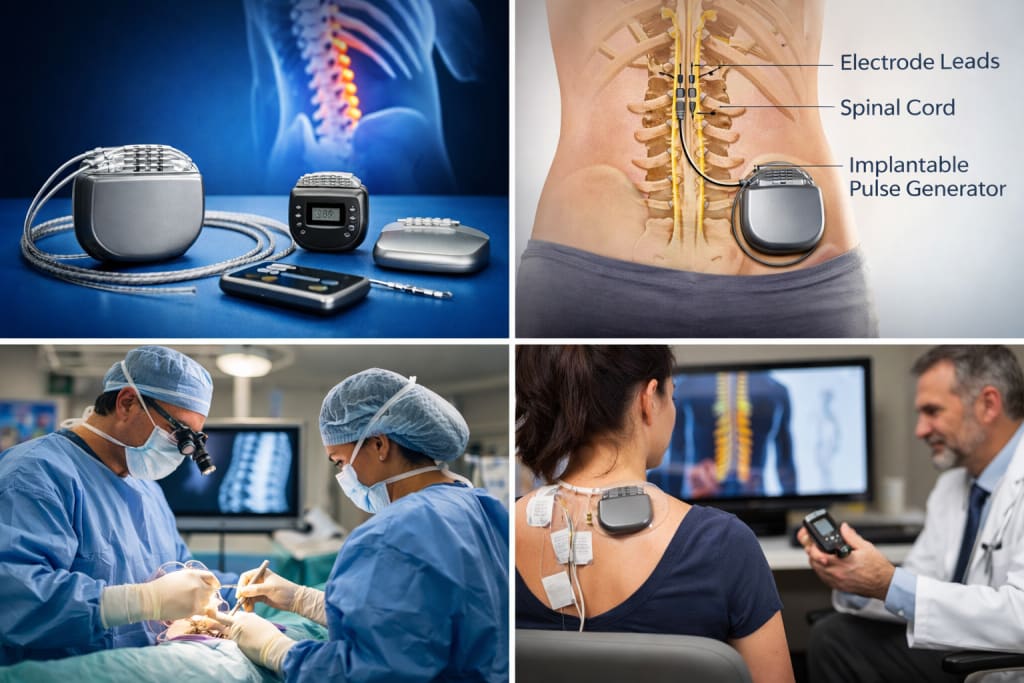
Spinal cord stimulation systems are implantable medical devices designed to manage chronic pain by delivering mild electrical impulses to the spinal cord. These impulses interfere with pain signal transmission before the signals reach the brain, effectively reducing pain perception. A typical SCS system includes implanted electrodes, a pulse generator, and an external controller that allows physicians and patients to adjust stimulation parameters.
In Europe, the demand for SCS devices has increased considerably due to the growing elderly population and the rising prevalence of spinal disorders, neuropathic pain, and post-surgical complications. European healthcare providers are increasingly prioritizing therapies that reduce long-term opioid dependence and repeated surgical interventions. The availability of rechargeable systems, closed-loop technologies, and advanced waveform modulation has significantly improved clinical outcomes, further encouraging adoption across hospitals and pain management centers.
Key Growth Drivers in the Europe Spinal Cord Stimulation Devices Market
Rising Incidence of Chronic Pain Conditions
One of the most important growth drivers for the European SCS devices market is the increasing prevalence of chronic pain. As Europe’s population continues to age, degenerative spinal disorders, neuropathic pain, and post-operative pain conditions are becoming more common. Conditions such as failed back surgery syndrome (FBSS), sciatica, and complex regional pain syndrome (CRPS) significantly affect patients’ quality of life and work productivity.
As of 2023, Europe’s population stood at approximately 740 million, with nearly 60 million individuals experiencing severe pain lasting more than three months, classifying it as chronic pain. Overall, an estimated 150 million people across Europe live with chronic pain, highlighting the immense clinical need for effective long-term treatment solutions. Notably, chronic pain prevalence is higher among women, with studies suggesting that women experience chronic pain nearly twice as often as men. This growing patient pool is accelerating the adoption of spinal cord stimulation therapies.
Increasing Demand for Minimally Invasive Procedures
Healthcare systems across Europe are increasingly favoring minimally invasive procedures due to shorter hospital stays, reduced complication risks, and lower overall healthcare costs. Spinal cord stimulation implantation procedures are less invasive compared to traditional surgical interventions and allow for faster recovery times.
Additionally, SCS therapy offers adjustable and reversible pain management, enabling personalized treatment without permanent anatomical changes. The ability of spinal cord stimulation to reduce long-term opioid usage aligns with public health priorities aimed at addressing opioid dependence. These advantages have made SCS devices an attractive option for both healthcare providers and patients across Europe.
Advancements in Neuromodulation Technologies
Technological innovation continues to play a crucial role in the expansion of the European spinal cord stimulation devices market. Modern SCS systems now feature rechargeable batteries with extended lifespans, wireless programming capabilities, closed-loop feedback mechanisms, and sophisticated stimulation waveforms. These advancements enhance patient comfort, improve therapeutic precision, and reduce the need for revision surgeries.
Improved programming flexibility also allows physicians to optimize treatment outcomes based on patient-specific pain patterns. As technology continues to evolve, healthcare professionals are increasingly confident in recommending SCS therapy, contributing to broader adoption across European healthcare settings.
Challenges Facing the Europe Spinal Cord Stimulation Devices Market
High Device and Procedure Costs
Despite strong clinical benefits, the high upfront cost of spinal cord stimulation devices and implantation procedures remains a key challenge. Neuromodulation systems require significant investment, which can be a barrier for healthcare facilities operating under tight budget constraints.
However, long-term economic evaluations often demonstrate cost savings due to reduced medication usage, fewer hospitalizations, and improved patient productivity. While initial costs may limit adoption in certain regions, the long-term value proposition of SCS therapy continues to support market growth.
Complex Reimbursement and Regulatory Frameworks
Europe’s fragmented reimbursement systems and varying regulatory requirements pose additional challenges. Differences in reimbursement policies across countries can affect patient access to SCS therapy and slow market penetration. Manufacturers must navigate complex approval processes, increasing time-to-market and compliance costs. Harmonization efforts and growing recognition of neuromodulation’s clinical benefits may gradually ease these barriers over time.
Market Segmentation Insights
Rechargeable Spinal Cord Stimulation Devices
The rechargeable SCS devices segment is witnessing steady growth across Europe. Rechargeable systems offer longer battery life, reducing the frequency of replacement surgeries and overall treatment costs. These systems are particularly suitable for younger and more active patients who require continuous pain management. Improved charging convenience and enhanced device functionality are driving increased acceptance among patients and healthcare providers alike.
Arachnoiditis-Related Spinal Cord Stimulation Devices
Spinal cord stimulation is increasingly being used for the management of arachnoiditis, a complex condition characterized by chronic inflammation and nerve pain. As awareness of arachnoiditis grows among clinicians and patients, demand for neuromodulation-based treatment options is increasing. SCS therapy has demonstrated effectiveness in alleviating pain symptoms associated with this condition, supporting segment growth.
Sciatica-Related Spinal Cord Stimulation Devices
The sciatica segment is experiencing notable growth due to rising cases of nerve compression-related back and leg pain. Patients who do not respond to conventional treatments such as physical therapy or medication are increasingly turning to spinal cord stimulation for long-term pain relief. The ability of SCS devices to block pain signals effectively makes them a valuable option for chronic sciatica management.
Complex Regional Pain Syndrome (CRPS)
Spinal cord stimulation has emerged as an important treatment modality for complex regional pain syndrome. CRPS requires long-term pain management, and SCS therapy offers personalized stimulation that reduces pain intensity and improves limb functionality. Growing clinical evidence supporting early intervention with SCS is driving demand in this segment.
End-User Analysis
Hospitals remain the dominant end-user segment in the European spinal cord stimulation devices market. Large hospitals and specialized pain centers possess the necessary infrastructure, expertise, and multidisciplinary teams required for SCS implantation and follow-up care. Increasing referrals to pain management centers and growing awareness among clinicians are supporting demand within hospital settings.
Country-Wise Market Analysis
France
France represents a significant market due to its advanced healthcare infrastructure and strong emphasis on chronic pain management. Rising musculoskeletal and neuropathic disorders, combined with increased acceptance of neuromodulation therapies, are fueling growth. France’s focus on non-opioid pain management further supports SCS adoption.
Germany
Germany is one of the largest markets for spinal cord stimulation devices in Europe. Strong reimbursement systems, high physician awareness, and robust investment in pain care facilities contribute to market expansion. The country’s aging population and increasing prevalence of chronic pain conditions continue to drive demand.
United Kingdom
The UK spinal cord stimulation devices market is growing steadily as healthcare professionals increasingly recognize the benefits of neuromodulation therapies. Specialized pain centers and hospitals remain key contributors, with long-term cost-effectiveness serving as an important driver despite budget constraints.
Russia
Russia’s spinal cord stimulation devices market is developing gradually, supported by improving healthcare infrastructure and rising awareness of advanced pain management solutions. Adoption is currently concentrated in major urban hospitals, but growing demand for effective chronic pain therapies is expected to support future growth.
Competitive Landscape
The European spinal cord stimulation devices market is characterized by the presence of leading global and regional players. Companies are focusing on technological innovation, strategic partnerships, and product launches to strengthen their market position. Competitive strategies emphasize advanced waveforms, AI-enabled personalization, and rechargeable systems to enhance clinical outcomes.
Key companies analyzed include:
Abbott Laboratories
Medtronic plc
Boston Scientific Corporation
Nevro Corp.
Saluda Medical Pty Ltd
Beijing PINS Medical Co., Ltd
Nalu Medical
Stimwave Technologies
Synapse Biomedical Inc.
Gimer Medical
Each company is evaluated across multiple viewpoints, including overview, key personnel, recent developments, SWOT analysis, and revenue performance.
Final Thoughts
The Europe Spinal Cord Stimulation Devices Market is set for strong and sustained growth through 2034, supported by rising chronic pain prevalence, advancements in neuromodulation technology, and a growing shift toward minimally invasive, non-opioid treatment options. While challenges such as high upfront costs and complex reimbursement systems remain, ongoing innovation and increasing clinical acceptance are expected to drive widespread adoption.
As European healthcare systems continue to prioritize patient-centric and cost-effective pain management strategies, spinal cord stimulation devices are positioned to play an increasingly vital role in the future of chronic pain treatment across the region.
About the Creator
Day 4 of Quitting
If this is how sobriety feels, maybe it’s better to go through life a little buzzed… this, along with other hits like, I want to kill myself, I wish I was dead, and I’m going to throw myself off a bridge have been the only thoughts on rotation these past few days. I promise myself that if, in a month, I still feel like this (‘this’ meaning despondent, full of rage, and simultaneously numb) I can go back to smoking. Until mid-February though? Nicotine is off the table.
By sleepy drafts27 days ago in Longevity
Concierge Medicine Market Size and Forecast 2025–2033
Concierge Medicine Market Outlook: A New Era of Personalized Care The global healthcare system is undergoing a profound transformation as patients increasingly seek care that is not only effective but also personal, accessible, and proactive. In this evolving landscape, concierge medicine has emerged as one of the fastest-growing healthcare models worldwide.
By Sakshi Sharma3 days ago in Longevity




Comments
There are no comments for this story
Be the first to respond and start the conversation.