
Effective ways to manage and relieve fatigue
Fatigue is not simply a depletion of physical energy, but rather a complex phenomenon that deeply affects human physical and mental functions.
Introduction
In modern society, fatigue has become a serious health problem that encroaches on our daily lives. Fatigue does not simply mean the depletion of physical energy, but rather a complex phenomenon that deeply affects the physical and mental functions of humans.
Medically, fatigue is defined as a state of continuous energy depletion of the body and mind. It significantly reduces an individual's ability to perform daily activities and directly affects productivity and quality of life. Fatigue is a profound condition that cannot be completely relieved by simple rest, and can be considered a warning signal for our body.
Modern people suffer from chronic fatigue due to constant stress and excessive workload in a rapidly changing social environment. This fatigue can lead to various negative effects beyond simple physical fatigue, such as decreased immunity, mental depression, and decreased concentration.
This paper comprehensively explores the various causes of fatigue and methods for resolving them. We will examine physical factors, environmental factors, and effective fatigue management strategies in depth. Ultimately, we aim to present a practical approach for a healthy and vibrant life.
Physical Causes
Physical causes of fatigue consist of complex factors that seriously affect the health of modern people.
First, lack of exercise has a direct negative effect on the body's metabolic function and energy production. The absence of regular physical activity causes muscle weakness, decreased blood circulation, and decreased metabolic rate, which leads to chronic fatigue. Modern sedentary lifestyles disrupt the body's natural energy production mechanism and reduce overall physical function. In addition, the cause of fatigue can be found in the way modern people work. The deformation of the body structure that occurs when working for long hours in an incorrect posture can cause pain, fatigue, and stress.
Second, lack of sleep seriously interferes with the body's recovery and regeneration process. Although adults need 7-9 hours of sleep per day, many modern people do not get this amount. Insufficient sleep causes hormonal imbalance, decreased immunity, decreased cognitive function, and leads to chronic fatigue and energy depletion.
Third, stress has a direct negative effect on the body's physiological mechanisms. Constant psychological stress causes excessive secretion of stress hormones such as cortisol, which depletes the body's energy system. This leads to a weakened immune system, sleep disorders, and muscle tension, which leads to severe fatigue.
Finally, malnutrition reduces the body’s ability to generate basic energy. An unbalanced diet, inadequate nutrient intake, and micronutrient deficiencies impede energy production at the cellular level. In particular, deficiencies in iron, B vitamins, and magnesium can be major causes of chronic fatigue.
These physical causes are closely linked, and an imbalance in one factor can have a chain effect on the others. Therefore, a comprehensive and balanced approach is the key to relieving fatigue.
Environmental factors
Environmental factors in modern society consist of important factors that aggravate human fatigue. First, noise and pollution continuously stimulate the body’s stress response mechanism. The constant noise and air pollution in the city cause continuous tension in the nervous system, which increases energy consumption and psychological fatigue.
Second, excessive workload is a key cause of chronic fatigue in modern people. Long working hours, high work intensity, and continuous performance pressure rapidly deplete physical and mental energy. This environment creates stress beyond the individual’s ability to recover, causing burnout.
Third, the disharmony of social life rhythms is also an important factor in fatigue. Irregular sleep patterns, a 24-hour digital environment, and an inappropriate work-life balance disrupt the biological rhythm, resulting in chronic energy depletion. This has a negative impact on hormonal balance and metabolism, and can cause serious fatigue in the long term.
These environmental factors go beyond mere external conditions and directly affect the physiological and psychological mechanisms of the human body. Therefore, in order to manage fatigue, not only individual efforts but also systematic responses and management of environmental factors are essential.
Methods for relieving fatigue
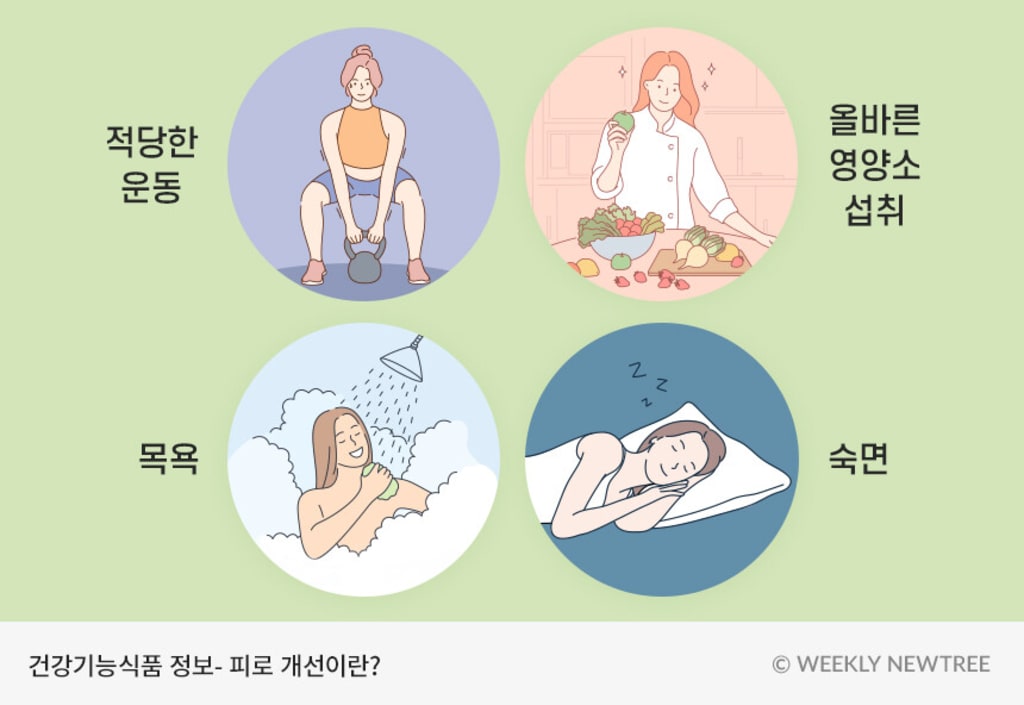
A comprehensive and balanced approach is key to relieving fatigue. First, sufficient rest and sleep are the most basic mechanisms for physical recovery. Regular sleep of 7-9 hours a day is essential for recharging the body’s energy and maintaining hormonal balance. In particular, maintaining a consistent sleep schedule and improving the sleep environment are important.
Second, regular exercise and stretching are key strategies for relieving fatigue. Moderate-intensity aerobic exercise improves blood circulation and promotes endorphin secretion, thereby increasing energy levels. Simple stretching every day, along with exercise for at least 30 minutes 3-4 times a week, will relieve muscle tension and increase body flexibility.
Third, a balanced diet is crucial for the body's energy metabolism. Protein, complex carbohydrates, healthy fats, and sufficient water intake optimize energy production at the cellular level. Regular consumption of foods rich in iron, B vitamins, and magnesium can help prevent chronic fatigue.
Fourth, systematic stress management is the key to relieving fatigue. Relaxation techniques such as meditation, deep breathing, and yoga relieve psychological tension and regulate the secretion of stress hormones. Regular psychological counseling or participation in stress management workshops are also effective coping methods.
Finally, hobbies and leisure activities are important for recovering mental and emotional energy. Enjoyable activities promote the secretion of dopamine and serotonin, which increases overall energy levels and life satisfaction. Developing hobbies that fit your personal interests can be a great help in relieving psychological fatigue.
Conclusion
In the complex living environment of modern society, fatigue has become a serious health problem that threatens our entire lives, beyond a simple physical phenomenon. As we analyzed earlier, fatigue is a multidimensional phenomenon that occurs due to a combination of lack of exercise, sleep disturbance, excessive stress, nutritional imbalance, and environmental factors.
Managing fatigue is not a personal choice, but an essential survival strategy. Regular exercise, sufficient sleep, a balanced diet, and effective stress management are not mere recommendations, but key elements for maintaining a healthy life. Each of us must take responsibility for our own physical and mental health, which leads to improved quality of life in the long term.
In particular, modern people must develop strategies to conserve and recharge their energy in a constantly changing social environment. The key to managing fatigue is to pursue balance in various areas such as hobbies, leisure time, and social relationships.
In conclusion, fighting fatigue requires a continuous and systematic approach, not a temporary response. When we all listen to our bodies and minds and actively practice healthy lifestyle habits, we will be able to escape the vicious cycle of chronic fatigue and lead more energetic and productive lives. Massage therapy
About the Creator
Mr. choi
I think you can enjoy sports more if you have basic knowledge about sports. I want to create opportunities to learn little by little. I want to provide information such as sports broadcasts and sports news.
Day 4 of Quitting
If this is how sobriety feels, maybe it’s better to go through life a little buzzed… this, along with other hits like, I want to kill myself, I wish I was dead, and I’m going to throw myself off a bridge have been the only thoughts on rotation these past few days. I promise myself that if, in a month, I still feel like this (‘this’ meaning despondent, full of rage, and simultaneously numb) I can go back to smoking. Until mid-February though? Nicotine is off the table.
By sleepy drafts11 days ago in Longevity
Kratom Tea Guide for Beginners, Benefits, Effects, and How to Use It
Kratom tea is one of the most common ways people use kratom. Many users choose tea because it is easier to digest, faster to absorb, and simpler to control than powder or capsules. If you searched for kratom tea, you likely want to know what it does, how to make it, how strong it is, and whether it is better than other forms. This guide answers those questions in a clear and direct way.
By Jack Wilder4 days ago in Longevity
Rachel Reviews: The Spiral Archive by Pieter Hendrik
It's difficult for me to know where to start with a review of this book as it was, for me, an entirely unique experience and one that I'll probably never have again. I don't want that to be interpreted as unenjoyable but it has left me scratching my head a little and ruminating on its content, its themes and its characters.
By Rachel Deemingabout 15 hours ago in BookClub




Comments
There are no comments for this story
Be the first to respond and start the conversation.