
Ebstein's anomaly - causes, symptoms, diagnosis and treatment
The Ebstein anomaly. Symptoms. Diagnostics. What to do when Ebstein's anomaly is diagnosed. Conservative treatment and operations.

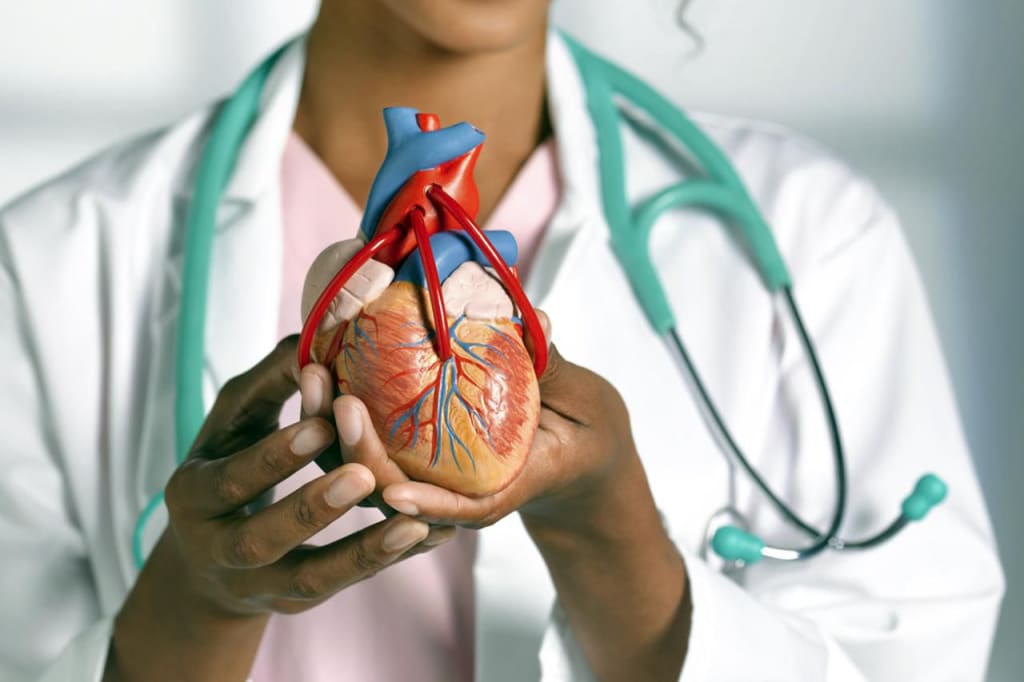
Ebstein's anomaly is a defect of the tricuspid valve, characterized by its dysplasia and displacement into the cavity of the right ventricle. Signs of Ebstein's anomaly are low physical endurance, shortness of breath, paroxysmal tachycardia, cyanosis, cardiomegaly, right ventricular failure, arrhythmias. The diagnosis of Ebstein's anomaly is confirmed by electrocardiogram, echocardiogram, phonocardiogram, radiography, probing of the heart cavities, atriography. Treatment of Ebstein's anomaly is operative, including prosthetics of the tricuspid valve, elimination of the atrialized part of the right ventricle, elimination of atrial communication
General information
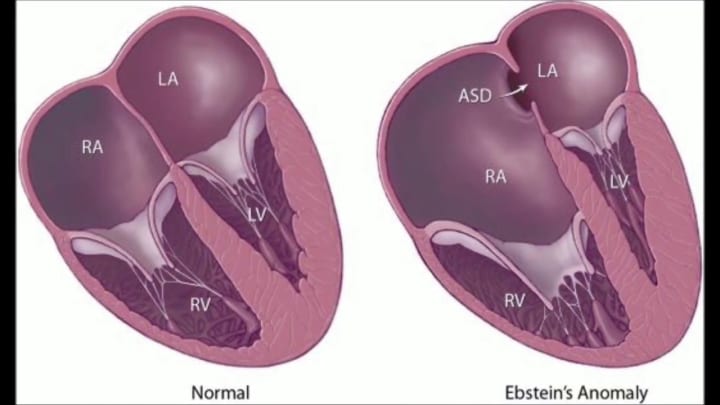
Ebstein's anomaly is a congenital pathology of the tricuspid atrioventricular valve, accompanied by an abnormal position of the valves, leading to the formation of an atrialized part of the right ventricle above them, which is one with the right atrium. For the first time in cardiology, the anomaly was described by the German physician W. Ebstein in 1866. The frequency of Ebstein's anomaly among various congenital heart defects is 0.5-1%. Ebstein's anomalies are often accompanied by other heart defects - atrial septal defect (ASD), open ductus arteriosus (ODA), ventricular septal defect (VSD), pulmonary artery stenosis or atresia, mitral stenosis or insufficiency, WPW syndrome.
Reasons
The formation of the Ebstein anomaly is associated with the entry of lithium into the fetal body at the early stages of embryogenesis. Also, infectious diseases of a pregnant woman (scarlet fever, measles, rubella), severe somatic diseases (anemia, diabetes mellitus, thyrotoxicosis), alcohol consumption and drugs with teratogenic effects, pathology of gestation (toxicosis, the threat of spontaneous miscarriage, etc.) can lead to the occurrence of this and other heart defects.
An important role in the development of Ebstein's anomaly is played by the burdened heredity of congenital heart defects - along with sporadic, there are also family cases of anomalies.
Classification
There are four anatomical variants (types) of Ebstein's anomaly:
I - the anterior flap of the tricuspid valve is large and movable; the septal and posterior flaps are absent or displaced;
II - all three valves of the atrioventricular valve are present, but they are relatively small and displaced towards the apex of the heart.
III - the chords of the anterior flap of the tricuspid valve are shortened and restrict its movement; the septal and posterior flaps are underdeveloped and displaced.
IV - the anterior flap of the tricuspid valve is deformed and displaced towards the outlet tract of the right ventricle; the septal flap is formed by fibrous tissue, the posterior one is underdeveloped or completely absent.
Features of hemodynamics in Ebstein's anomaly
The anatomical basis of Ebstein's anomaly is the incorrect location of the tricuspid valve, in which its flaps (usually posterior and septum) are deformed and displaced into the cavity of the right ventricle. In this case, the valve flaps are attached below the fibrous ring, sometimes at the level of the outlet section of the right ventricle. Displacement of the valve is accompanied by atrialization of the right ventricle, i.e. a condition in which part of the right ventricle is a continuation and a single cavity with the right atrium.
Thus, the displacement of the valves causes the division of the right ventricle into 2 functional parts: the supravalvular atrialized, forming a common cavity with the right atrium, and the subvalvular, smaller in size, functioning as the right ventricle. At the same time, the right atrium and the atrialized part of the right ventricle are significantly expanded, and the cavity of the right ventricle is reduced.
Hemodynamic disorders associated with Ebstein's anomalies depend on the degree of tricuspid insufficiency, the size of the functioning right ventricle and the amount of blood discharge from right to left through atrial communication.
Electrical processes in the right atrium, consisting of two parts, are not synchronized: the contraction of the right atrium proper occurs in the atrial systole, and the atrialized part of the right ventricle - in the ventricular systole. Due to tricuspid insufficiency, venous blood regurgitates back into the right atrium; the shock volume of the right ventricle decreases, which is accompanied by a decrease in pulmonary blood flow. The right atrium dilates and hypertrophs, the pressure in it increases progressively, causing the occurrence of a venous-arterial shunt through a defect in the atrial septum.
Right-left blood discharge plays a dual role: on the one hand, it avoids overload of the right atrium and compensates for the defect; on the other hand, it promotes the development of arterial hypoxemia.
Symptoms of Ebstein's anomaly
Depending on the severity of hemodynamic disorders, there are 3 stages of the Ebstein anomaly: I — asymptomatic (rare); II - stage of severe hemodynamic disorders (IIA - without cardiac arrhythmias; IIb - with cardiac arrhythmias), III - stage of persistent decompensation.
The most severe forms of Ebstein's anomaly can cause fetal death in utero. With a favorable variant of the defect, its course remains asymptomatic for a long time; the physical development of children corresponds to age. In typical cases, Ebstein's anomaly manifests itself in early childhood, sometimes in the first months of a child's life.
Clinical symptoms include diffuse cyanosis, poor exercise tolerance, heart pain, palpitations. 25-50% of patients with Ebstein's anomaly have paroxysmal supraventricular tachycardia, 14% of them have WPW syndrome. During external examination, attention is drawn to changes in the terminal phalanges of the fingers in the type of "drumsticks" and nails in the form of "watch glasses", "heart hump".
With Ebstein's anomaly, right ventricular failure may develop early - shortness of breath, liver enlargement, swelling and pulsation of the cervical veins. Arterial hypotension is often noted. The course of Ebstein's anomaly is steadily progressing. The cause of death of older patients is most often heart failure and severe rhythm disturbances.
Diagnosis of Ebstein's anomaly
Patients with suspected Ebstein's anomaly are consulted by a cardiologist and a cardiac surgeon, ECG, chest X-ray, echocardiography, phonocardiography. Percussion determines the increase in the size of the heart to the right, during auscultation, a characteristic three- or four-stroke rhythm is heard, systolic and diastolic noise to the right of the xiphoid process, splitting of the II tone.
ECG data include electrical axis of the heart deviation to the right, signs of hypertrophy and dilation of the right atrium, paroxysmal ventricular extrasystole and atrial tachycardia (WPW syndrome), atrial flutter, atrial fibrillation, complete (incomplete) blockade of the right leg of the Gis bundle. Phonocardiogram with Ebstein anomaly is characterized by the presence of systolic noise in the projection of the right ventricle; delay of the I tone; split II tone; III, IV tones of large amplitude.
Radiological signs indicating Ebstein's anomaly are represented by a sharp increase in the right parts of the heart, a spherical shape of the heart shadow, increased transparency of the pulmonary fields.
During echocardiography, a downward displacement of the tricuspid valve flaps, an increase in the size of the right atrium, delayed closure of the tricuspid valve, a displacement of the flaps, the presence of an atrialized right ventricle, a shunting blood duct from right to left through ASD (according to Doppler echocardiography) is visible. Fetal echocardiography performed in the prenatal period makes it possible to diagnose Ebstein's anomaly in 60% of cases.
To clarify the form and severity of Ebstein's anomaly, MRI, probing of the heart cavities, ventriculography are performed. The diagnosis of Ebstein's anomaly requires differentiation with exudative pericarditis, Abramov-Fiedler myocarditis, isolated ASD and pulmonal stenosis, Fallot's tetrad.
Treatment of Ebstein's anomaly
Drug therapy for Ebstein's anomaly is carried out in order to treat heart failure and eliminate arrhythmias. Indications for surgical correction of Ebstein's anomaly are the presence of complaints, circulatory insufficiency and cardiac arrhythmias. The optimal age for surgery is 15-17 years, with a severe form of the defect, the intervention is carried out at an earlier time.
Radical corrective surgery for Ebstein's anomaly includes plastic surgery or prosthetics of the tricuspid valve, plastic surgery of the ASD, and the elimination of the atrialized right ventricle. In some cases, it is advisable to perform the Fontaine operation. Sometimes, at the first stage, in order to increase pulmonary blood flow and reduce hypoxemia, they resort to the imposition of a Blalock-Taussig anastomosis, the imposition of a bidirectional cava-pulmonal anastomosis.
Additional pulse pathways in WPW syndrome undergo radiofrequency ablation. For the treatment of arrhythmias, implantation of pacemakers or cardioverter defibrillators is used.
Forecast
The natural course of Ebstein's anomaly depends on the morphological substrate of the defect. In the first year of life, 6.5% of patients die from severe heart failure or ventricular fibrillation; by the age of 10 - 33%, by the age of 30-40 - 80-87%.
After surgical correction of Ebstein's anomaly, the prognosis for life becomes favorable. Pronounced cardiomegaly and the development of postoperative arrhythmia negatively affect the long-term results of the intervention.
About the Creator
Artur Kh.
Writer, doctor and businessman. I blog about self-development, personal growth, health and new ways of making money.
Day 4 of Quitting
If this is how sobriety feels, maybe it’s better to go through life a little buzzed… this, along with other hits like, I want to kill myself, I wish I was dead, and I’m going to throw myself off a bridge have been the only thoughts on rotation these past few days. I promise myself that if, in a month, I still feel like this (‘this’ meaning despondent, full of rage, and simultaneously numb) I can go back to smoking. Until mid-February though? Nicotine is off the table.
By sleepy drafts10 days ago in Longevity
Lung Cancer Diagnostics Market Size and Forecast 2025–2033
Introduction: A Market at the Center of Early Cancer Care Lung cancer remains one of the world’s most challenging public health burdens, accounting for millions of new cases and deaths each year. Yet the narrative around lung cancer is changing. Advances in imaging, molecular diagnostics, and biomarker-driven testing are moving detection earlier, improving treatment selection, and ultimately extending survival. This transformation is reflected in the expanding commercial landscape for diagnostic technologies.
By jaiklin Fanandish3 days ago in Longevity


Comments
There are no comments for this story
Be the first to respond and start the conversation.