
Do Blocked Fallopian Tubes Contribute to Menstrual Pain?
Connection Between Blocked Fallopian Tubes and Menstrual Cramps


Menstrual pain is a common experience for many women, varying from mild discomfort to severe pain. It's important to understand that while blocked fallopian tubes are a significant reproductive health concern, they are generally not a direct cause of menstrual pain. Here’s a closer look at the relationship between blocked fallopian tubes and menstrual pain, and other more common causes of menstrual discomfort.
Blocked Fallopian Tubes and Menstrual Pain
Blocked fallopian tubes, while they can have a substantial impact on reproductive health, typically do not directly cause menstrual pain. Menstrual cramps, or dysmenorrhea, are usually linked to hormonal changes that cause the uterus to contract. The primary culprits are increased levels of prostaglandins, chemicals in the body that stimulate uterine contractions.
Blockages in the fallopian tubes usually do not affect prostaglandin levels directly. Therefore, they do not typically result in menstrual cramps. However, complications associated with blocked fallopian tubes can contribute to discomfort:
- Infections: If the blockage is due to an infection or inflammation, it can cause lower abdominal pain that may resemble menstrual cramps.
- Endometriosis: This condition, where tissue similar to the uterine lining grows outside the uterus, can cause both blocked tubes and painful periods. Inflammation and adhesions from endometriosis can lead to significant menstrual discomfort.
More Common Causes of Menstrual Pain
1. Primary Dysmenorrhea
Primary dysmenorrhea is a common condition where menstrual pain occurs without an underlying reproductive pathology. It usually starts 1 to 2 days before menstruation and can continue through the period. This type of pain is associated with:
- Hormonal Fluctuations: Increased levels of prostaglandins cause the uterus to contract, leading to pain.
- Psychological Stress: Stress can exacerbate pain perception.
- Genetic Factors: Family history can influence the severity of menstrual cramps.
Symptoms include lower abdominal and lower back pain, and in severe cases, nausea, vomiting, dizziness, and fatigue. It is often most severe in young, unmarried women but may lessen with age or after childbirth. Treatment focuses on managing symptoms, as there is no specific cure.
2. Secondary Dysmenorrhea
Secondary dysmenorrhea refers to menstrual pain resulting from an underlying condition. Unlike primary dysmenorrhea, secondary dysmenorrhea is associated with disorders such as:
- Endometriosis: Tissue similar to the uterine lining grows outside the uterus, causing pain and potentially affecting fertility.
- Adenomyosis: Uterine tissue grows into the muscular wall of the uterus, leading to painful periods and heavy bleeding.
- Pelvic Inflammatory Disease (PID): Infection of the reproductive organs can cause chronic pain and discomfort.
Secondary dysmenorrhea may be detected through pelvic exams and imaging tests. Treatment often involves addressing the underlying condition.
Additional Symptoms of Blocked Fallopian Tubes
While blocked fallopian tubes may not directly cause menstrual pain, they can lead to other symptoms:
- Menstrual Irregularities: Blocked tubes can impact the fertilization process, potentially leading to irregular cycles or changes in flow.
- Infertility: Obstructed tubes prevent the egg from reaching the uterus, leading to difficulties conceiving.
- Pelvic Pain: Increased pressure or infection from blocked tubes can cause persistent or intermittent pelvic discomfort.
- Abdominal Bloating: Fluid accumulation near the fallopian tubes can cause bloating and abdominal distension.
Managing Symptoms and Seeking Treatment
If you experience symptoms such as menstrual pain, irregular cycles, or pelvic discomfort, it is crucial to consult a healthcare provider to determine the underlying cause and receive appropriate treatment. For conditions like endometriosis or pelvic inflammatory disease, targeted treatments like Fuyan Pill can help alleviate inflammation and restore normalcy. Lifestyle adjustments, including a balanced diet and regular exercise, can also improve overall well-being and help manage symptoms.
Maintaining a healthy diet, staying active, and seeking timely medical advice are essential steps in managing menstrual pain and addressing any potential reproductive health issues.
About the Creator
Jane Smith
Haha, just to share some health knowledge.
Reader insights
Nice work
Very well written. Keep up the good work!
Top insights
Eye opening
Niche topic & fresh perspectives
On-point and relevant
Writing reflected the title & theme
Keep reading
More stories from Jane Smith and writers in Longevity and other communities.
Managing Post-Surgery Urinary Issues: Solutions for Frequent and Incomplete Urination After Cystitis Glandularis Treatment
Cystitis glandularis is a common bladder condition characterized by symptoms such as urinary frequency, urgency, and incomplete emptying. For some patients, surgery may be an effective method to alleviate these symptoms. However, even after the procedure, some patients may still experience frequent urination and the sensation of incomplete emptying, significantly affecting their quality of life. Why do these symptoms persist after surgery, and how can they be addressed?
By Jane Smith2 years ago in Longevity
How China Is Challenging the U.S. to Become the Next Great Space Power
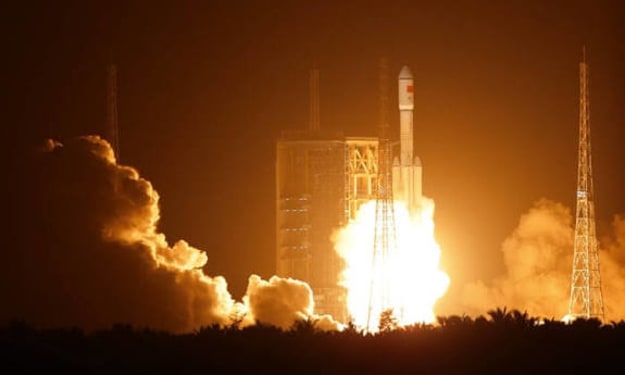
As Beijing’s space ambitions expand, Washington faces an intensifying geopolitical and technological rivalry in orbit and beyond. In the early decades of the 21st century, the United States long stood unchallenged as the dominant space power — a position built on decades of NASA leadership, unmatched launch capability, and a vibrant commercial space economy. But today, a determined China is mounting one of the most consequential strategic challenges in space since the Cold War, pushing to rival — and ultimately surpass — the U.S. in space influence, technology, and strategic advantage. National Strategy and Long‑Term Vision China’s leaders have openly signaled their ambition to become a global space powerhouse. Official space policy documents and state planning envision a broad array of capabilities — from heavy‑lift rockets to lunar exploration — aimed at reshaping the space order that has been U.S.‑dominated for decades. According to analyses of government planning, Beijing intends to establish a full suite of launch vehicles, satellites, and space infrastructure that could surpass current international norms by mid‑century. Underpinning this vision is a belief among Chinese space officials that self‑reliance and indigenous innovation are key to international competitiveness. Recent reports in state media emphasize that China’s aerospace industry is pushing far beyond imitation toward original technological breakthroughs in areas like rocket manufacturing, intelligent space systems, and advanced materials — all with the strategic goal of securing leadership in space. Commercial Space: From Government Giants to Private Innovators China’s rapid ascent isn’t limited to state space agencies. A growing ecosystem of private space companies — much like the commercial boom seen in the U.S. — has taken root, focusing on reusable rockets, satellite networks, and novel space services. A recent South China Morning Post report highlights Beijing’s push to encourage private innovation within its space sector, supporting technologies such as reusable launch vehicles, space debris monitoring, extraterrestrial resource utilization, and even in‑space biomanufacturing — fields long dominated by U.S. firms such as SpaceX or Blue Origin. This commercial expansion broadens China’s capabilities and compresses the technological gap with the U.S., challenging American assumptions that commercial innovation is exclusively an American forte. It also signals a shift in global space economics, where China may soon contend for commercial markets once dominated by Western companies. Military and Strategic Dimensions Alongside civil and commercial ambitions, China’s space strategy has clear military implications. U.S. strategic assessments note Beijing’s efforts to build counterspace capabilities — systems designed to deter, deny, or degrade another nation’s satellite operations — a key advantage in future conflicts. China has already deployed anti‑satellite weapons, jamming technologies, and sophisticated ground‑to‑space radar systems that could threaten U.S. space assets in a crisis. For the United States, which relies heavily on space systems for communication, navigation, and battlefield awareness, these capabilities represent a serious strategic challenge. Beijing’s ability to field space and counterspace technologies could blunt some of Washington’s military advantages in the Asia‑Pacific region and beyond. Lunar and Deep Space Objectives China’s Chang’e lunar exploration program is another marker of its space ambitions. With a series of increasingly complex robotic missions and plans for an International Lunar Research Station by the 2030s, Beijing aims to be a leading voice in lunar science and development — directly challenging the U.S. Artemis program and international partnerships spearheaded by NASA. � Wikipedia Missions like the strategically significant Queqiao‑2 communications relay satellite, which supports lunar missions over long distances, further demonstrate China’s growing sophistication in deep space operations and infrastructure deployment. U.S. Response: Maintaining Leadership Recognizing the challenge, U.S. policymakers are pushing legislative and strategic initiatives designed to preserve American competitiveness in space. A newly passed NASA authorization package includes provisions aimed at reinforcing U.S. lunar presence, strengthening Earth orbit assets, and countering Chinese influence in space science and technology — signaling a bipartisan consensus on the gravity of the space rivalry. A New Era of Cosmic Competition The emerging science and technological competition between China and the United States in space is unlike anything seen since the original Moon race. Today’s contest spans not only national prestige but military advantage, commercial opportunity, and scientific discovery. As each side pursues its vision of space dominance, the outcome will shape global power structures for decades to come — affecting diplomacy, security, and economic leadership both on Earth and beyond. If you’d like alternative versions, transcripts, or a set of headline + subtitle options for this topic, just let me know!
By Fiaz Ahmed 5 days ago in Longevity



Comments (1)
Thanks for the educative content