
Disconnected Together: How Virtual Reality Is Redefining Human Relationships
Love, friendship, even family ties are shifting into the metaverse — but is digital connection real connection?
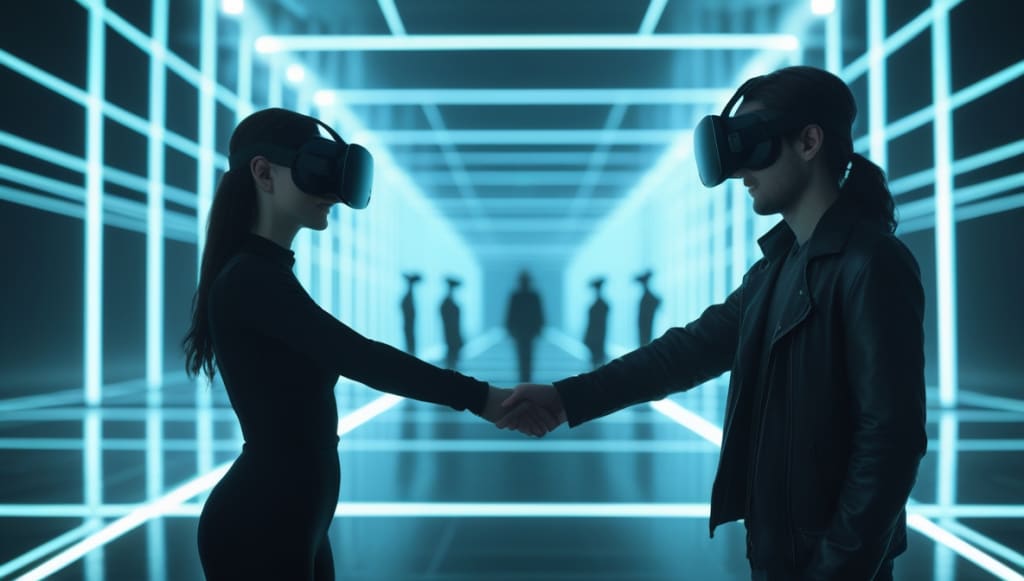
It appeared nearly magical at first for the internet to connect people over enormous distances. In an instant, a person in New York could reach someone in Dhaka instantly. Images were almost instantly shared by families living apart on continents. This started the first digital revolution in human connections. We are now going into a new age: virtual reality (VR), where people live in digital worlds and have more than just chat or messaging. In virtual reality sites, ceremonies are held; in gaming-style social venues, bonds are developed; and couples in separate locations communicate within reconstructed living quarters.
But an important issue emerges as this digital closeness grows: can interactions in the metaverse be regarded as real relationships?
The VR Leap Forward
Unlike social media or video conferencing, virtual reality provides something unique: a sense of presence. This is full immersion rather than simple discussion. In VR, consumers are not limited to sharing a shared screen or sending emojis; they truly feel as though they are there.
Today's avatars copy subtle gestures, body movements, and facial expressions. Thousands of miles apart physically, partners can wear headsets, meet in a virtual living room, watch a movie together, and even intertwine. haptic gloves recreating the sense of touch
For many, this is an absolute support rather than merely a fresh experience. Many times, individuals struggling with long-term disease, loneliness, or mobility problems find VR communities where the feeling of belonging is both quick and real. Connections within these surroundings are enhanced by creativity and imagination and go beyond actual restrictions.
The New Forms of Love and Friendship
Relationships thrive unexpectedly in this developing digital terrain. Long-distance relationships blossom in virtual reality conversation settings. After hours of traveling across fascinating gaming worlds, people who were once strangers form tight relationships. Through avatars that may look like humans, robots, dragons, or other imaginary creatures, people share laughter, disputes, birthday parties, and provide support during trying times.
Still, the emotional link is absolutely genuine.
Some people even get married inside virtual reality, planning events where attendees show up as avatars from many nations. In terms of feeling, these weddings are just as important as any traditional commitment made at a celebration even if they lack legal authority. Virtual reality opens a path for couples who cannot travel owing to distance, financial restrictions, or other limitations, hence changing what seems "impossible" into attainable.
The Risks of a Digital-Only Life
But every new achievement brings with it worries that show up. Interactions in virtual reality carry great risks.
Going too far into digital worlds can hide the line between physical life and the digital sphere, therefore lowering people's participation in their real-world activities. Research suggests that VR relationships can help to reduce loneliness but also make social withdrawal worse if these contacts substitute actual, face-to-face interactions rather than complement them.
Another problem is authenticity. How can one really know the identity of the person behind the screen in a world when avatars can be adjusted in look and sound? It becomes easier to misguide when one has no opportunity to hear their real voice, observe their honest feelings, or see their physical presence. Though it is fragile to breaking apart if the reality does not fit the online depiction, a virtual link may seem deep.
Redefining “Real” Connection
The most basic question virtual reality raises is philosophic rather than technical: what constitutes a real relationship?
If two people laugh together, comfort one another, and sense love in a virtual environment, does it really make a difference whether they ever meet face-to– face? Many people will say no. They contend that relationships are forged by feelings rather than by one's physical location. The heart is, after all, independent of the setting of the chat, whether in a café or in a busy virtual meeting room.
Some people are still suspicious, though. They contend that something essential is missed in absence of physical presence. Though a virtual reality hug appears sincere, it falls short on warmth felt on the skin. A kiss may seem to be metaphorical, but it misses the thrill of actual physical attraction. This group believes that although virtual love looks like genuine emotional intimacy, it cannot perfectly replace it.
Finding Balance
As VR becomes more mainstream, the healthiest approach may be balance. VR can maintain long-distance bonds, provide spaces for marginalized groups to connect, and create joy through shared experiences. But ideally, these relationships should be grounded in the physical world when possible.
The future of human connection may not be about choosing between the real and the virtual, but about weaving them together. A couple may use VR for daily connection while cherishing the rare moments they meet in person. Friends may game in digital realms but still gather for coffee when they can.
Because at the heart of it, humanity still thrives on touch, presence, and the unspoken comfort of simply existing together in the same room. VR can redefine how we bond, but it cannot erase our primal need for real-world connection.
About the Creator
Keep reading
More stories from Shahjahan Kabir Khan and writers in Longevity and other communities.
The Longevity Paradox: Why Tech That Extends Life May Be Shortening Happiness
Humankind has sought to live longer for many decades. The road from the search for the legendary Fountain of Youth to modern genetic research shows how much mankind wants to live long and affects legends as well as scientific projects. It seems this goal is now more achievable than it has ever been as we approach the year 2025.
By Shahjahan Kabir Khan4 months ago in Longevity
Day 4 of Quitting
If this is how sobriety feels, maybe it’s better to go through life a little buzzed… this, along with other hits like, I want to kill myself, I wish I was dead, and I’m going to throw myself off a bridge have been the only thoughts on rotation these past few days. I promise myself that if, in a month, I still feel like this (‘this’ meaning despondent, full of rage, and simultaneously numb) I can go back to smoking. Until mid-February though? Nicotine is off the table.
By sleepy drafts11 days ago in Longevity
What Is Proprioception? Why Body Awareness Matters More Than You Think
Balance is something most people take for granted—until it starts to feel unreliable. A moment of unsteadiness, a fear of falling, or difficulty walking on uneven ground can raise questions that many people struggle to answer. Strength alone doesn’t always explain these changes. In many cases, the missing piece is something far less talked about: proprioception.
By AhmedFitLife4 days ago in Longevity



Comments
There are no comments for this story
Be the first to respond and start the conversation.