
Digital Overload: How Social Media and AI Anxiety Are Draining Your Mental Health (And How to Reclaim Peace)
The Silent Burnout Epidemic: Why Your Brain Needs a Tech Detox


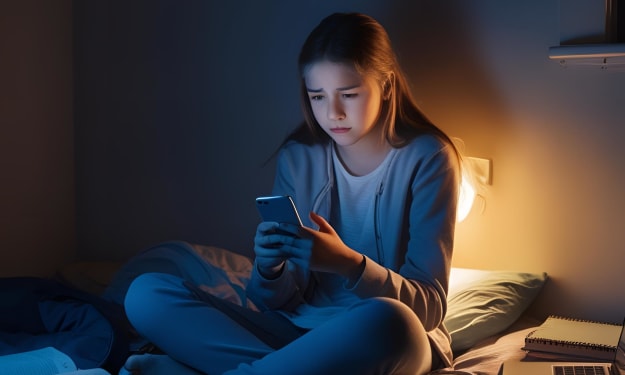
Let’s be real—what’s the first thing you do when you wake up? For a lot of us, the answer is: reach for our phones. Before our eyes have even adjusted to the light, we’re knee-deep in emails, texts, and a flood of social media notifications. It’s become so automatic, we barely notice it anymore.
But here's the thing—we're paying a price for all this connectivity. And it's a bigger one than most of us realize.
I started noticing it in myself a while ago. I’d get eight hours of sleep, but wake up tired, like my brain never fully shut down. My thoughts jumped around like static—one minute I’d be answering a message, the next I’d be doom-scrolling Instagram, then wondering why I couldn’t concentrate. Even when I wasn’t on my phone, I was thinking about it. Did I miss something important? Why didn’t that person respond yet? Am I doing enough with my life compared to everyone else?
It wasn’t just distraction—it was mental exhaustion.
The truth is, it’s not just the time we spend on screens that’s hurting us. It’s how deeply our digital habits are rewiring our minds—changing the way we think, feel, and even connect with each other. The average person checks their phone close to 60 times a day. That’s not just a habit—it’s a relationship. And for many of us, it’s become a toxic one.
Here’s why: every ping, every notification, every like—we get a tiny hit of dopamine, that “feel-good” brain chemical. It’s the same system that drives other addictive behaviors. And yes, tech companies know this. That endless scroll? The algorithm feeding you videos? It’s not a coincidence. It’s design.
Meanwhile, our attention spans are shrinking, our anxiety is growing, and real moments of connection—unfiltered, unshared, unliked—are slipping through the cracks.
And then there’s a newer, quieter stress creeping in: AI anxiety.
As artificial intelligence rapidly weaves itself into the fabric of our jobs, our creativity, and even our identities, many of us are left wondering: Am I falling behind? Will my skills still matter in five years? What happens if a robot can do what I do?
You're not imagining it. A recent study showed that nearly half of workers are losing sleep over AI-related fears. It’s a new kind of stress, and it's very real.
But maybe the most damaging part of all this is the constant alert mode we live in. That tiny red badge on your messaging app? It’s like a mosquito buzzing at your attention, keeping your nervous system in a low-level fight-or-flight state. Even when we ignore the pings, they affect us.
One study from the University of California found that it can take 23 minutes to fully regain your focus after a single interruption. Multiply that by dozens of daily notifications, and it’s no wonder we feel scattered, stressed, and disconnected.
I felt this deeply last year during a dinner with close friends. There were six of us, all people I love, but every few minutes someone would pick up their phone. Conversations stalled. Eye contact was fleeting. And it hit me—we were all there, but we weren’t really there.
It was like we were trading real connection for scraps of digital attention.
But here's the good news: this doesn't have to be your normal. You can reset your relationship with technology. And no, it doesn’t require moving off-grid or deleting all your apps (unless you want to). It starts with small, intentional choices.
Here’s what helped me—and might help you too:
1. Rethink your mornings.
Those first few minutes after you wake up? They set the tone for your entire day. Instead of diving into a sea of notifications, try something different. Leave your phone in another room. Stretch. Drink a glass of water. Look out the window. Just be. You might be surprised how calming that can feel.
2. Curate your digital space.
Think of your feeds like a room you live in. Would you keep posters on the wall that made you feel anxious, inadequate, or angry every day? No? Then don’t follow accounts that do. Mute noisy group chats. Unfollow people who drain you. Fill your screen with things that nourish your mind, not clutter it.
3. Create “analog hours.”
Pick a time each day when screens are off limits. Maybe it’s during meals, maybe it's the hour before bed. Use that time to read a physical book, go for a walk, or have a tech-free conversation. Yes, you might feel bored at first—but boredom is a gateway to creativity. Let your brain breathe.
4. Reframe AI anxiety.
Yes, technology is advancing fast. But it still can’t do the things that make you uniquely you. Empathy. Intuition. Creativity. Real, human connection. Focus on nurturing those strengths instead of racing to keep up with the machine.
Over time, these small shifts can lead to big changes. A friend of mine deleted social media from her phone and started sleeping better. Another began “no-email evenings” and picked up painting again. For me, it was realizing I didn’t have to post every cute moment with my niece—I could just watch her play soccer, be in the moment, and that was enough.
So, here’s my challenge to you this week: try just one small change. Maybe it’s silencing non-essential notifications. Maybe it’s leaving your phone behind during your next walk. Notice what happens. Pay attention to how you feel.
Because at the end of the day, technology is just a tool. You get to choose how and when you use it. You get to protect your peace.
In a world constantly shouting for your attention, the most radical, healing thing you can do—is choose when not to listen.
About the Creator
The Healing Hive
The Healing Hive| Wellness Storyteller
I write about real-life wellness-the messy, joyful, human kind. Mental health sustainable habits. Because thriving isn’t about perfection it’s about showing up.
Keep reading
More stories from The Healing Hive and writers in Longevity and other communities.
Scrolling Through Life: The Messy, Real Impact of Social Media on Teen Mental Health
We’ve all been there—lying in bed, phone in hand, mindlessly scrolling. Minutes turn into hours. Laughter fades into numbness. And by the time we finally put our phones down, we don’t feel connected—we feel worse.
By The Healing Hive11 months ago in Longevity
Microsoft's Purposeful Marketing Deception About AI's Ability To Beat Physicians In Diagnosis
When you look at the world of scientific research... If you are not careful... You will be fooled into believing things that are not actually supported by the data.
By Dr. Cody Dakota Wooten, DFM, DHM, DAS (hc)a day ago in Longevity
A Cross-Border Medical Mistake Leaves Lasting Emotional Scars
A teenage schoolgirl has been left deeply traumatised after a serious administrative mistake resulted in her being sent to England for an abortion she did not require, sparking questions about cross-border healthcare procedures and the psychological impact of medical errors on young patients. The incident, which has only recently come to light due to privacy protections surrounding the minor involved, occurred when the girl was referred for specialist reproductive healthcare after medical staff mistakenly believed she was pregnant. According to sources familiar with the case, the error stemmed from a misinterpretation of initial test results combined with communication failures between medical professionals and referral services. The teenager, who cannot be named for legal reasons, had initially sought medical advice after experiencing severe abdominal pain and irregular menstrual symptoms. Concerned about her condition, healthcare providers conducted preliminary tests that were later incorrectly interpreted as indicating pregnancy. Because abortion services in certain parts of the United Kingdom are provided through arrangements with clinics in England, officials arranged for the schoolgirl to travel across the Irish Sea to undergo the procedure. The referral process was handled quickly, with little time for additional confirmation or counselling before travel arrangements were made. Sources close to the family say the girl believed she had no choice but to follow medical instructions. “She trusted what the doctors were telling her,” said one individual familiar with the situation. “At that age, when professionals say something serious about your health, you assume it must be true.” The journey itself proved frightening and confusing for the teenager. Accompanied by a guardian, she travelled to England believing she would undergo a medical procedure that would end a pregnancy she had only recently been told existed. However, upon arrival at the clinic, further medical examinations were conducted as part of routine pre-procedure checks. It was during these assessments that clinicians discovered the shocking truth: the schoolgirl was not pregnant. Doctors halted the process immediately, informing the teenager and her guardian that the referral had been made in error. While no abortion procedure took place, the emotional damage had already been done. Family members later described the ordeal as “devastating,” saying the girl had spent days believing she was facing a life-changing medical event. The experience reportedly left her anxious, confused and deeply distressed. Medical experts say such errors, while rare, can have severe psychological consequences. Adolescents are particularly vulnerable because they often lack the emotional tools to process complex medical information, especially when it involves reproductive health. “This type of mistake can undermine a young person’s trust in healthcare professionals,” said a consultant familiar with the case. “Even when corrected, the emotional stress and fear experienced during the process can leave lasting trauma.” Following the discovery of the error, an internal review was reportedly launched by the healthcare service responsible for the referral. Early findings indicate that a breakdown in communication between testing laboratories and clinical staff contributed to the misdiagnosis. Healthcare administrators are now examining whether confirmation procedures were properly followed before the referral was made. In many medical systems, pregnancy diagnoses typically require multiple tests or clinical confirmation before major decisions are taken. Advocates for patient safety say the case highlights the importance of strict verification processes, particularly when young patients are involved and when medical treatment requires travel to another jurisdiction. “The system must ensure that no patient — especially a minor — is sent for a major procedure without thorough verification,” said one healthcare accountability campaigner. “This situation should never have reached the stage where a teenager boarded a plane believing she needed an abortion.” The girl’s family is now considering possible legal action, although their primary focus remains her recovery and emotional wellbeing. Reports suggest she has received counselling to help process the experience. Legal experts note that cases involving minors and medical errors can be particularly complex, as they often involve questions about consent, safeguarding procedures and the duty of care owed by healthcare providers. Meanwhile, health authorities have pledged to review their protocols to prevent similar mistakes in the future. Officials say new safeguards may include mandatory secondary confirmation of test results before cross-border medical referrals are approved. For the young girl at the centre of the incident, however, the damage has already been done. What began as a routine medical consultation turned into a distressing ordeal involving travel, fear and confusion — all based on a diagnosis that ultimately proved false. As healthcare investigators continue to examine the circumstances behind the error, the case serves as a stark reminder of how administrative failures and miscommunication within medical systems can have deeply personal consequences, particularly for vulnerable young patients navigating sensitive health issues.
By Fiaz Ahmed about 8 hours ago in Longevity


Comments
There are no comments for this story
Be the first to respond and start the conversation.