
Development of foot massage techniques and use of traditional therapies
From the traditional techniques of foot massage to its use in modern medicine, we will delve into the wide-ranging impact this unique healing method has on human health and well-being.
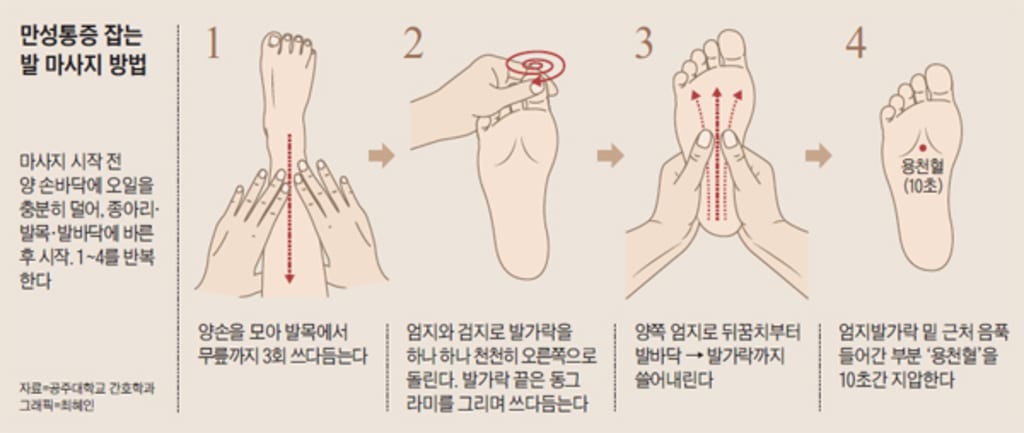
Introduction
Foot massage is an ancient healing method that has been with human history, and is an important treatment technique that promotes the health and well-being of the body. For thousands of years, foot massage has been recognized as a core element of holistic healing in various civilizations such as China, Egypt, and India, and has developed into a traditional treatment method that pursues harmonious health of the mind and body beyond simple body massage.
This essay comprehensively explores the historical development and modern significance of foot massage. We will deeply analyze the traditional techniques of foot massage from their application in modern medicine, and shed light on the extensive impact of this unique healing method on human health and well-being.
The composition of the essay is largely divided into four parts. First, we will explore the historical development of foot massage techniques. Second, we will analyze the specific efficacy of traditional therapy and its application in modern medicine. Third, we will review the scientific and medical basis for foot massage, and finally, we will present the future prospects and potential of this treatment method.
Foot massage is a holistic approach that pursues holistic health of humans beyond a simple body care technique. Through this essay, we hope to convey to our readers a deeper understanding of foot massage and its therapeutic value.
The evolution of foot massage techniques
The techniques of foot massage have evolved over thousands of years, reflecting the unique healing philosophies of each civilization and culture. Traditional foot massage techniques are mainly represented by Chinese reflexology, Thai traditional foot massage, and Indian Ayurvedic massage.
Chinese reflexology is based on the principle that certain areas of the foot are connected to other organs of the body. This technique aims to regulate the function of the corresponding organ and improve the flow of energy by stimulating specific points on the foot. Traditional Thai foot massage is more dynamic and uses pressure techniques to relieve muscle tension and promote blood circulation.
Modern foot massage techniques have evolved in a more systematic and specialized direction by combining traditional knowledge with scientific approaches. Modern foot massage techniques have become more sophisticated based on knowledge of anatomy, physiology, and neurology, and the following innovative approaches have been taken:
Scientific evidence-based techniques: Precise massage techniques that reflect neurological research results
Customized treatment approaches: Customized massage programs based on individual physical condition and health conditions
Use of advanced equipment: Precise massage techniques using electronic devices and pressure sensors
The advantages of new foot massage techniques include improved accuracy, personalized treatment, and scientific evidence. On the other hand, disadvantages include the need for expensive equipment and specialized personnel, and the gap with traditional healing methods.
These developments are transforming foot massage from a simple traditional healing method to a professional treatment technique that combines modern medicine.
Use of traditional therapies
Traditional foot massage is recognized as a comprehensive healing method that goes beyond a simple body care technique. Its efficacy is manifested in various ways in both physical and mental aspects. First, improving blood circulation is one of the most important benefits of traditional foot massage. By stimulating specific reflex points on the feet, it promotes blood circulation and increases oxygen supply throughout the body.
Relief from stress and improvement of mental health are also notable effects. Foot massage stabilizes the autonomic nervous system and reduces the secretion of stress hormones such as cortisol, providing psychological stability. It is particularly effective in relieving psychological fatigue caused by chronic stress.
In the modern medical field, traditional foot massage is becoming increasingly important as a complementary treatment. It is used in various medical fields such as pain management for cancer patients, prenatal care for pregnant women, and rehabilitation treatment for patients with chronic diseases. In particular, its therapeutic value is recognized in terms of pain relief and immunity enhancement.
As an alternative medicine, foot massage is attracting attention as an alternative to invasive treatment. It is evaluated as a holistic approach that supports the natural healing process while minimizing the side effects of drug treatment. The integrated approach of modern medicine and traditional healing methods presents a patient-centered integrated treatment model.
In particular, the potential of foot massage is prominent in chronic disease management. Its effectiveness has been proven in various fields such as peripheral nerve stimulation for diabetic patients, pain relief for rheumatoid arthritis patients, and management of chronic fatigue syndrome.
In the future, traditional foot massage is expected to develop by further integrating scientific evidence and modern medical approaches. It shows the potential to become an important complementary treatment for modern medicine beyond simple alternative therapy.
Conclusion
Foot massage is a healing art and science that has evolved along with the long history of human civilization. This traditional treatment, which has developed in various cultures such as China, India, and Thailand over thousands of years, has established itself as a holistic approach that pursues the holistic health of humans beyond a simple body care technique.
In modern society, foot massage is no longer confined to the realm of alternative medicine, but is evolving into a professional treatment method based on scientific evidence and advanced medical technology. Its therapeutic value and effectiveness are continuously being proven through precise anatomical understanding, neurological approach, and customized treatment program development.
Foot massage in the future is expected to develop in a more integrated and innovative direction. New methods such as personalized massage programs utilizing artificial intelligence and big data technology, real-time health monitoring linked to wearable devices, and treatment methods incorporating virtual reality (VR) technology will emerge.
In particular, the importance of foot massage as a holistic healing method that responds to the health promotion of modern people, such as chronic disease management, stress relief, and immunity enhancement, will increase further. The fusion of traditional wisdom and modern science will enable a more comprehensive and profound understanding of human health.
In conclusion, foot massage is an important practice that goes beyond a simple treatment technique to understand and heal the human body and mind as a whole. We will continue to explore important healing paths that can contribute to human health and well-being through continuous innovation and research.
About the Creator
Mr. choi
I think you can enjoy sports more if you have basic knowledge about sports. I want to create opportunities to learn little by little. I want to provide information such as sports broadcasts and sports news.
Day 4 of Quitting
If this is how sobriety feels, maybe it’s better to go through life a little buzzed… this, along with other hits like, I want to kill myself, I wish I was dead, and I’m going to throw myself off a bridge have been the only thoughts on rotation these past few days. I promise myself that if, in a month, I still feel like this (‘this’ meaning despondent, full of rage, and simultaneously numb) I can go back to smoking. Until mid-February though? Nicotine is off the table.
By sleepy drafts12 days ago in Longevity
Olivia Dean
In an age where music often feels rushed and overproduced, Olivia Dean stands out by doing something surprisingly simple: she sounds honest. Her voice carries warmth, restraint, and emotional clarity, making listeners feel understood rather than overwhelmed. Olivia Dean is not just another rising singer; she represents a return to music that values feeling over noise. Born and raised in London, Olivia Dean grew up surrounded by a mix of musical influences. From a young age, she was drawn to soul, pop, and jazz, genres that prioritize storytelling and emotion. This foundation shaped her artistic identity and continues to influence the way she writes and performs today. Rather than chasing trends, Dean focuses on timeless sounds and relatable experiences. What makes Olivia Dean special is not just her technical ability, but her emotional intelligence as an artist. Her songs often explore themes like self-worth, love, vulnerability, and growth. These are universal ideas, yet she presents them in a way that feels deeply personal. Listening to her music can feel like reading someone’s private journal—quiet, reflective, and sincere. One of her greatest strengths is her voice. It is soft without being weak, powerful without being aggressive. She knows when to hold back and when to lean in, allowing space for emotions to breathe. This control gives her music a calm confidence that resonates with listeners who are tired of constant intensity. Her vocals don’t demand attention; they invite it. Olivia Dean’s songwriting also deserves attention. Her lyrics are simple but thoughtful, avoiding dramatic exaggeration. She writes about real emotions in everyday language, which makes her songs easy to connect with. There is no need to decode hidden meanings or metaphors that feel forced. Instead, her words flow naturally, reflecting real conversations and feelings many people experience but struggle to express. Another important aspect of her artistry is authenticity. In interviews and performances, Dean comes across as grounded and self-aware. She openly talks about personal growth, creative struggles, and learning to trust herself. This honesty builds a strong connection with her audience, especially young listeners navigating similar emotions. She doesn’t present herself as perfect, and that makes her relatable. Her rise in the music industry has been steady rather than explosive, and that slow growth feels intentional. Olivia Dean has taken time to develop her sound, refine her message, and understand who she is as an artist. This patience shows in the quality of her work. Each release feels considered, not rushed, and that consistency builds long-term trust with her audience. Live performances further highlight her strength as a musician. On stage, she maintains the same warmth and control that define her recordings. There is no overacting or unnecessary spectacle. Instead, she focuses on connection—between herself, the music, and the audience. This creates an intimate atmosphere, even in larger venues, where listeners feel emotionally present rather than distracted. Olivia Dean’s influence extends beyond music alone. She represents a generation of artists who prioritize mental health, self-awareness, and balance. Her work encourages listeners to slow down, reflect, and accept themselves as they are. In a world driven by constant comparison and pressure, this message feels both refreshing and necessary. Fashion and visual presentation also play a subtle role in her identity. Dean’s style is elegant but understated, mirroring the tone of her music. She avoids excess and instead embraces simplicity, allowing her personality and voice to remain the focus. This alignment between sound, image, and message strengthens her overall artistic presence. As her career continues to grow, Olivia Dean remains a reminder that success does not have to be loud to be meaningful. Her journey shows that there is space in modern music for softness, reflection, and emotional honesty. She proves that artists can build strong connections without sacrificing integrity or authenticity. In the long run, Olivia Dean’s impact may not be measured by chart positions alone, but by the way her music stays with people. Her songs feel like companions during quiet moments—on late-night walks, early mornings, or times of personal change. That kind of connection is rare, and it is what gives her work lasting value. Olivia Dean is not trying to reinvent music. Instead, she is reminding us why it matters in the first place. Through her voice, her words, and her presence, she offers something increasingly rare: comfort, clarity, and genuine emotion. And in today’s fast-moving world, that might be her greatest strength.
By Saboor Brohi a day ago in Longevity



Comments
There are no comments for this story
Be the first to respond and start the conversation.