
Chicory Market Size and Forecast: A Global Industry Brewing Steady Growth (2025–2033)
From Coffee Substitute to Functional Superfood, Chicory Emerges as a Powerful Health-Driven Market


Global Chicory Market Outlook
The global chicory market is experiencing a strong resurgence as health-conscious consumers, food manufacturers, and beverage brands rediscover this traditional plant for modern wellness applications. According to Renub Research, the chicory market is expected to reach US$ 591.49 million by 2033, rising from US$ 318.5 million in 2024, registering a CAGR of 7.12% from 2025 to 2033.
Once primarily associated with coffee substitutes in Europe, chicory has evolved into a multi-application ingredient across food, beverages, dietary supplements, cosmetics, and even animal nutrition. Its high inulin content, digestive health benefits, and growing role in plant-based formulations are reshaping global demand patterns.
As consumers increasingly seek natural, clean-label, and functional ingredients, chicory is transitioning from a niche crop into a mainstream health-driven commodity.
What Is Driving the Global Chicory Industry?
Chicory (Cichorium intybus) is a versatile plant whose roots, leaves, and extracts are used across multiple industries. It contains inulin, a naturally occurring prebiotic fiber that supports gut health, improves digestion, and helps regulate blood sugar levels. It is also rich in beta-carotene, antioxidants, and anti-inflammatory compounds, making it attractive to both food and wellness markets.
Traditionally consumed as a roasted coffee alternative, chicory is now widely used in:
Functional foods and beverages
Dietary supplements
Low-sugar and sugar-replacement products
Gluten-free snacks
Cosmetics and personal care
Animal feed additives
The shift toward plant-based nutrition and digestive wellness has placed chicory firmly at the center of next-generation food innovation.
Key Growth Drivers of the Chicory Market
1. Rising Demand for Functional and Gut-Healthy Foods
Chicory root is one of the richest natural sources of inulin, a prebiotic fiber known to nourish beneficial gut bacteria. As digestive health becomes a global priority, food and beverage manufacturers are increasingly incorporating chicory into:
Yogurts and dairy alternatives
Nutrition bars and cereals
Health drinks and smoothies
Infant and clinical nutrition products
The global gut-health trend is a major accelerator for chicory demand, especially in urban and aging populations.
2. Popularity as a Caffeine-Free Coffee Alternative
Roasted chicory root delivers a rich, earthy flavor similar to coffee, without caffeine. This makes it an ideal choice for:
Pregnant women
Caffeine-sensitive consumers
People with sleep or anxiety concerns
Wellness-focused individuals
Unlike coffee, chicory also offers digestive benefits, making it more than just a beverage replacement—it’s a functional drink. As caffeine reduction becomes a lifestyle choice rather than a medical need, chicory-based beverages are gaining momentum worldwide.
3. Cost Advantage Over Traditional Coffee
Chicory is significantly more affordable than coffee—up to 10 times cheaper in some regions. With climate change, supply chain disruptions, and price volatility affecting global coffee production, manufacturers are increasingly using chicory to:
Extend coffee blends
Create affordable instant beverages
Develop caffeine-free alternatives
This cost-effectiveness, combined with its health benefits, gives chicory a strong economic edge.
4. Growth in Plant-Based and Clean-Label Products
Consumers now demand shorter ingredient lists and natural sources of fiber. Chicory fits perfectly into clean-label formulations, making it highly attractive for food brands reformulating products to meet health and transparency standards.
Challenges Facing the Chicory Market
Limited Consumer Awareness
Despite its benefits, chicory remains under-recognized outside Europe. Many consumers in North America and Asia-Pacific are unfamiliar with:
Its prebiotic function
Its use as a coffee substitute
Its role in sugar reduction
Brands must invest in education, labeling clarity, and marketing campaigns to unlock full market potential.
Seasonal and Regional Production Constraints
Chicory cultivation is seasonal and geographically concentrated, mainly in Europe and parts of India. This creates:
Supply inconsistency
Price volatility
Dependence on specific growing regions
Expanding cultivation zones and improving agricultural practices will be essential for long-term supply stability.
Regional Analysis: Where Chicory Is Growing Fastest
United States Chicory Market
The U.S. chicory market is steadily expanding due to rising interest in functional foods and natural ingredients. Chicory’s digestive benefits and caffeine-free profile appeal strongly to health-focused consumers.
Its growing use in:
Clean-label foods
Dietary supplements
Wellness beverages
reflects the broader shift toward holistic nutrition. However, awareness remains limited, requiring continued education and innovation to drive adoption.
Germany Chicory Market
Germany has a long tradition of chicory consumption, particularly as a coffee alternative known as Muckefuck. This cultural familiarity gives chicory a strong base in the market.
Today, renewed interest is driven by:
Digestive health awareness
Plant-based lifestyle trends
Advanced food processing capabilities
Germany remains a key European hub for chicory-based innovation, despite competition from other functional fibers.
India Chicory Market
India is emerging as a high-growth chicory market, supported by strong agricultural capabilities and increasing health awareness. Chicory is widely used in:
Instant coffee blends
Dietary supplements
Functional foods
Herbal formulations
Demand for caffeine-free beverages and gut-health ingredients is accelerating adoption. However, competition from other herbal and functional ingredients remains a challenge.
United Arab Emirates Chicory Market
The UAE chicory market is growing steadily as consumers seek natural and wellness-oriented alternatives. Chicory-based coffee substitutes and supplements are gaining popularity among the region’s diverse population.
Strategic partnerships, premium product positioning, and education campaigns are key to expanding chicory’s footprint in the Middle East.
Recent Developments in the Chicory Industry
August 2024: DKSH expanded its exclusive distribution agreement with Cosucra across Australia and New Zealand, enhancing the availability of chicory-based fibers like Fibruline and Fibrulose for food and beverage manufacturers.
November 2023: BENEO announced the expansion of its Pemuco facility in Chile, improving production capacity for Orafti Oligofructose LL, a liquid chicory root fiber with extended shelf life.
These developments highlight growing investments in processing technology and global distribution networks.
Chicory Market Segmentation
By Product
Roasted Chicory
Instant Chicory
Chicory Extracts
Others
By Form
Powder
Liquid
Others
By Application
Food & Beverages
Dietary Supplements
Cosmetics & Personal Care
Others
Geographical Coverage
North America
United States
Canada
Europe
France
Germany
Italy
Spain
United Kingdom
Belgium
Netherlands
Turkey
Asia-Pacific
China
Japan
India
Australia
South Korea
Thailand
Malaysia
Indonesia
New Zealand
Latin America
Brazil
Mexico
Argentina
Middle East & Africa
Saudi Arabia
South Africa
United Arab Emirates
Competitive Landscape
The global chicory market is moderately fragmented, with key players focusing on:
Capacity expansion
New product development
Strategic distribution partnerships
Key Companies Covered
Jamnagar Chicory Industries
Cargill, Incorporated
Leroux Flavored Brandies
Delecto Foods Pvt Ltd.
Starwest Botanicals
Organic Herb Trading
Pioneer Chicory
STOKROS Company Ltd
Nature’s Gold
Royal Cosun
Each company is analyzed in terms of overview, key personnel, recent developments, SWOT, revenue, and strategic positioning.
Final Thoughts
The global chicory market is no longer limited to its traditional role as a coffee substitute. With rising demand for digestive health, functional ingredients, clean-label foods, and plant-based alternatives, chicory is carving out a powerful position in the global wellness economy.
As per Renub Research, the market’s growth from US$ 318.5 million in 2024 to US$ 591.49 million by 2033 reflects not just increasing consumption, but a fundamental shift in how consumers view food—as a tool for long-term health.
Companies that invest in consumer education, innovation, and sustainable sourcing will be best positioned to capitalize on this transformation. Chicory’s future is rooted not just in tradition, but in its ability to meet the evolving needs of a health-driven world.
About the Creator
Marthan Sir
Educator with 30+ years of teaching experience | Passionate about sharing knowledge, life lessons & insights | Writing to inspire, inform, and empower readers.
Keep reading
More stories from Marthan Sir and writers in Longevity and other communities.
Vitamin K2 Market Size and Forecast 2025–2033: A Rapidly Expanding Global Nutraceutical Opportunity
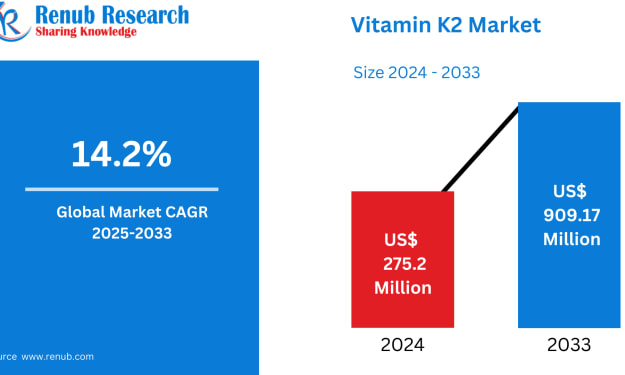
Global Vitamin K2 Market Outlook The global Vitamin K2 market is witnessing a transformative growth phase, driven by rising consumer awareness of preventive healthcare, expanding scientific validation of its health benefits, and the increasing adoption of functional foods and nutraceuticals. According to Renub Research, the global Vitamin K2 market is expected to reach US$ 909.17 million by 2033, up from US$ 275.2 million in 2024, registering a robust CAGR of 14.2% from 2025 to 2033.
By Marthan Sira day ago in Longevity
Day 4 of Quitting
If this is how sobriety feels, maybe it’s better to go through life a little buzzed… this, along with other hits like, I want to kill myself, I wish I was dead, and I’m going to throw myself off a bridge have been the only thoughts on rotation these past few days. I promise myself that if, in a month, I still feel like this (‘this’ meaning despondent, full of rage, and simultaneously numb) I can go back to smoking. Until mid-February though? Nicotine is off the table.
By sleepy drafts15 days ago in Longevity
Djokovic, the Eye of the Storm
There is something in Novak Djokovic’s gaze that cannot be taught. It is not a pose, nor a media strategy. It is deeper — almost primal — a stillness charged with silent intensity, a focus that seeks neither approval nor aesthetic grace, but survival. This look is not performative. It is inherited. In Melbourne, when he returns to the Australian Open, his eyes arrive before he does. They announce intent. They say everything before the first serve is even struck. Djokovic does not step onto the court to join a celebration of tennis. He enters an inner arena — one where time, pain, and memory collide.
By Laurenceau Porte5 days ago in Longevity



Comments
There are no comments for this story
Be the first to respond and start the conversation.