
Canada Loses Its Measles-Free Status, With U.S. on Track to Follow
A surge in preventable infections reignites debate over vaccination, public health policy, and the fragile legacy of herd immunity.”

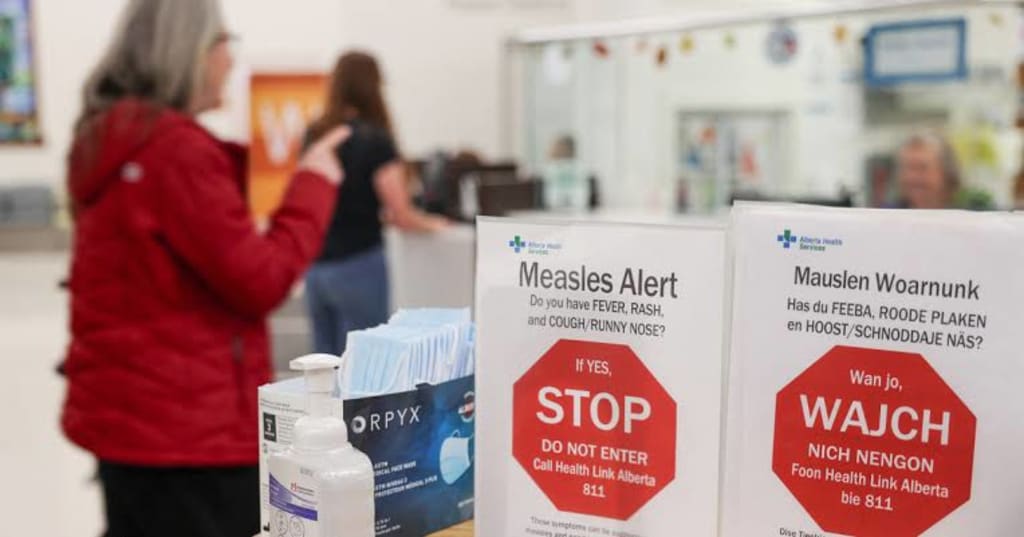
For over two decades, Canada was a global success story in public health — a nation that had successfully wiped out measles, a disease once responsible for thousands of deaths worldwide. But in 2025, that hard-earned status has come to an end.
According to the World Health Organization (WHO), Canada has officially lost its measles-free designation, following a sharp rise in cases across multiple provinces. Health officials warn that the United States may soon face the same fate, as clusters of outbreaks continue to grow south of the border.
The news has sparked concern among doctors, parents, and policymakers — and reignited the difficult conversation about vaccine hesitancy and public trust in science.
---
A Disease Once Thought Gone
Measles was declared eliminated in Canada in 1998 and in the United States in 2000. “Eliminated” didn’t mean the virus was extinct, but that there was no continuous transmission for more than 12 months.
Now, outbreaks in Ontario, Alberta, and British Columbia have crossed that threshold. Canadian health authorities confirmed over 500 cases in 2025 alone — the highest number in decades. Most are linked to international travel and communities with low vaccination coverage.
The U.S. is not far behind. Health experts at the Centers for Disease Control and Prevention (CDC) say that if current trends continue, the country could lose its measles-free status within months.
Dr. Theresa Tam, Canada’s Chief Public Health Officer, called the development “deeply concerning,” noting that “the loss of elimination status is not just symbolic — it’s a signal that our collective defenses are weakening.”
---
The Vaccine Gap
The measles, mumps, and rubella (MMR) vaccine has been available for more than 50 years and is one of the most effective vaccines ever developed, offering 97% protection after two doses.
But despite its proven safety, vaccination rates have dropped in parts of North America. Pandemic-era disruptions, misinformation on social media, and a rise in “personal choice” exemptions have created gaps in immunity.
In some regions, childhood vaccination rates have fallen below 85%, far lower than the 95% threshold needed for herd immunity. That gap gives measles — one of the most contagious viruses on Earth — the opportunity to spread.
Dr. Isaac Bogoch, an infectious disease specialist at the University of Toronto, summarized it bluntly:
> “Measles isn’t coming back because the virus got stronger — it’s coming back because we got weaker.”
---
The Role of Misinformation
Health authorities say that misinformation remains one of the biggest barriers to controlling measles. False claims linking vaccines to autism, infertility, or immune disorders — long debunked — continue to circulate widely on social media platforms.
The WHO has listed vaccine hesitancy among the top ten global health threats. In Canada and the U.S., experts say online echo chambers have eroded trust in science, even as hospitals struggle to contain preventable outbreaks.
Public health campaigns are now focusing not only on increasing access to vaccines but also on rebuilding confidence in them.
> “Facts alone aren’t enough anymore,” said Dr. Bonnie Henry, British Columbia’s Provincial Health Officer. “We have to meet people where they are, listen to their fears, and counter misinformation with compassion.”
---
The Cost of Complacency
For many, measles sounds like a childhood illness from the past. But it’s anything but harmless. The virus can cause pneumonia, brain swelling, and even death — especially among infants and the immunocompromised.
Hospitals in Quebec and Toronto have reported children in intensive care due to severe complications from the virus. In the U.S., communities in New York, Florida, and California are now reporting similar outbreaks.
Beyond the human toll, the economic cost is rising. Each measles outbreak can cost millions in public health response — contact tracing, vaccinations, and quarantine measures.
---
A Wake-Up Call for North America
The resurgence of measles is more than a medical issue — it’s a mirror reflecting society’s fragile relationship with science and trust.
Experts warn that if Canada and the U.S. cannot maintain control of measles, it could open the door for the return of other preventable diseases like polio or whooping cough.
The good news: the solution is still in our hands. Measles is entirely preventable. Every outbreak serves as a reminder of the power of collective responsibility — and the danger of complacency.
As Dr. Tam noted,
> “Our success against measles was built on community trust and action. If we want to reclaim that success, we’ll need both again.”
About the Creator
Fiaz Ahmed
I am Fiaz Ahmed. I am a passionate writer. I love covering trending topics and breaking news. With a sharp eye for what’s happening around the world, and crafts timely and engaging stories that keep readers informed and updated.
Keep reading
More stories from Fiaz Ahmed and writers in Longevity and other communities.
A Simple Guide to What Is Happening in Sudan
Understanding a Nation Torn Between Power, Survival, and Hope Sudan, the third-largest country in Africa, has been trapped in one of the world’s most complex and devastating conflicts since April 2023. What began as a struggle for power between two generals has spiraled into a humanitarian catastrophe affecting millions of civilians. For those trying to make sense of this tragedy, here’s a simple breakdown of what’s happening in Sudan, why it matters, and what the world can do about it.
By Fiaz Ahmed 4 months ago in Longevity
Herbal Tea: Natural Drink for Relaxation and Better Health
Introduction: Herbal tea is a natural beverage made from dried herbs, flowers, fruits, or spices. Unlike traditional teas such as black or green tea, herbal tea usually does not come from the Camellia sinensis plant.
By Health Tips3 days ago in Longevity
Why Your Brain Feels Foggy During the Day
Why Your Brain Feels Foggy? Have you ever sat in class or tried to study, only to realize that your brain just isn’t cooperating? You read the same sentence three times, struggle to focus, and feel mentally drained even though the day has barely started. Many students experience this feeling, often described as “brain fog.”
By Being Inquisitive6 days ago in Longevity




Comments
There are no comments for this story
Be the first to respond and start the conversation.