
Breakthrough: Scientists Grow First Plants In Moon Soil – A Giant Leap for Space Farming!
From Moon Dust to Harvest: The Pioneering Breakthrough in Extraterrestrial Farming!


Introduction
In a historic milestone for space exploration and agriculture, scientists have successfully grown plants in lunar soil for the first time. This groundbreaking achievement marks a crucial step toward sustainable human settlements on the Moon and beyond. The experiment, conducted using samples collected during NASA’s Apollo missions, proves that crops can thrive in extraterrestrial environments—a vital requirement for future deep-space colonization.
1. The Experiment Setup
Researchers from the University of Florida used 12 grams of lunar regolith (soil) brought back by Apollo 11, 12, and 17 missions. They planted thale cress (Arabidopsis thaliana), a small flowering weed commonly used in scientific studies due to its well-mapped genome.
2. Key Findings
Plants sprouted but grew slower than those in Earth soil.
Lunar soil stressed the plants, causing stunted roots and leaves.
Younger Apollo samples (less exposed to cosmic radiation) performed better.
3. Why This Was Difficult
Moon soil lacks organic nutrients and is packed with sharp, abrasive particles. Additionally, cosmic radiation alters its chemistry, making it hostile to plant growth. Scientists had to supplement it with nutrients and carefully control conditions.
Why This Breakthrough Matters
1. A Step Toward Sustainable Moon Bases
Future astronauts can’t rely solely on food shipments from Earth. Growing crops on the Moon is essential for long-term missions and colonies.
2. Testing the Limits of Space Agriculture
This experiment proves that plants can adapt to harsh lunar conditions, paving the way for more resilient genetically modified crops.
3. Preparing for Mars and Beyond
If plants can grow in Moon soil, similar techniques could apply to Martian soil, making interplanetary farming a reality.
Benefits of Lunar Farming
1. Reduced Reliance on Earth Supplies
Lower mission costs (shipping food to space is expensive).
Emergency backup if supply missions are delayed.
2. Oxygen Production & Air Purification
Plants absorb CO₂ and release oxygen, helping maintain breathable air in lunar habitats.
3. Psychological Benefits for Astronauts
Greenhouses could provide a touch of Earth, reducing stress and isolation during long missions.
4. Scientific Discoveries
Studying plant mutations in lunar soil could lead to hardier crops for Earth’s climate-changed future.
Challenges & Future Research
1. Soil Modification Needed
Adding nutrients, bacteria, and organic matter could improve growth.
Hydroponics or aeroponics may be more efficient than raw lunar soil.
2. Radiation & Temperature Extremes
Moon’s lack of atmosphere exposes plants to deadly solar radiation.
Greenhouses with radiation shielding will be necessary.
3. Scaling Up for Colonies
Current experiments used tiny amounts of soil—large-scale farming requires more regolith processing.
4. Next Steps
Testing food crops like wheat, potatoes, and tomatoes.
Developing self-sustaining lunar greenhouses.
Conclusion
The successful growth of plants in Moon soil is a revolutionary leap for space exploration. While challenges remain, this experiment proves that sustainable lunar agriculture is possible. Future research will focus on optimizing growth conditions, making this a cornerstone for human settlements on the Moon, Mars, and beyond.
FAQs About Growing Plants in Moon Soil
1. Can we eat plants grown in lunar soil?
Not yet—this experiment used a non-edible plant. Future tests will focus on food crops, but safety checks are needed.
2. How is Moon soil different from Earth soil?
Moon regolith lacks organic matter, has sharp particles, and contains metals and compounds that can be toxic to plants.
3. Will future Moon farms use only lunar soil?
Likely not—modified soil (with added nutrients) or hydroponics may be more efficient.
4. What’s the biggest hurdle for lunar farming?
Radiation and extreme temperatures are major obstacles. Protective structures will be essential.
5. Could this help Earth’s agriculture?
Yes! Studying stress-resistant plants could lead to crops that survive droughts and poor soils on Earth.
Final Thought
This breakthrough isn’t just about plants—it’s about humanity’s future as a multi-planetary species. The dream of Moon bases and Mars colonies just got one step closer to reality.
About the Creator
Jacky Kapadia
Driven by a passion for digital innovation, I am a social media influencer & digital marketer with a talent for simplifying the complexities of the digital world. Let’s connect & explore the future together—follow me on LinkedIn And Medium
Keep reading
More stories from Jacky Kapadia and writers in Longevity and other communities.
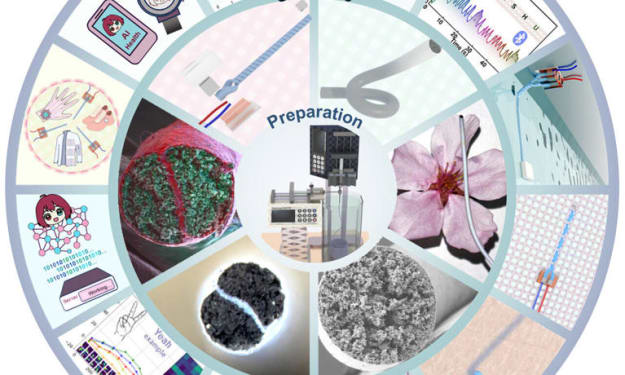
✨ Smart Fiber, Smart Wearables: DNA-Inspired Sensors Revolutionize Next-Gen Comfort & Accuracy
🌐 Introduction: The Dawn of Biologically-Inspired Wearables Imagine a world where your fitness tracker feels like a second skin, your medical monitor bends like a Band-Aid, and your smart clothing adapts to your body’s needs in real time. This isn’t science fiction—it’s the reality being unlocked by DNA-inspired flexible fiber sensors. Merging biology with cutting-edge engineering, researchers are weaving the future of wearables with threads inspired by life’s most fundamental code: DNA.
By Jacky Kapadia11 months ago in Longevity
How Trackless Mining Equipment Suppliers in China Operate in 2026
When searching for reliable trackless mining equipment manufacturers in China, the options get overwhelming fast. You jump on a supplier portal and suddenly see thousands of identical looking machines. Buying heavy machinery for a mine is not like ordering basic office supplies. If a loader breaks down three miles underground, the whole production schedule stops immediately. The financial hit is massive. Finding the right factory matters a lot more than just getting a cheap price tag on a shiny new vehicle.
By CEO A&S Developers2 days ago in Longevity
A Transparent Look at Vocal Challenges and Top Stories
Almost three years ago, we shared a resource article that served as a place for people to suggest new challenge prompts. We thought it would be a good idea to refresh that thread, and take the opportunity to answer a few common questions about top stories, how challenges are judged and how submissions are reviewed.
By Vocal Curation Team4 days ago in Resources



Comments (1)
This would be our first step to colonizing the red planet. Fascinating!! Thanks for taking us through it.