
Asia Cervical Cancer Diagnostics Market Size and Forecast 2026–2034
Expanding Screening Programs, Technological Innovation, and Healthcare Access Drive Market Growth Across Asia

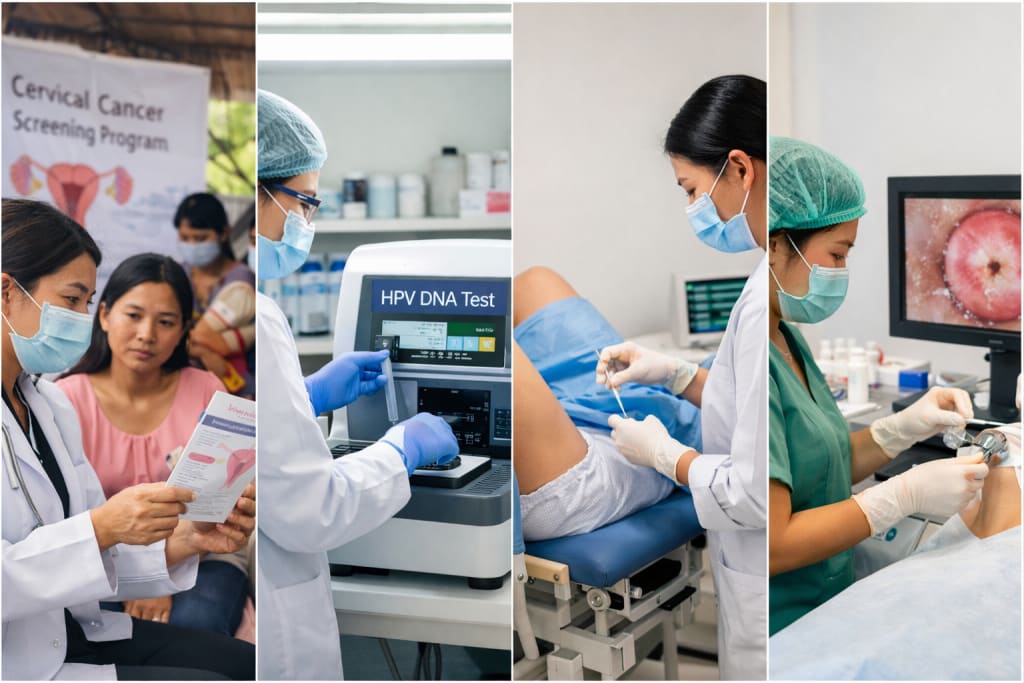
Asia Cervical Cancer Diagnostics Market Overview
The Asia cervical cancer diagnostics market is entering a decisive growth phase, supported by rising awareness of women’s health, government-backed screening initiatives, and rapid technological advancements in diagnostic testing. According to Renub Research, the market is projected to grow from US$ 2.47 billion in 2025 to US$ 4.01 billion by 2034, expanding at a compound annual growth rate (CAGR) of 5.51% during the forecast period from 2026 to 2034.
Cervical cancer remains one of the most preventable yet deadly cancers affecting women in Asia, primarily due to historically low screening rates and late-stage diagnosis. However, this narrative is shifting. Countries across Asia are increasingly prioritizing early detection, preventive screening, and improved access to diagnostic services, creating strong momentum for market expansion.
Cervical cancer diagnostics encompass a range of tests and procedures designed to detect precancerous lesions, high-risk human papillomavirus (HPV) infections, and malignant cervical abnormalities. These diagnostics play a vital role in reducing mortality rates by enabling timely treatment and long-term disease management.
Asia Cervical Cancer Diagnostics Market Outlook
Cervical cancer diagnostics include Pap smear tests, HPV DNA testing, colposcopy, biopsy procedures, and visual inspection with acetic acid (VIA). Early detection is essential, as cervical cancer is highly treatable when identified at an early stage. Diagnostic screening also helps detect high-risk HPV infections, which are responsible for the majority of cervical cancer cases globally.
Across Asia, cervical cancer diagnostics adoption is rising steadily. Large population bases, previously limited screening infrastructure, and uneven healthcare access historically resulted in delayed diagnoses. Today, governments, healthcare institutions, and international organizations are actively addressing these gaps.
National screening programs, HPV vaccination campaigns, mobile diagnostic units, and the expansion of private diagnostic laboratories are transforming cervical cancer detection across both urban and rural regions. As awareness improves and diagnostic technologies become more affordable, cervical cancer diagnostics are gaining broader acceptance throughout Asia.
Key Growth Drivers of the Asia Cervical Cancer Diagnostics Market
Rising Awareness and Government-Led Screening Programs
One of the most influential drivers of market growth is the increasing awareness of cervical cancer prevention and the implementation of government-sponsored screening initiatives. Many Asian countries are now prioritizing early detection through nationwide screening programs aimed at educating women about routine cervical examinations.
Public health agencies are promoting Pap smear testing, HPV DNA diagnostics, and low-cost screening solutions, particularly for underserved populations. These programs are significantly increasing screening participation, especially among younger and middle-aged women.
In September 2024, the United States, Australia, India, and Japan launched a landmark initiative under the Quad Cancer Moonshot, focused on eliminating cervical cancer in the Indo-Pacific region. This initiative aims to strengthen healthcare infrastructure, expand research collaboration, improve data systems, and enhance cancer prevention and early detection across Asia.
Technological Advancements in Diagnostic Methods
Technological innovation is reshaping the cervical cancer diagnostics landscape in Asia. The introduction of liquid-based cytology, molecular HPV testing, automated screening platforms, and AI-assisted diagnostics has significantly improved detection accuracy and efficiency.
Highly sensitive HPV DNA tests enable the identification of high-risk HPV strains even before cellular abnormalities appear. Automation and digital imaging reduce human error and increase screening throughput, a critical advantage in densely populated Asian countries.
Point-of-care diagnostics and self-sampling solutions are also improving screening access in remote and resource-constrained areas. In September 2025, PHASE Scientific International Limited announced the launch of the world’s largest clinical study for urine-based HPV screening in China, highlighting the region’s commitment to innovation in non-invasive diagnostics.
Improving Healthcare Infrastructure and Accessibility
Healthcare infrastructure development is another key factor driving market expansion. Many Asian nations are investing heavily in hospitals, diagnostic laboratories, and primary healthcare centers. The rise of private diagnostic chains and public–private partnerships has expanded access to cervical cancer screening services.
Urbanization, higher healthcare spending, and increased availability of trained medical professionals are strengthening diagnostic capabilities across the region. Mobile screening units and community-based healthcare programs are extending diagnostic coverage to rural and underserved populations.
In January 2025, the Asian Infrastructure Investment Bank (AIIB) introduced its first Health Strategy, reinforcing its commitment to social development and healthcare inclusion. This strategy is expected to support long-term improvements in diagnostic access and capacity across Asia.
Challenges Facing the Asia Cervical Cancer Diagnostics Market
Limited Awareness and Cultural Barriers
Despite progress, cultural stigma, lack of education, and misconceptions surrounding cervical cancer remain significant obstacles. In conservative and rural communities, fear and embarrassment often discourage women from undergoing regular gynecological screenings.
Limited awareness about the importance of early detection and preventive screening continues to affect participation rates, particularly in low-income and rural areas. Addressing these barriers requires sustained public education and culturally sensitive outreach programs.
Uneven Access and Resource Constraints
Disparities in healthcare access remain a major challenge. While urban centers often have advanced diagnostic facilities, rural regions frequently lack laboratories, skilled personnel, and reliable screening infrastructure.
High costs associated with advanced diagnostic technologies, limited reimbursement coverage, and inconsistent public healthcare funding further restrict adoption in some countries. These inequalities continue to impact overall screening coverage across Asia.
Segment Analysis: Asia Cervical Cancer Diagnostics Market
Asia Cervical Cancer Pap Smear Diagnostics Market
Pap smear diagnostics remain a cornerstone of cervical cancer screening in Asia. This method is widely used due to its affordability, established clinical acceptance, and effectiveness in detecting abnormal cervical cells at an early stage.
Government-supported screening programs, improved laboratory infrastructure, and the availability of trained cytologists are sustaining demand. While newer technologies are emerging, Pap smear diagnostics continue to play a vital role, particularly in large-scale public health initiatives.
Asia Cervical Cancer HPV DNA Diagnostics Market
The HPV DNA diagnostics segment is experiencing rapid growth, driven by its high sensitivity and ability to detect high-risk HPV infections early. HPV DNA testing allows for longer screening intervals and earlier intervention compared to traditional methods.
Advancements in molecular diagnostics have improved test accuracy while reducing costs, making HPV DNA testing increasingly accessible across Asia. Rising awareness of HPV’s role in cervical cancer is further accelerating adoption.
Asia Cervical Cancer VIA Diagnostics Market
Visual inspection with acetic acid (VIA) is widely used in low-resource settings due to its simplicity, low cost, and immediate results. VIA is particularly valuable in rural and underserved areas where laboratory infrastructure is limited.
Governments and NGOs frequently deploy VIA in community-based screening programs to increase coverage. While less specific than molecular tests, VIA remains essential for expanding access to early detection in resource-constrained regions.
Country-Level Market Insights
China Cervical Cancer Pap Smear Market
China’s Pap smear market is driven by large-scale public health programs and a growing emphasis on preventive healthcare. Urban hospitals and maternal health centers widely use Pap smear tests, supported by improved laboratory facilities and skilled professionals.
Liquid-based cytology is gaining popularity in urban areas, enhancing screening accuracy. Despite the rise of HPV DNA testing, Pap smears remain a cost-effective solution for mass screening programs.
Japan Cervical Cancer Pap Smear Market
Japan’s Pap smear market is mature and technologically advanced, supported by high clinical standards and widespread routine screening. Automated cytology and advanced laboratory systems are commonly used to improve efficiency and accuracy.
An aging population and strong preventive healthcare culture continue to sustain steady demand for Pap smear diagnostics.
India Cervical Cancer HPV DNA Market
India’s HPV DNA diagnostics market is expanding rapidly due to rising awareness and growing private healthcare investment. Urban hospitals and diagnostic centers are increasingly adopting HPV DNA testing for its high sensitivity and early detection capabilities.
While affordability remains a challenge, declining test costs and government-led screening initiatives are improving accessibility.
Malaysia Cervical Cancer HPV DNA Market
Malaysia’s HPV DNA diagnostics market is growing steadily, supported by improved healthcare access and rising awareness of women’s health. Government-backed screening programs and expanding laboratory capacity are encouraging the adoption of molecular diagnostics.
Thailand Cervical Cancer VIA Market
Thailand relies heavily on VIA diagnostics to expand screening access in rural areas. VIA is widely used in government-run health centers due to its affordability and ease of implementation. Despite lower specificity, VIA remains critical for large-scale screening initiatives.
India Cervical Cancer VIA Market
In India, VIA plays a vital role in reaching women in low-resource and rural regions. Government and NGO-led programs extensively use VIA to improve early detection and reduce cervical cancer mortality, ensuring continued demand for this diagnostic method.
Competitive Landscape
Leading companies operating in the Asia cervical cancer diagnostics market include:
Abbott Laboratories
Hologic Corporation
Becton, Dickinson and Company
Siemens AG
Roche Diagnostics
Quest Diagnostics
Cardinal Health
These companies compete through product innovation, strategic partnerships, geographic expansion, and investments in advanced diagnostic technologies.
Final Thoughts
The Asia cervical cancer diagnostics market is on a strong growth trajectory, supported by rising awareness, technological advancements, and expanding healthcare infrastructure. While challenges such as cultural barriers and uneven access persist, coordinated efforts by governments, healthcare providers, and global organizations are steadily improving screening coverage.
With continued investment in preventive healthcare and diagnostic innovation, cervical cancer diagnostics will play a critical role in reducing disease burden and improving women’s health outcomes across Asia during the 2026–2034 forecast period.
About the Creator
Day 4 of Quitting
If this is how sobriety feels, maybe it’s better to go through life a little buzzed… this, along with other hits like, I want to kill myself, I wish I was dead, and I’m going to throw myself off a bridge have been the only thoughts on rotation these past few days. I promise myself that if, in a month, I still feel like this (‘this’ meaning despondent, full of rage, and simultaneously numb) I can go back to smoking. Until mid-February though? Nicotine is off the table.
By sleepy drafts28 days ago in Longevity
The Foundation of Balance: Why Ankles Matter More Than Core Strength
When balance becomes a concern, the conversation often turns toward core strength. While the core plays an important role in posture and movement, balance itself starts much closer to the ground. The feet and ankles are the body’s primary interface with the world, constantly collecting information and sending signals that guide stability.
By AhmedFitLife6 days ago in Longevity



Comments
There are no comments for this story
Be the first to respond and start the conversation.