
AI-Powered Drug Discovery: A Game Changer in the Fight Against Cancer
AI revolutionizing Medicine
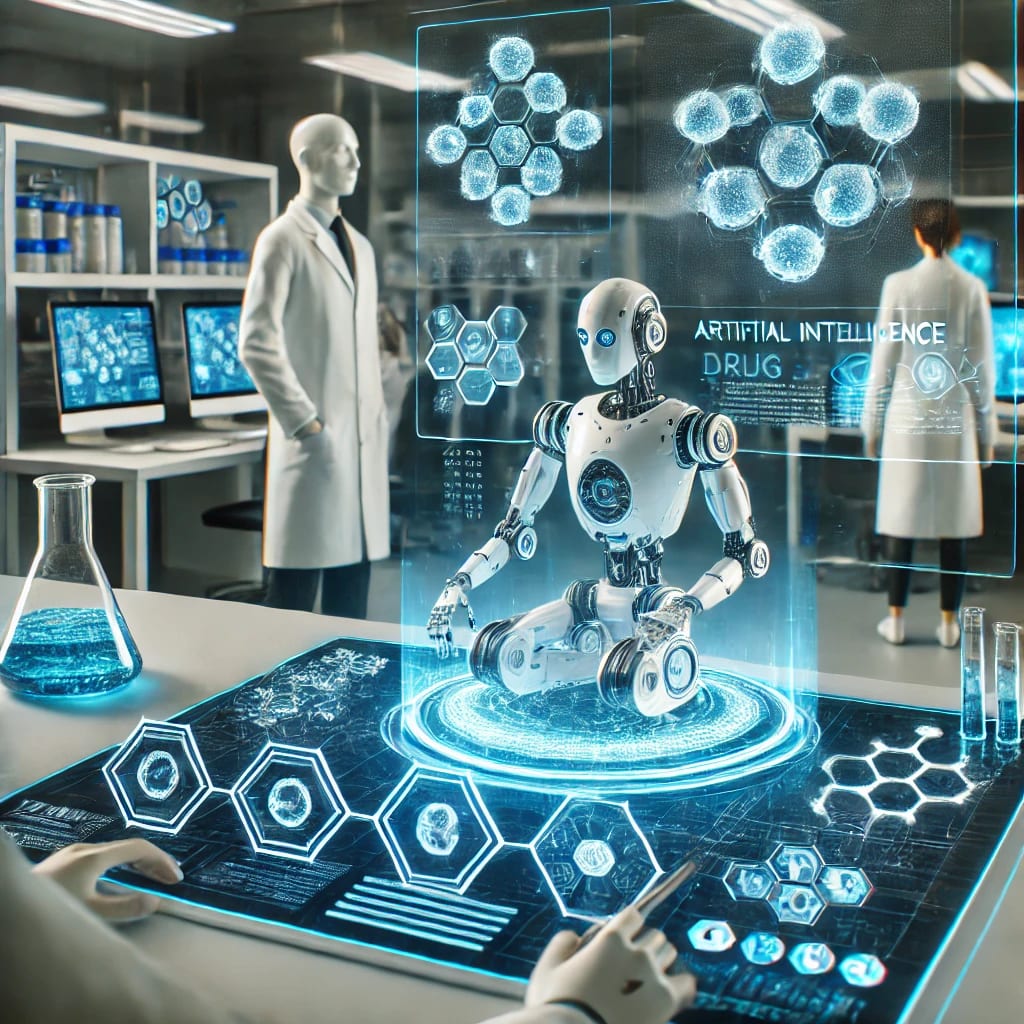
Artificial intelligence (AI) is revolutionizing the field of drug discovery, offering new hope for diseases like cancer. Traditional drug development is a long and expensive process, often taking over a decade and costing billions of dollars. AI is changing this by accelerating the identification of promising drug candidates, improving precision in targeting cancer cells, and reducing costs. From analyzing massive datasets to predicting molecular interactions, AI is making the search for cancer treatments faster and more effective than ever before.
The Challenges of Traditional Drug Discovery
Developing a new cancer drug is a complex and time-consuming process. It involves several stages, including:
• Target Identification – Finding a biological molecule (e.g., a protein or gene) that plays a key role in cancer.
• Drug Screening – Testing thousands to millions of chemical compounds to see which ones interact effectively with the target.
• Preclinical Testing – Conducting laboratory and animal studies to determine safety and effectiveness.
• Clinical Trials – Testing the drug on humans in multiple phases to assess safety, dosage, and efficacy.
This process is not only costly but has a high failure rate—more than 90% of potential drugs fail before reaching the market. AI is transforming this landscape by making drug discovery more efficient and precise.
How AI is Accelerating Cancer Drug Discovery
1. AI for Identifying Drug Targets
AI can analyze vast amounts of genetic, molecular, and clinical data to identify potential drug targets with greater accuracy. Traditional methods rely on manual analysis, which is slow and prone to human error. AI algorithms, particularly deep learning models, can scan millions of scientific papers, patient records, and genomic databases to uncover new biological pathways involved in cancer.
For example, AI has been used to identify mutations in the TP53 gene, a critical gene involved in many cancers. By recognizing these mutations early, researchers can develop drugs that specifically target the abnormal proteins they produce.
2. AI for Predicting Drug-Target Interactions
Once a target is identified, AI helps predict how different chemical compounds will interact with it. Instead of testing thousands of compounds in a lab—a process that takes years—AI models can simulate interactions in minutes. Machine learning algorithms analyze chemical structures and predict which compounds are most likely to bind effectively to the target.
Companies like Atomwise and BenevolentAI use AI to screen billions of molecules in search of potential cancer drugs. Atomwise, for example, developed an AI platform called AtomNet, which uses deep learning to predict how small molecules will bind to proteins. This technology has already helped discover promising compounds for treating leukemia and brain cancer.
3. AI in Repurposing Existing Drugs
AI is also accelerating drug discovery by identifying new uses for existing drugs. Many drugs already approved for other diseases may also be effective against cancer. AI can scan databases of known drugs and predict whether they might work against cancer cells.
A notable example is Thalidomide, originally developed as a sedative but later repurposed for treating multiple myeloma, a type of blood cancer. AI is making this process much faster by analyzing molecular similarities between different diseases and drugs.
During the COVID-19 pandemic, AI helped identify existing drugs with antiviral properties in record time. The same approach is being used to find new cancer treatments.
4. AI for Personalized Cancer Treatments
Every cancer patient is different, and treatments that work for one person may not work for another. AI is helping create personalized therapies by analyzing a patient’s genetic makeup, medical history, and tumor characteristics.
Platforms like Tempus and Foundation Medicine use AI to match patients with the most effective drugs based on their specific cancer mutations. This precision medicine approach improves treatment success rates while reducing harmful side effects.
5. AI in Drug Testing and Clinical Trials
Even after a drug candidate is identified, testing it in clinical trials can take years. AI is streamlining this process in several ways:
• Patient Recruitment: AI helps match eligible patients to clinical trials faster by analyzing electronic health records and genetic data.
• Predicting Side Effects: AI models can simulate how a drug will behave in the human body, helping researchers anticipate potential side effects before trials begin.
• Optimizing Trial Design: AI analyzes past trial data to suggest better trial designs, improving success rates.
A great example is IBM Watson for Drug Discovery, which uses AI to analyze clinical trial data and recommend potential cancer treatments.
The Future of AI-Powered Drug Discovery
The future of AI in drug discovery looks incredibly promising. Several advancements are on the horizon:
•AI and Quantum Computing: Quantum computers will exponentially speed up molecular simulations, leading to even faster drug discovery.
. AI-Driven Robotic Labs: AI-powered robotic systems will automate lab experiments, reducing human error and increasing efficiency.
• Advanced Biomarker Discovery: AI will help identify new biomarkers—biological signals that indicate cancer presence—leading to earlier and more precise diagnosis.
While AI is not yet a cure for cancer, it is dramatically improving the way we develop treatments. As technology continues to advance, AI-driven drug discovery will play a crucial role in finding better, more targeted therapies for cancer and other life-threatening diseases.
Conclusion
AI-powered drug discovery is a game changer in the fight against cancer. By speeding up target identification, predicting drug interactions, repurposing existing drugs, and personalizing treatments, AI is making cancer drug development faster, cheaper, and more effective. While challenges remain, such as data privacy and ethical concerns, AI's potential to revolutionize medicine is undeniable.
As researchers continue to integrate AI into the drug discovery process, we move closer to finding life-saving treatments for cancer and ultimately improving patient outcomes worldwide
About the Creator
Day 4 of Quitting
If this is how sobriety feels, maybe it’s better to go through life a little buzzed… this, along with other hits like, I want to kill myself, I wish I was dead, and I’m going to throw myself off a bridge have been the only thoughts on rotation these past few days. I promise myself that if, in a month, I still feel like this (‘this’ meaning despondent, full of rage, and simultaneously numb) I can go back to smoking. Until mid-February though? Nicotine is off the table.
By sleepy drafts18 days ago in Longevity




Comments
There are no comments for this story
Be the first to respond and start the conversation.