
Acceptance
An Ongoing Journey Towards Body Positivity

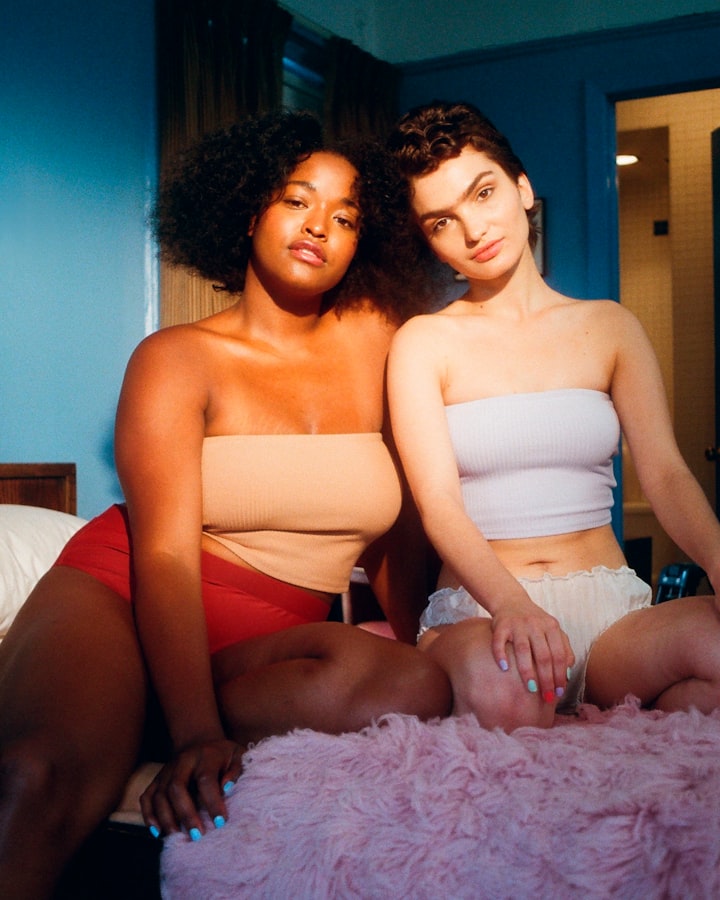
Over the past few years, I have been attempting to change the negative relationship that I have with my own body. It all started as a young teenager, where I, along with many other teenagers across the UK, was influenced by the media and the environment around me to believe that being thin was the ideal. With the rise of social media perpetuating this belief further towards the end of my teenager years, I began my time at university at a mere 47 kilograms, which is underweight for someone of my age and size.
By the end of my four years at university, my weight had steadily risen by 15 kilograms. Looking back, I can see now that through developing new friendships and discovering new passions at university, I became less concerned about my weight. At the time, however, I’d ask myself the same toxic questions. How could I let myself gain so much weight? Why didn’t I do more to stop gaining weight? How am I going to lose this much weight? These insecurities were particularly heightened last year when I couldn’t wiggle my way into my size 8 clothes.
The body positivity movement that we see today across social media was initiated by fat Black and ethnic minority women, with the aim to empower those with marginalised bodies and challenge unrealistic beauty standards within society. I am so thankful to these incredible women for beginning such an important conversation with society and challenging the environment we are immersed in where being skinny equates to being beautiful. The body positivity movement has helped women across the globe, including myself, begin the journey towards recognising the value in themselves, no matter what their body looks like.
I had the honour of speaking to Katie Budenberg, a twenty-two year old graduate and the owner of the inspiring Instagram account @make_love_not_diets, about toxic diet culture, the UK government’s new weight loss campaign and accepting your body just as it is.
Q. Have you always had a positive relationship with your body?
Definitely not. I think it’s so hard, especially as a woman, to have a positive relationship with your body, as we have not been brought up in an environment that has been so focused on that. As a society, we focus on the narrative of being thinner means you are healthier, so I grew up having a very negative relationship with my body because my body likes to hold just a little bit of extra weight. I never accepted the way I looked or thought that I was healthy, I always saw it as a hurdle that I had to try and jump over. The environment I grew up in was one where people around me always dieted, the girls at school were always talking about whatever new diet they were going on or whether they weren’t going to have lunch that day. I very much contributed to it because I also felt horrible about myself. I think there’s this horrible toxic cycle of everyone feeling negatively about themselves, which then makes everyone else around them feel negatively about themselves and we just pass it down from one generation to the next.
When I was a teenager, there was a point where I completely refused to eat. I thought that by not eating, I would have more friends and fit in at school, I thought nobody would ever pick on me again about being any kind of size. I ended up having therapy because I developed eating disorder tendencies, which all stemmed from the kids at school being mean and that toxic environment everyone grows up in. I was also starting to use Instagram and Facebook for the first time and when I’d see everyone’s pictures, I thought they looked so perfect and I felt that I wasn’t. I would just compare myself to them and I ended up feeling so upset with myself and my body.
Q. What made you want to embark on this body positivity journey?
It started when I read a post about not following people that make you feel bad about yourself. So a few years ago, I went through who I was following on Instagram and any time I saw a picture that made me have thoughts about wanting to lose weight, I would unfollow that person. Even though they would be people I’d seen on Love Island and I enjoyed seeing their posts, I knew that their posts were unhealthy for me. And then that’s how I then started finding body positivity accounts like @bodyposipanda – she’s so cool! I remember seeing some of her posts and she was wearing this mini skirt and yes, her tummy wasn’t flat, but she looked amazing. And I thought to myself, ‘If she can look and feel amazing, why can’t I?’ The body positive accounts on social media were so different from the other influences of having other people trying to sell me diet pills and shakes. It was like retraining my brain by seeing only healthy body image posts and realising that I can feel good about myself.
Q. What made you want to set up your own body positivity account?
It was actually quite a spur of the moment decision. I’d always wanted to produce content and as a teenager, I wanted a YouTube channel, I’d always dreamed of that kind of thing. But I was so worried about having pictures of me out on the Internet of me in my underwear and whether that would affect my employability. And then post-lockdown, everyone was posting about how they were upset about lockdown weight gain, the ‘maskne’ they’d developed (the spots you get when wearing a mask), all these things that everyone was so upset about. You have survived a global pandemic and the worst thing that has happened to you is that you’ve gained 10 pounds. I just really wanted people to see that that isn’t the worst thing that can happen to you!
This way of thinking was something I had to work on with myself over lockdown as well, because I can be very triggered and influenced by things that I see on Facebook, like when people would share their insecurities about how everyone is getting fit over lockdown and they’ve put on weight. I had to make that final hurdle of accepting my body and whatever change it goes through. We’ve been through a pandemic and I need to forgive myself. I was just sat with my friend one day at the end of July and I brought up the idea of making a body positivity account, so we just sat and made it there and then!
Although I refer to my account as a body positivity account, it’s important to recognise that the body positivity movement was created by fat Black women, who deal with the biases of being Black and being fat – they don’t have thin privilege or white privilege. They founded the movement which then allowed people like me, who do have thin privilege and white privilege, to jump on the train. I think it’s super important to remember that when discussing body positivity, because it’s not really spoken about.
Q. Have you faced any issues whilst promoting body positivity on social media?
I was on TikTok for a bit, but I deleted it after they shadow-banned me and took down one of my videos. It’s probably because I had a few videos on there where I was in my underwear, but nothing more than you would see if I were wearing a swimming costume. I knew TikTok had shadow-banned me because I’d upload a video and I could see it on my account, but nobody else could see them. Then I posted one video on TikTok where I was just trying to tell everyone that it’s okay to love their bellies whilst wearing a sports bra and shorts and TikTok took it down because apparently it went against community guidelines. The aim of the video was to break up people’s feeds where they see all these people sucking in their bellies or wearing high-waisted leggings that hide everything. Everyone just needs to see that it’s so normal to have a belly! And TikTok took that video down, so I deleted TikTok.
The worst thing about TikTok is that it allows videos that have very toxic behaviour implemented within them. For example, there was a trend going around where girls were using a sound effect that said, ‘So you think I’m SKINNY!’ to celebrate when someone would imply that they were skinny, for example, if someone bought them a piece of clothing in size XS or their boyfriend made a comment about picking them up easily. TikTok will keep those videos up that promote the message that only skinny is good, but they’ll take down my video that is promoting that everyone’s belly is wonderful in their own way. TikTok in particular is used by so many teens and I’m just imagining these young girls watching these toxic videos and following the messages they are promoting. Half of me thought that maybe I should stay on TikTok to break the algorithm up, but at the same time, I didn’t want to encourage anyone who followed me on Instagram to get TikTok because I didn’t want anyone to have to see that toxic content.
On social media, the algorithms are designed to make money and they want to support accounts that are going to bring money in. My account isn’t really doing that because I’m just encouraging people to not worry about presenting this fake, wonderfully happy life on social media. I want to make people feel like they can be human on social media because we are all human. We all have bad days and social media is just everyone’s highlight reel. A lot of influencers post about their ‘perfect’ lives on Instagram and then everyone feels that they also need to follow this Instagram aesthetic. People will only post pictures which have a nice background where they’re smiling and having the best time ever – it’s not real life, but social media makes it seem like it is.
Q. Speaking of toxicity surrounding body image, I wanted to ask you what your thoughts are on the UK government’s new campaign to tackle obesity?
I have two reasons why I’m fuming about the government’s weight loss campaign. The first is that I will fight every single day to not equate health with size. This campaign is not aiming to make everyone as a society healthier, it’s targeted at overweight and obese women to make them slim down. It’s promoting this idea that you cannot still be healthy if they are carrying extra weight – that is completely false. You should never judge someone’s health by what size they are because someone that is a size 6 might be that size because they could be suffering from cancer, they might be suffering from an eating disorder, they could be so unhealthy. But these campaigns are not targeted at people that are underweight, they’re only targeted at you if you are unhealthy and overweight. You can just tell that they haven’t brought any dietitians or anyone with any knowledge in to make this decision – it’s just a bunch of men making decisions about things they don’t know enough about.
Secondly, I think they haven’t really thought through how this campaign could affect someone with an eating disorder. As someone who has suffered with eating disorder tendencies, not even a full-blown eating disorder, I’d struggle if I’m going out for a meal and next to the meal description there’s the calorie content in massive letters. Calories are not what anyone should be thinking about when they’re going out and trying to enjoy a meal. I shouldn’t be choosing the salad over the pasta dish because the pasta dish has more calories, that’s a really unhealthy mindset to teach people. I don’t calorie count or weigh myself because I’ll become very obsessive over the numbers and I know that it works the same for a lot of different people. Now they’re making it the guideline where they want restaurants to always have that on the menu next to the items, which will trigger so many people when they’re just trying to have a nice meal out. I hope that if they’re going to do something like that, they have the calorie information available on a separate menu for anyone that wants it, but for people like me, I wouldn’t ever have to see the calorie content.
Especially for someone that is recovering, compulsory calorie information on the menu could be a really triggering thing. For example, I used to struggle to eat in public, it came from caring way too much about what other people thought. If I were out at a restaurant and I knew that other people could see the calorie content on the menu, I would have been way too scared to order a highly calorific meal because I would have felt that people would be watching and judging me as I ate my meal. The calorie content would have then stuck in my head for the rest of the week and I probably would have skipped other meals to make up for the extra calories. It’s so unhealthy to encourage anyone to calorie count.
Q. What is your current relationship with your body?
I’m at a point where there’s more positive than negative and when the negative thoughts creep in, I know what to do about it. Instead of letting it manifest and make me feel horrible about myself, I know how to get rid of those thoughts and at least land in a position of acceptance, if not positivity. There’s definitely still some parts of my body that I cannot say that I love, but I accept that they are a part of me and it’s just doing whatever it’s doing, because it’s just a body at the end of the day! I appreciate it for so many more reasons than how it looks, because how it looks is the least interesting thing about what my body is capable of. I thank my body mostly because I can dance and it brings me so much joy.
That’s the stage I wish most people can get to – acceptance. From the level of accepting that your body is there and you’re not constantly trying to change it, it’s so much easier to find love for it. For example, I have always hated the pouch under my belly. I think everyone woman at some point has been insecure about the pouch, especially when all the celebrities wear low-waisted jeans with flat abs. Once I got to the point where I accepted that the pouch was there and it was always going to be there because it’s protecting my internal organs – and I really want my internal organs! It wasn’t until I reached that point of acceptance that I could grow to love it and now I think it actually looks kind of cute, I’m growing to be actively positive about it.
What got drilled into me as a child and a teen was, ‘You’re not chubby or fat, you’re beautiful.’ I was taught that I couldn’t hold the extra weight and look good, so that’s what stuck in my head. I think the best thing that I could have been taught as a child is that you can be beautiful whatever size I was and whether I lost or gained weight, I was still wonderful. I think it’s a message that needs tweaking because I even now, if I tell my friends that I’m chubby, they’ll say, ‘No you’re not, oh my gosh!’ I like being chubby, I’ve grown to love and accept it, I wouldn’t want it any other way. I carry a bit of extra weight and it’s not a lot of extra weight, I have nothing to really complain about at all, and it’s fine. I’m beautiful, everyone is beautiful as they are, it’s not an ‘either or’ where I’m chubby or I’m beautiful.
Q. For anyone that is struggling to love their own skin or is looking to embark on a journey towards self-love, what would your words of advice be?
I would definitely give them the same advice that I gave myself a few years ago. Your social media should be filled with what you want to see and what makes you feel good, so unfollow any accounts that are promoting any kind of toxic diet culture or make you feel like you need to change – just never look at them again. Then follow accounts that do make you feel good about yourself. That’s what I did and it helped so much, it really got me out of an endless rut that I’d been in my entire life. Also, if following body positivity accounts like mine don’t work for you or it doesn’t help you in the slightest, that’s completely fine too. Finding a place where you can love your body after the years of dealing with toxic diet culture is such a personal journey, you’ve just got to do what suits you.
The capitalist world that we live in makes women feel bad about parts of our body that literally need to be there. Cellulite is a perfect example of this – the vast majority of women have cellulite, yet it’s treated like it’s some sort of condition that needs to be corrected. You don’t need a million creams, treatments or surgeries to fix it, but if companies can make us feel bad about having it, they’ll profit from it. Just think about how much companies have earnt from making women feel bad about things and then putting out solutions to fix it that we all fall for because they show these happy women who don’t have the insecurity that we have. I definitely would aim for my followers and anyone who is looking to embark on a journey to aim for acceptance because once you’ve accepted your body, you can love it.
In a world where corporations profit off our insecurities, it is so refreshing to see people like Katie challenging societal norms by filling our feeds with empowering and inspiring content. Seeing reminders of how capable and beautiful the human body is have helped so many, including myself, on their pathway towards not only accepting their bodies, but truly loving them.
As we continue to discuss body positivity more openly, it is important to keep a few things in mind. We must challenge platforms like TikTok and Instagram that promote influencers portraying unrealistic ideals to their audiences whilst rejecting those trying to dismantle the current beauty standards. We must continue to advocate for more body diversity within the media and challenge toxic diet culture. Most importantly, we must ensure the voices of fat Black and ethnic minority women are not dismissed, ignored or overridden by those in more privileged positions within society. We still have a long way to go when it comes to completely changing the toxic culture that surrounds body image, but I firmly believe we’re on the right track.
I’d like to thank Katie for being so open and honest about her experiences. If you’d like to see some incredibly wholesome content, follow Katie’s Instagram: @make_love_not_diets
About the Creator
Nuriya Shoro
Just a 23 year old woman from London looking to learn about the world.
Keep reading
More stories from Nuriya Shoro and writers in Longevity and other communities.
Why You Wake Up Tired Even After 8 Hours of Sleep
You slept for 8 hours. Your alarm rings. And somehow… you still feel exhausted. If you’re constantly waking up tired, you’re not lazy. And you’re definitely not alone. Many students struggle with feeling tired after 8 hours of sleep, and the problem usually isn’t the number of hours — it’s the quality of sleep.
By Being Inquisitive3 days ago in Longevity


Comments
There are no comments for this story
Be the first to respond and start the conversation.