
A controlled diet trial: In addition to lowering blood pressure, this strategy can also reduce the risk of cardiovascular disease
In addition to lowering blood pressure


Cardiovascular disease is the number one disease in the world in terms of morbidity and mortality. According to the latest data, the incidence of cardiovascular disease in my country remains high. There are now more than 330 million patients, and 2 out of every 5 deaths are due to cardiovascular disease.
In addition to obesity or overweight, poor diet and lifestyle habits, high blood pressure is also a major risk factor for cardiovascular disease. It is known that there is a clear link between a high-sodium diet and high blood pressure. Therefore, a low-sodium diet that is good for lowering blood pressure should also be good for heart health.
Currently, in addition to a low-sodium diet, there is also a diet strategy widely used to prevent and control blood pressure, called the DASH diet. This is a dietary strategy developed from the 1997 Dietary Approaches to Stop Hypertension (DASH) program in the United States. The DASH diet has been shown to lower blood pressure. It emphasizes the consumption of fruits, vegetables, low-fat dairy products, whole grains and nuts, while limiting the intake of saturated fat, total fat, cholesterol, red meat, candy and sugary beverages. In addition to lowering blood pressure, the DASH diet has also been shown to prevent cancer, osteoporosis, diabetes, heart disease, stroke and cardiovascular disease.
Recently, in a new study published in the Journal of the American College of Cardiology (JACC), a research team from the Beth Israel Deaconess Medical Center (BIDMC) of Harvard Medical School in the United States demonstrated through a strictly controlled controlled diet test The DASH diet strategy can reduce inflammation in the body. If combined with a low-sodium diet, it can reduce the levels of biomarkers related to subclinical heart damage and stress. The study provides some of the strongest evidence that diet directly affects heart damage, and also shows that dietary intervention can improve cardiovascular risk factors in a relatively short period of time.
This study builds on two recent studies in which the researchers found that the DASH diet reduced the levels of markers of heart damage and inflammation. However, these previous studies did not specifically study the effect of reducing sodium intake on cardiovascular health alone or in combination with the DASH diet.
In this new study, the researchers analyzed samples from the "DASH-Sodium" study conducted at four medical centers in the United States between 1997 and 1999. The study recruited 412 hypertensive patients (56% women) with an average age of 48 years and randomly assigned them to the DASH diet group and the typical American diet control group. In these two groups, each subject was assigned to one of three diets with three sodium levels (low, medium, or high) for four weeks. In this controlled diet study, all the meals and snacks of the subjects were provided by the researchers. They completed a regular meal (lunch or dinner) in the laboratory under the observation of the researchers every day. Eat outside the laboratory. The subjects measured their body weight every day.
The researchers analyzed three biomarkers in the sample, namely high-sensitivity cardiac troponin I (hs-cTnI), amino-terminal pro-brain natriuretic peptide (NT-proBNP) and high-sensitivity C-reactive protein (hs-CRP) These markers are all related to three different subclinical heart damage pathways, which are injury, stress, and inflammation.
The analysis showed that among the subjects participating in the DASH diet group, the levels of biomarkers related to heart damage and inflammation decreased by 18% and 13%, respectively. The subjects who combined the DASH diet with a low-sodium diet had the greatest reduction in blood biomarkers related to injury and stress, at 20% and 23%, respectively, while inflammatory markers were not significantly affected.
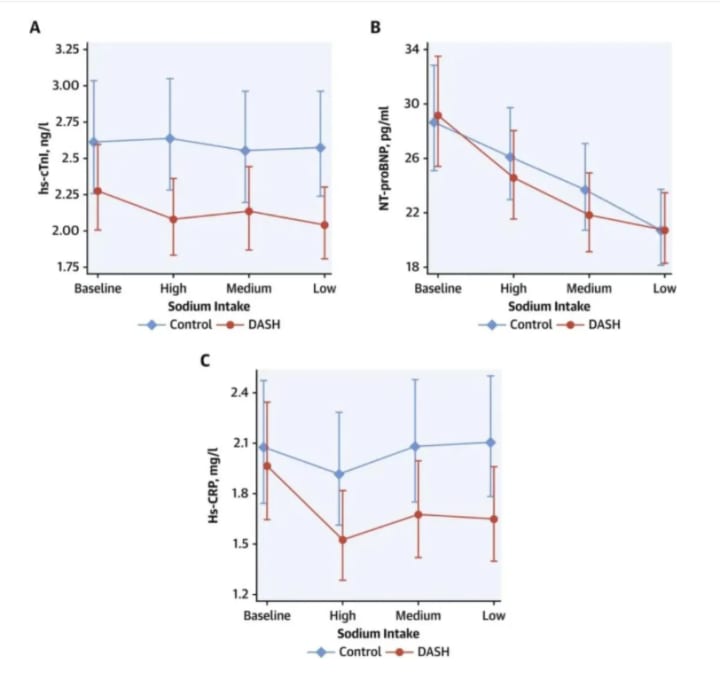
Although the DASH diet itself did not reduce stress-related biomarkers, whether it was the DASH diet group or the control diet group, the stress-related biomarkers of subjects on the low-sodium diet decreased by 19%. However, reducing sodium intake alone does not have a beneficial effect on heart damage or inflammation.
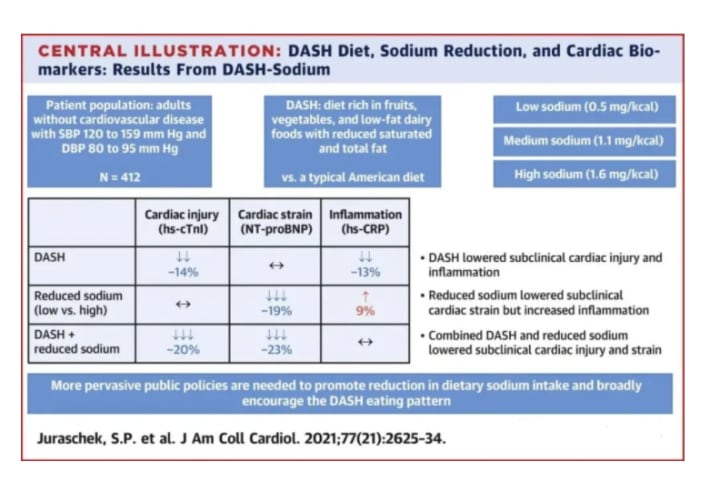
These results underscore the importance of lifestyle. Over time, including a low-sodium, DASH diet rich in fruits, vegetables, and whole grains can minimize heart damage.
The study’s corresponding author and BIDMC assistant professor Stephen Juraschek said: “We used high-sensitivity markers of subclinical cardiovascular disease to illustrate how two dietary strategies can improve the different mechanisms of subclinical heart damage in a relatively short period of time. In addition to improving cardiovascular disease risk factors, the DASH diet that reduces sodium intake can also reduce concurrent heart damage. Our research has important clinical significance to promote DASH dietary strategies and reduce sodium intake on a global scale."
About the Creator
Keep reading
More stories from writers in Longevity and other communities.
Day 4 of Quitting
If this is how sobriety feels, maybe it’s better to go through life a little buzzed… this, along with other hits like, I want to kill myself, I wish I was dead, and I’m going to throw myself off a bridge have been the only thoughts on rotation these past few days. I promise myself that if, in a month, I still feel like this (‘this’ meaning despondent, full of rage, and simultaneously numb) I can go back to smoking. Until mid-February though? Nicotine is off the table.
By sleepy drafts14 days ago in Longevity
Saudi Arabia Generic Drugs Market Size and Forecast 2025–2033
Saudi Arabia Generic Drugs Market Outlook The Saudi Arabia Generic Drugs Market is anticipated to grow to US$ 8.11 billion by 2033 from US$ 4.05 billion in 2024, expanding at a CAGR of 8.02% during 2025–2033. This growth is attributed to rising healthcare needs, proactive government efforts to curb pharmaceutical expenditure, and increasing awareness of cost-effective medication alternatives. Expanding domestic pharmaceutical manufacturing and regulatory support for generics are further strengthening the market’s long-term outlook.
By Marthan Sir6 days ago in Longevity
Thoughts on Vocal and the way the world is
"Death cannot stop true love, only delay it." – Wesley in The Princess Bride. I decided to come back to Vocal on a very cold and dark night at the end of December. I had been, and still am, convalescing from a horrible staph infection that had gone misdiagnosed for months. This, paired with the increasing challenges of being healthy, making the best choices for my co-parented child, being a wife, and being a director at a new job, was a lot to manage.
By Jazzy 3 days ago in Confessions




Comments
There are no comments for this story
Be the first to respond and start the conversation.