
5 Beginner Pilates Moves to Restart Your Fitness
Gentle, low-impact exercises to build strength and flexibility at home.

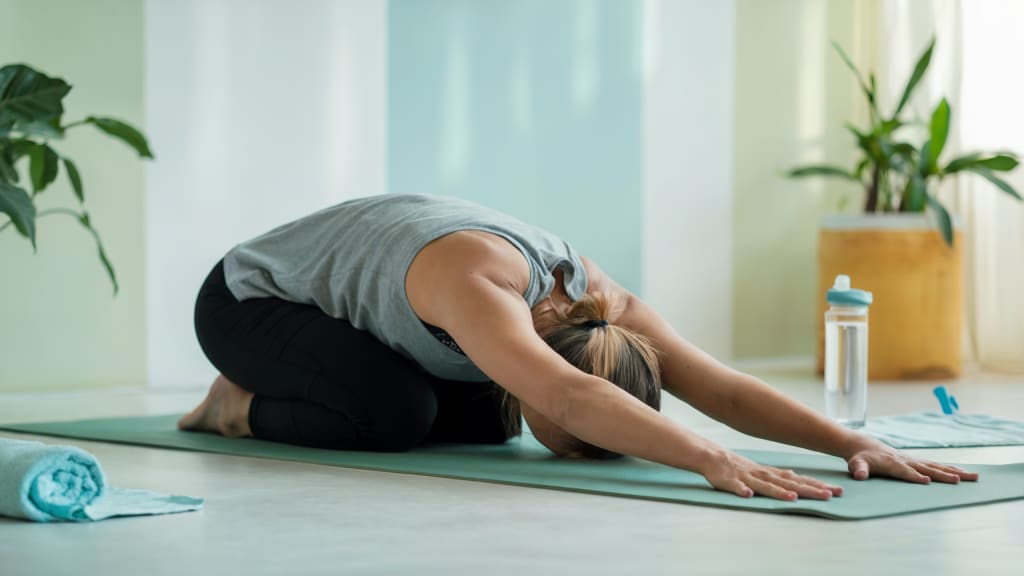
Ah, Pilates. A form of exercise like none other, the kind of workout that makes you wonder how you ever stopped moving your body in such beautiful ways. If your current workout plan consists of lifting the remote or stretching for the last piece of pizza, Pilates may be the ticket for you back to the land of the living (er, active). It’s gentle, it’s forgiving, and, bonus, it doesn’t require a gym membership or a closet full of equipment. You will need only a mat (or a towel, or even a blanket if you’re feeling particularly resourceful) and an openness to reconnecting with your body.
Catherine Radford, a Pilates instructor who obviously knows her way around a spine, suggests five straightforward moves that will ease you back into movement. These exercises have been made to be gentle on your joints, which reduces your chances of injury and builds strength gradually. Plus, they’ll enhance your mobility, flexibility, and core strength—the so-called “powerhouse” of your body. Consider your core the CEO of your physical wellness; when it’s doing its job, everything else falls in line.
Here’s the rundown on how to get started. Do two or three rounds of this workout consistently, and you’ll start to see gains in both strength and flexibility. And who doesn’t want to feel like a well-oiled machine?”
Cat-Cow Stretch: The Spine’s Morning Wake-Up Call
This one is all about spinal flexibility and core engagement. It’s sort of like giving your back a light massage while also telling it how to move. The name of the game here is articulation—you can think of this as fancy talk for using each vertebra in your spine, one at a time, as you peel it like a banana (but in a good way).
How to do it:
Begin on all fours, shoulders over wrists and hips over knees, with your back neutral. Look down at the mat.
Exhale: Hunch your back up toward the ceiling, tuck your chin to your chest, and draw your belly button in toward your spine. Pretend you’re a cat stretching its back.
Inhale: Round your back, dropping your belly toward the floor, and raising your tailbone and chest upward. You’re a cow now, mooing at the ceiling.
Transition back and forth fluidly between these two poses for three to five breaths, coordinating the movements with your inhales and exhales. It’s like yoga class for your spine without the incense.
Roll Down: The Vertebrae Waltz
This decision is a gradual, subtle slouch to self-awareness. It’s great for loosening up your back and hamstrings and for teaching you to move with control. Consider it the standing ovation—body edition—of Pilates.
How to do it:
Stand with your feet hip-width apart and your arms at your sides.
Take a deep breath in, then breathe out as you tuck your chin and start to roll down, one vertebra at a time. You’re just going to let your arms hang like wet noodles.
When you’ve folded as much as you can comfortably (there’s no need to touch your toes unless they’re being particularly neighborly), breathe in again.
Breathe out as you roll back up to standing, stacking each vertebra like building blocks. End by raising your head last, as if you’re peering over a fence.
Repeat three to four times. And by the end, you’ll feel like a puppet of Marionette with a very attentive puppeteer.
Pelvic Tilt: The Subtle Core Awakener
This deceptively simple move is powerful for your core and lower back. It’s a little massage for the spine, with the bonus of getting your abs involved. And for the ambitious among you, you can ratchet it up to a full bridge pose. But that’s not what was on the slate first.
How to do it:
Lie on your back with your knees bent and feet flat on the floor and arms by your sides, palms down.
Take a deep breath in, then exhale, engaging your abs—pulling your navel towards your spine.
Tuck your pelvis slightly, pressing your lower back down against the mat. Your tailbone will lift gently, like a bashful turtle poking its head out of its shell.
Inhale to return to neutral.
Do it eight to 10 times, breathing as if you’re meditating on a beach. Namaste, core muscles.
The Hundred: The Core Crusher
Don’t let the name scare you—this move is all about building endurance in your core. If it feels too hard initially, there are versions to make it simpler (because, let’s face it, not everyone’s a Pilates prodigy).
How to do it:
Lie on your back, legs up, knees bent 90 degrees. You palms face down; arms by your sides.
Breathe in to prepare, and then breathe out as you extend your head, neck, and shoulders off the mat. Look in the direction of your thighs and continue to press your lower back into the mat.
Raise your arms so they are parallel to the floor and pulse them up and down in small, intentional channels.
Breathe in for five counts, breathe out for five counts, and repeat this for a total of five full cycles.
By the end, you’ll feel as if you’ve just run a marathon—for your abs.
Single-Leg Stretch: The Stability Seeker
It doubles as a triple threat: boosting stability, flexibility, and core strength. It’s a kind of dance for your legs, with your core taking the lead.
How to do it:
Lie on your back and draw your knees toward your chest, head, neck, and shoulders lifted off the mat. Put your hands on your thighs.
Inhale in to prepare, and then exhale as you release one leg, keeping the core engaged.
Switch legs on an inhale, bringing the extended leg in and the other leg out.
Repeat for eight to 10 reps, flowing in time with your breath. It’s like riding a bicycle in slow motion with no handlebars.
So there you have it: five moves that’ll get you back into exercise without the bus-hit feeling. Pilates is about listening to your body, moving with purpose, and perhaps enjoying yourself while doing it. Who knows? You may find that your core has been waiting for this all along. Now go out there and stop our spines like the elegant human you are.
About the Creator
Pedro Wilson
Passionate about words and captivated by the art of storytelling.
Keep reading
More stories from Pedro Wilson and writers in Longevity and other communities.
Brown Fat: The Secret to Youth and Energy
Imagine a world in which the key to remaining youthful and full of energy isn’t a pill, a trendy diet, or even an exhausting exercise regime—but that type of fat most of us didn’t even realize we had. What a sci-fi plot that sounds like! However, researchers at Rutgers University are making this concept a real possibility. Their pioneering research on brown fat—a unique type of fat that converts calories into energy rather than storing them—has the potential to change our understanding of aging, exercise, and health in general. And though the studies are merely preliminary, the implications are nothing less than intriguing.
By Pedro Wilsonabout a year ago in Longevity
6 Things to Avoid After 5 P.M. for Better Blood Sugar Control, According to Dietitians
Do you wind down at night by doom-scrolling on the couch with a glass of wine? Do you stay up way too late or eat a large dinner before bed? These seemingly harmless evening habits could be sabotaging your blood sugar more than you realize.
By Good health to everyonea day ago in Longevity
Green Tea: A Cup Full of Wellness 🌿 (Health Tips)
Introduction Green tea is more than just a warm and relaxing drink — it is one of the most loved natural beverages in the world. It is made from the leaves of the plant (Camellia sinensis) a plant known for its rich antioxidants and healing properties.
By Health Tips5 days ago in Longevity
The Piggy Project
I’ve had so many names in this life I lose track of which ones were ever really mine and which ones I wore because someone needed me to. Some were handed to me before I had words to refuse them, before I knew what they meant, before I knew I could say no. Most weren’t meant to hurt. That doesn’t mean they didn’t leave marks. Marks that told me who I belong to, who I am by way of who claims me, recognizes me in the good and bad, who walks beside me.
By Fatal Serendipity2 days ago in Confessions


Comments
There are no comments for this story
Be the first to respond and start the conversation.